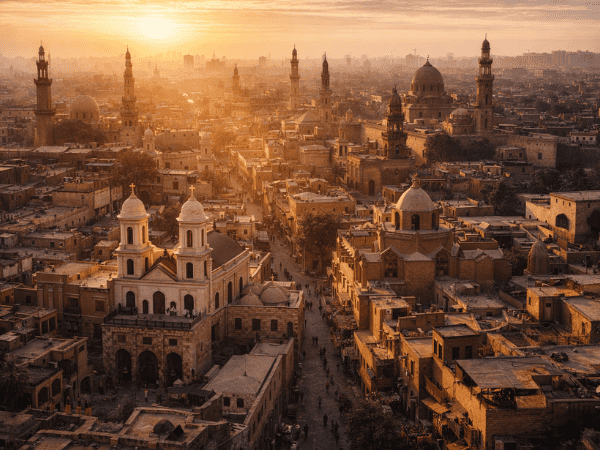


17 Best Al Muizz Street Tours | Islamic Cairo Walking Trips | Egypt Tours Club
Al Muizz Street . banner

Al Muizz Street

Egypt Tours Club

Historic Cairo · Islamic architecture · Private walking routes

Fatimid Cairo · Mamluk Monuments · Khan El Khalili · Islamic Cairo

Al-Muizz Street Cairo: Complete Visitor Guide to Historic Islamic Cairo

Walk one of Cairo’s richest historic routes from the Fatimid gates through mosques, madrasas, mausoleums, historic houses and Mamluk complexes, then continue naturally toward Khan El Khalili and the wider heritage of Islamic Cairo.

Quick Travel Answer

Is Al-Muizz Street worth visiting?

Yes. Al-Muizz Street is one of the strongest places in Cairo for understanding the city’s Islamic and medieval history through architecture and the living urban fabric rather than museum displays alone. The route brings together Fatimid foundations with Ayyubid, Mamluk and Ottoman layers.

For a first visit, allow two to three hours and continue toward Khan El Khalili. Travelers who want deeper historical interpretation can use a guided Old Islamic Cairo walking tour.
Best Things to See

Essential monuments and experiences on Al-Muizz Street

The value of Al-Muizz lies in reading the street as an architectural timeline. These stops represent the gates, Fatimid mosques, Mamluk complexes, domestic architecture and market atmosphere highlighted in the supplied visitor guide.

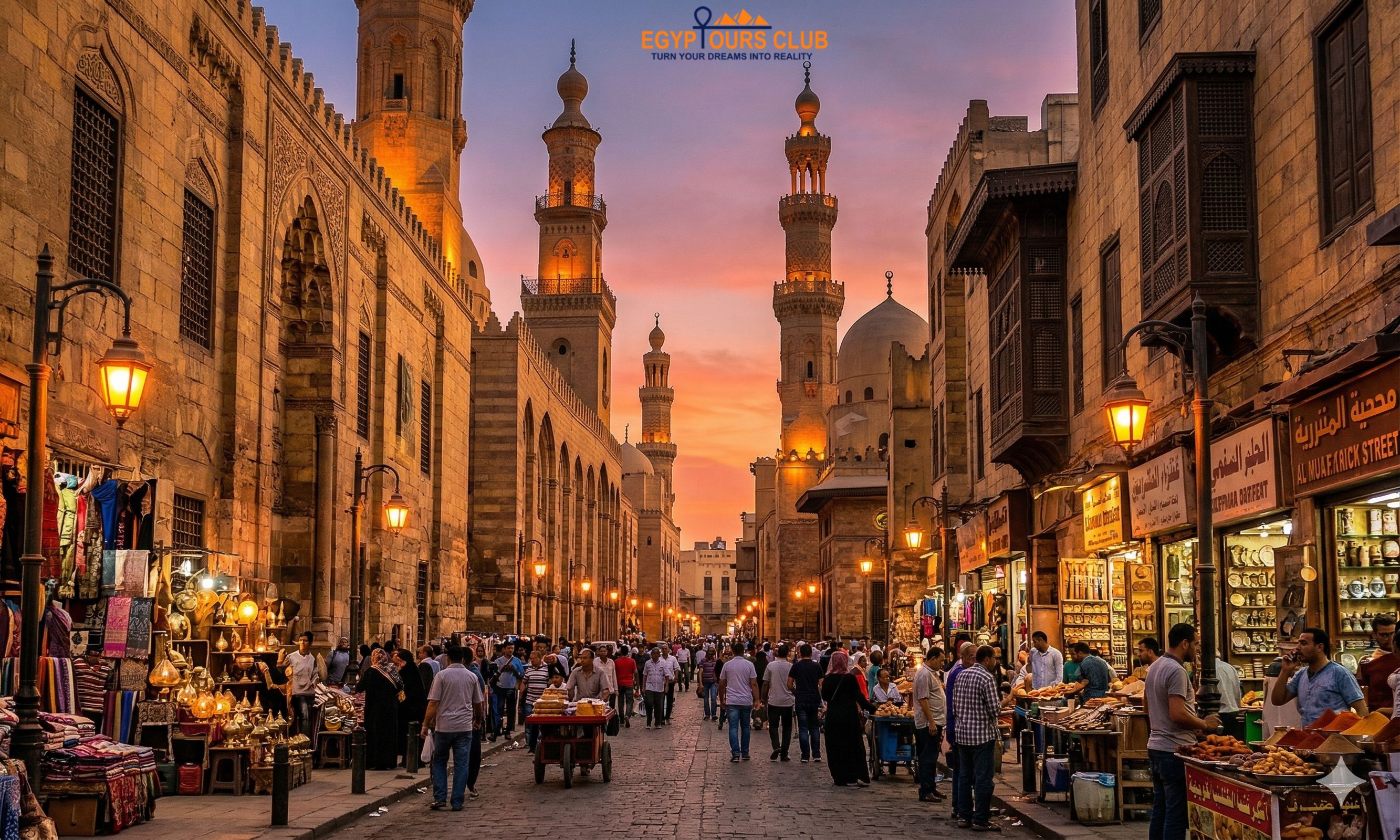
Historic monuments and pedestrians on Al-Muizz Street in CairoHistoric Urban Route

Bab al-Futuh & the Northern Entrance

Fatimid CairoHistoric gate

Begin near Bab al-Futuh, one of the monumental surviving gates of Fatimid Cairo. Together with nearby Bab al-Nasr, it introduces the defensive and urban structure of the medieval city.

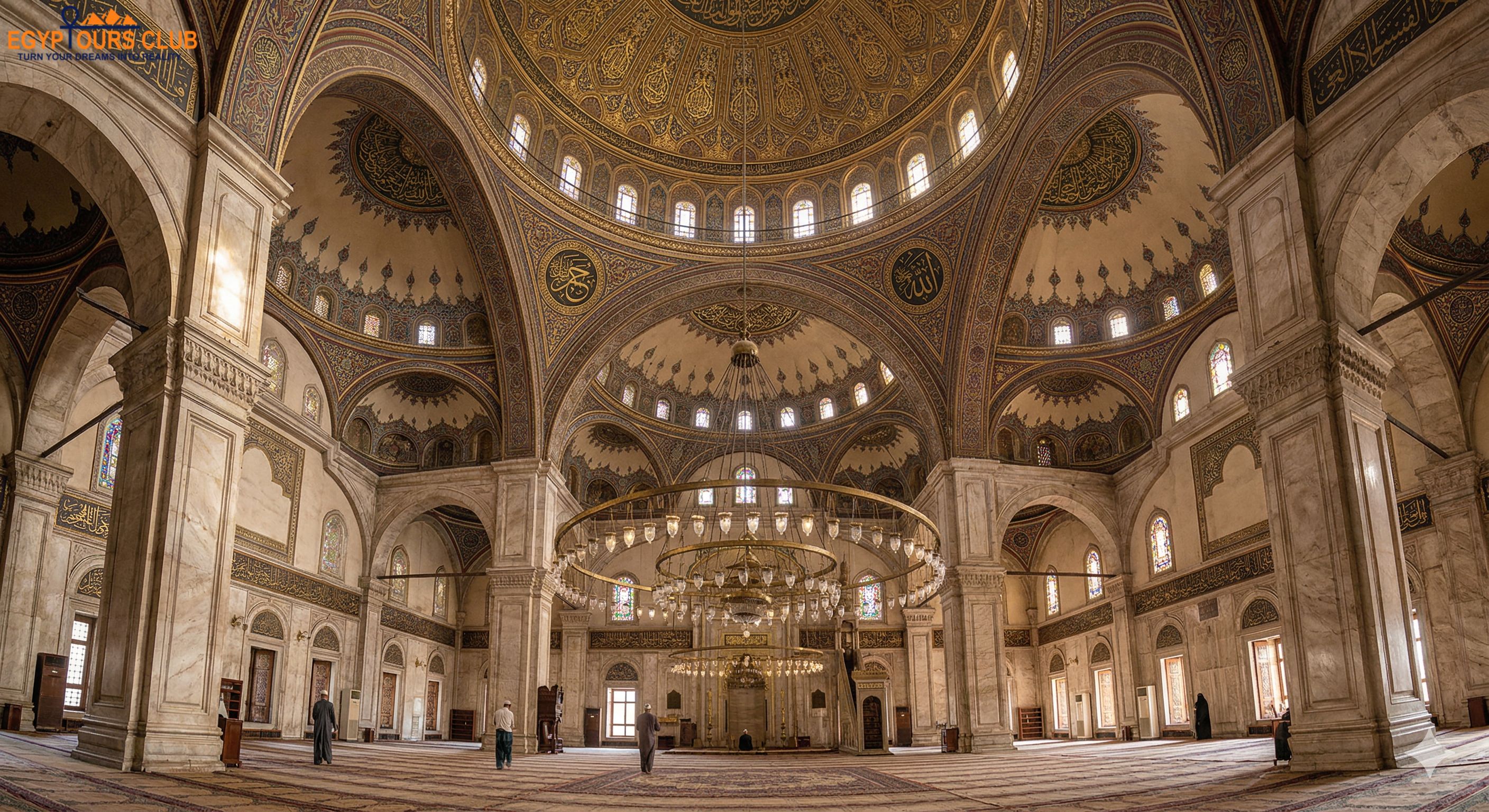
Interior of a monumental Islamic mosque in Historic CairoFatimid Architecture

Al-Hakim & Al-Aqmar Mosques

Early Islamic CairoStone façades

Al-Hakim Mosque introduces the monumental scale of early Fatimid Cairo, while Al-Aqmar Mosque rewards a slower look at its decorated stone façade and its sophisticated relationship with the street alignment.

Traditional market lane near Al-Muizz Street and Khan El KhaliliDomestic & Living Heritage

Bayt Al-Suhaymi & Historic Houses

Ottoman-era houseMashrabiya

Historic houses reveal another side of Cairo: courtyards, privacy, ventilation, wooden screens and reception spaces. Bayt Al-Suhaymi helps visitors imagine life inside the old city beyond its mosques and madrasas.

Mamluk monumental façades and minarets along Al-Muizz StreetMamluk Monument Cluster

Qalawun, Al-Nasir Muhammad & Sultan Barquq

Bayn al-QasraynMamluk Cairo

Slow down around Bayn al-Qasrayn, where monumental religious, educational and funerary complexes stand almost side by side. Compare portals, domes, minarets, inscriptions and interior decoration rather than treating them as one visual mass.

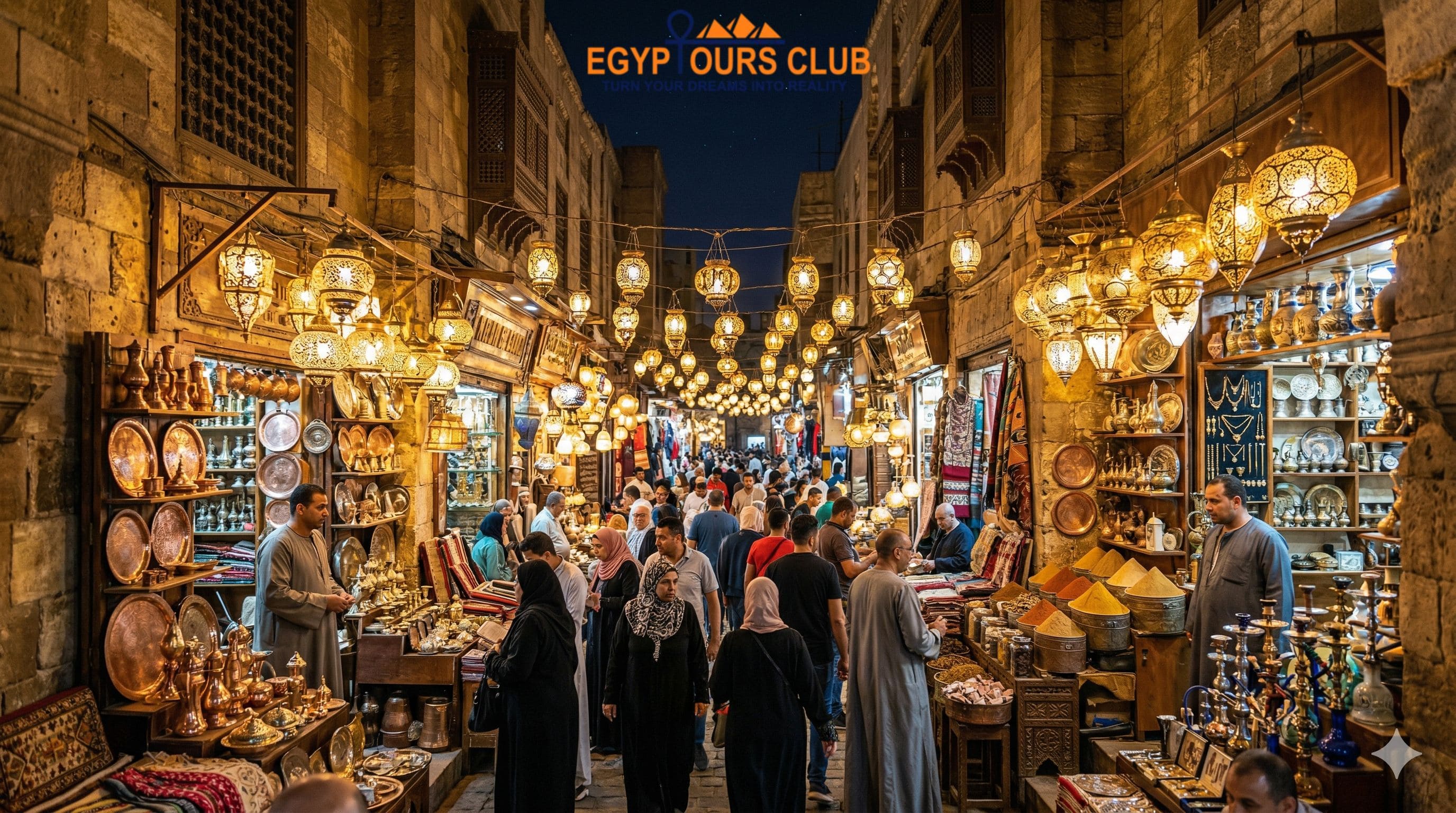
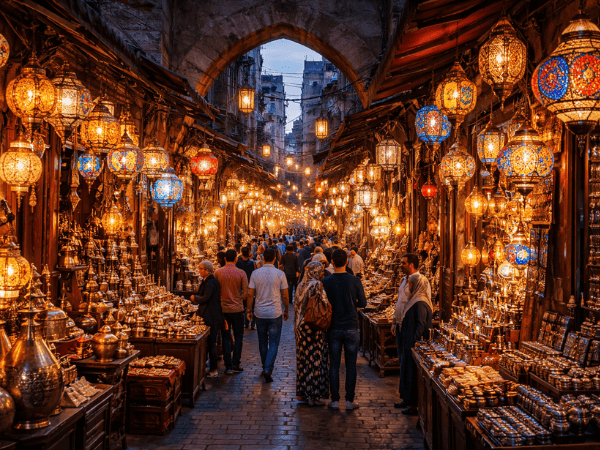
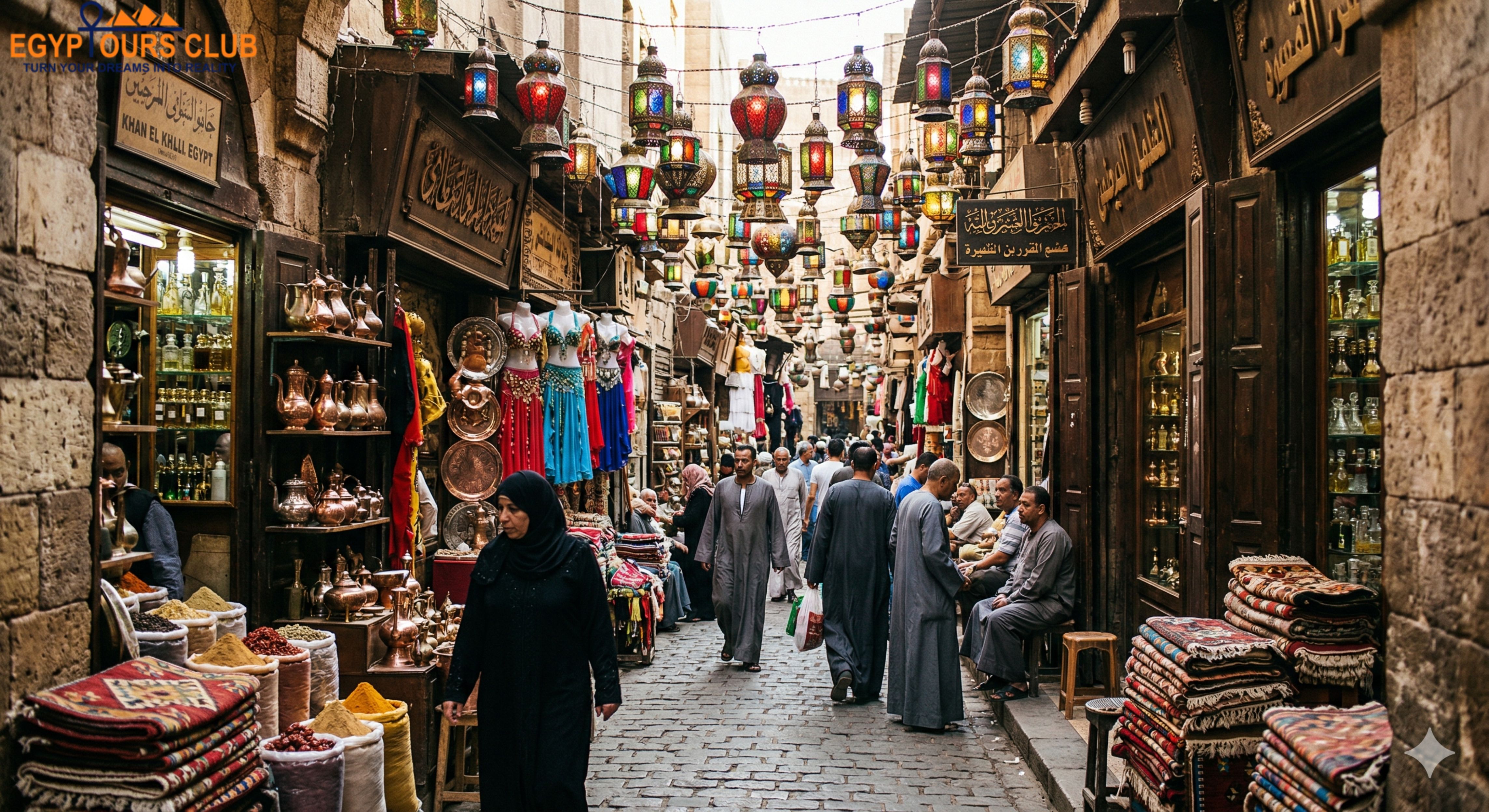
Illuminated lantern shops in Khan El Khalili near Al-Muizz StreetBest Nearby Pairing

Khan El Khalili Bazaar

ShoppingEvening atmosphere

Al-Muizz and Khan El Khalili complement one another without being the same attraction. The street focuses on architecture and urban heritage; the bazaar adds shops, crafts, cafés, lanterns and commercial traditions.

Crowded historic market street in Islamic Cairo near Al-Muizz StreetSouthern Route

Bab Zuweila & the Southern End

1092 CE gateHistoric Cairo

Continue south through the Al-Ghuri area toward Bab Zuweila when time and access allow. The gate marks the historic southern threshold of the Fatimid city and links naturally with the Tentmakers’ Market.

Suggested Walking Route

How to plan an Al-Muizz Street visit

The supplied guide recommends a logical north-to-south sequence beginning near Bab al-Futuh and moving through the central Mamluk monument zone before continuing toward the southern historic districts or Khan El Khalili.

2–3 hours

Classic Al-Muizz Walk

  • Begin near Bab al-Futuh.
  • Visit Al-Hakim Mosque.
  • Continue to Al-Aqmar Mosque and historic houses.
  • Spend time around Qalawun, Al-Nasir Muhammad and Sultan Barquq.
  • Finish near Khan El Khalili.
View the Guided Walking Tour
Late afternoon

Architecture + Evening Atmosphere

  • Arrive while selected monuments are still accessible.
  • Photograph façades in softer late-day light.
  • Walk slowly through the central monument cluster.
  • Continue to Khan El Khalili after dark.
Plan the Bazaar Finish
Full heritage day

Islamic & Coptic Cairo

  • Explore Coptic Cairo earlier in the day.
  • Use private transport between historic districts.
  • Add the Citadel when realistic.
  • Finish with Al-Muizz and Khan El Khalili.
Open the Heritage Route

Planning note: individual monument hours, prayer schedules, ticketing, photography rules and access arrangements can change. Verify the sites you most want to enter shortly before your visit.

Islamic architectural interior illustrating Cairo's historic monument heritage

Trusted Heritage References

Official context for Historic Cairo

Use official heritage sources for World Heritage context and current monument information, especially when opening arrangements or conservation access may change.

External sources open in a new tab. Monument access and operating conditions should be reconfirmed close to travel.

AEO Travel Answers

Al-Muizz Street questions before you go

Direct answers based on the supplied visitor guide, with practical route and timing context.

Where is Al-Muizz Street?

Al-Muizz Street is in Historic Islamic Cairo. Its historic north-south axis runs through the medieval city between the areas of Bab al-Futuh and Bab Zuwayla.

Why is Al-Muizz Street famous?

It is famous for an exceptional concentration of Islamic architecture and for its role as one of the principal streets of medieval Cairo.

How old is Al-Muizz Street?

Its origins are connected with the foundation of Fatimid Cairo in 969 CE, giving the historic route more than a thousand years of urban history.

Is Al-Muizz Street a UNESCO World Heritage Site?

Al-Muizz Street lies within the wider historic urban environment of UNESCO-listed Historic Cairo. It is more accurate to describe it as part of that World Heritage setting than as a separate World Heritage property.

What are the best things to see on Al-Muizz Street?

Highlights include Bab al-Futuh, Al-Hakim Mosque, Al-Aqmar Mosque, Bayt Al-Suhaymi, the Qalawun Complex, the Madrasa of Al-Nasir Muhammad, Sultan Barquq’s complex and the wider sequence of medieval façades, houses and religious monuments.

How much time should I spend there?

About two to three hours works well for many first-time visitors. Architecture, photography and history enthusiasts can easily spend longer when entering individual monuments.

Is Al-Muizz Street close to Khan El Khalili?

Yes. They are naturally combined in one Historic Cairo outing, with Al-Muizz providing the architectural walk and Khan El Khalili adding market lanes, crafts, cafés and evening atmosphere.

Is Al-Muizz Street better during the day or at night?

Both are rewarding. Daytime is better for monument interiors, while late afternoon and evening offer attractive light and illuminated façades. A late-afternoon start often provides the best balance.

Can I visit Al-Muizz Street without a guide?

Yes. Independent walking is possible, but a knowledgeable guide adds significant value by explaining the Fatimid, Mamluk and Ottoman layers, monument functions and architectural differences.

Private Historic Cairo Planning

Build the right Al-Muizz Street and Islamic Cairo route

Share your Cairo hotel, date, group size, available time and whether your priority is architecture, photography, Islamic history or the evening bazaar atmosphere. Egypt Tours Club can match the walking route with private transport and guiding.