


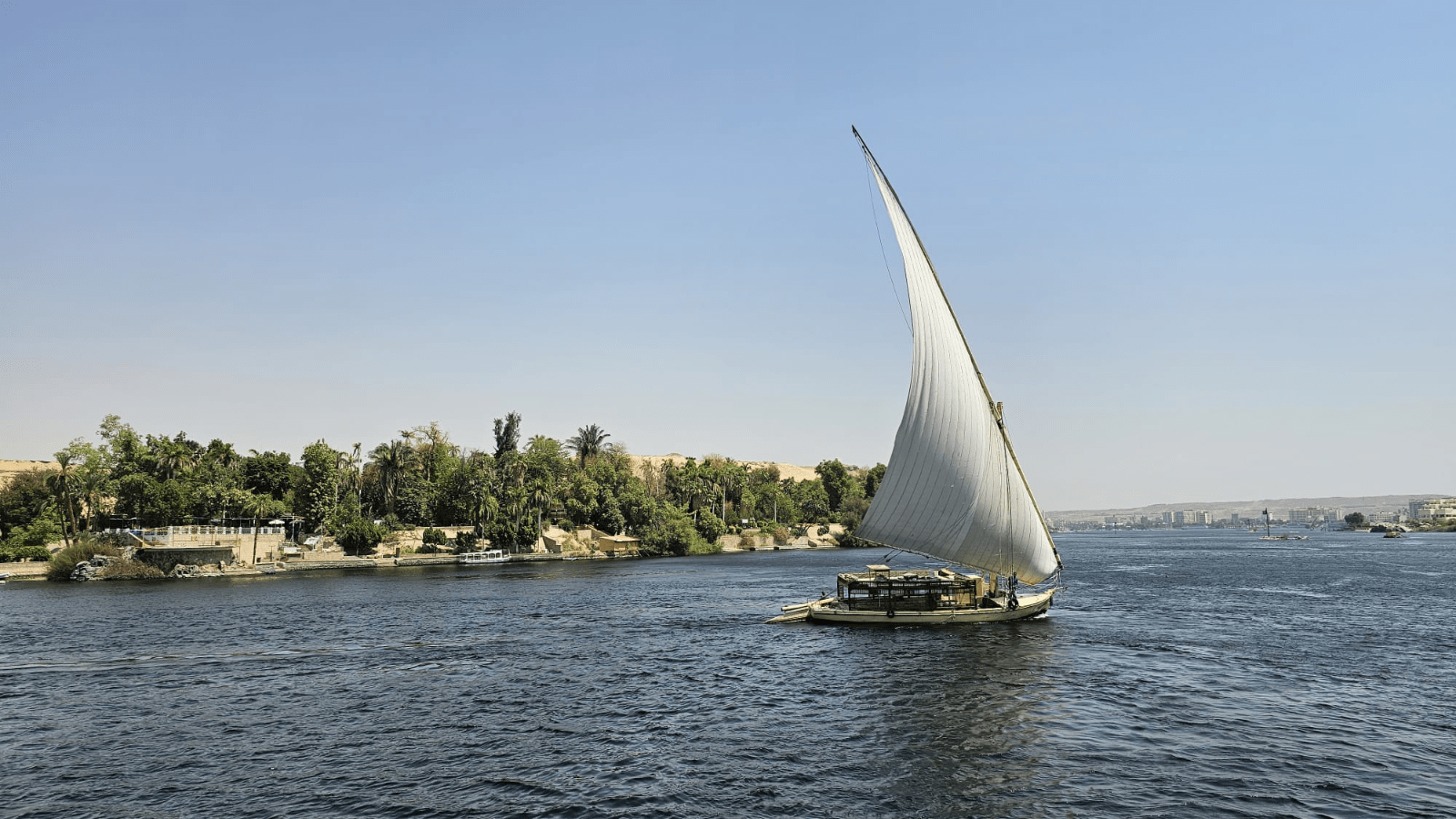
The phrase “Egypt is the Gift of the Nile” means that without the Nile River, ancient Egypt as we know it could not have existed. The river turned desert into farmland, connected cities, supported trade, shaped religion and made one of the world’s oldest civilizations possible. For travelers, the clearest way to understand this story is to follow the river through Cairo, Luxor, Aswan and a well-planned Nile Cruise Packages route.
What Does “Egypt Is the Gift of the Nile” Mean?
The expression “Gift of the Nile” is famously associated with the ancient Greek historian Herodotus. He recognized a simple truth: Egypt’s life, wealth and stability depended on the Nile River. This is why many complete Egypt routes still connect the Nile with the Pyramids of Giza Tours, Karnak Temple Tours, Philae Temple Tours and the river landscapes between Luxor and Aswan.
Most of Egypt lies within a harsh desert environment. Without a permanent source of water, large-scale farming, cities, temples, trade and state power would have been almost impossible. The Nile created a narrow green corridor through the desert, allowing ancient Egyptians to build a civilization that lasted for thousands of years.
So when people ask, why is Egypt called the Gift of the Nile? the answer is not only “because the Nile provided water.” The fuller answer is that the Nile gave Egypt its geography, economy, agriculture, transport network, religious imagination and political unity.
Quick Answer
Egypt is called the Gift of the Nile because the Nile River transformed a desert land into a fertile civilization, providing water, rich soil, food production, transportation, trade routes and sacred meaning.
The Lifeblood of a Desert Civilization
Egypt’s geography is one of the clearest reasons the Nile was so important. On both sides of the river, desert dominates the landscape. The Nile created the natural contrast that defined ancient Egypt: black fertile land beside red desert.
Ancient Egyptians called the fertile valley Kemet, often translated as “the Black Land,” because of the dark, rich soil left by the river. The desert was known as the Red Land, a space associated with danger, distance and protection from invasion.
Fresh Water
The Nile supplied water for drinking, cooking, farming, animals and daily life.
Fertile Soil
Annual flooding deposited rich silt that renewed farmland naturally.
Transport
The river acted as Egypt’s main highway for people, goods, armies and officials.
Civilization
Surplus food supported temples, cities, craftsmen, scribes and royal projects.
Unity
The Nile linked Upper and Lower Egypt into one connected kingdom.
Religion
The river became part of Egyptian myth, ritual, renewal and divine order.
Nile Flooding, Fertile Soil and Ancient Egyptian Farming
One of the Nile’s greatest gifts was its annual inundation. Before modern dams, the river flooded its banks and left behind a layer of fertile silt. This natural process made the land ideal for crops such as wheat, barley and flax.
The ancient Egyptian calendar and farming cycle were closely connected to the river. Agricultural life followed the rhythm of flooding, planting and harvest. This predictable system allowed Egypt to produce food surplus, support population growth and fund state institutions through grain taxation.
| Nile benefit | How it helped Egypt | Result for civilization |
|---|---|---|
| Annual flooding | Covered fields with water and renewed the soil. | Reliable farming in a desert environment. |
| Fertile black silt | Made the land productive without modern fertilizers. | High crop yields and food surplus. |
| Grain production | Supported bread, beer, taxation and wages. | Funded temples, workers and administration. |
| Flax cultivation | Produced linen for clothing, trade and burial practices. | Supported crafts, trade and funerary culture. |
| Flood calendar | Organized agricultural seasons and work cycles. | Created predictable economic planning. |
This is why Nile River agriculture in ancient Egypt is one of the most important topics for understanding Egyptian history. Farming was not just daily work; it was the foundation of the kingdom’s wealth.
The Nile as Egypt’s Main Transportation Route
The Nile was also Egypt’s main transportation artery. Boats moved grain, stone, soldiers, officials, priests, traders and building materials along the river. This made communication and control easier across a long, narrow country.
The river flowed north toward the Mediterranean, while prevailing winds helped boats travel south with sails. This natural system made Egypt unusually well connected compared with many other ancient lands.
| Movement on the Nile | What traveled | Why it mattered |
|---|---|---|
| Food transport | Grain, livestock, beer, bread and produce. | Fed cities, workers and temple estates. |
| Building projects | Stone, wood, tools and labor groups. | Supported temples, tombs and monuments. |
| Trade | Papyrus, linen, gold, incense and luxury goods. | Connected Egypt internally and internationally. |
| Government control | Officials, tax collectors, royal messages and records. | Helped unify the country under central authority. |
| Religious journeys | Priests, festival boats, sacred statues and offerings. | Connected temples and sacred landscapes. |
How the Nile Shaped Ancient Egyptian Culture and Religion
The Nile was more than a river. It was a sacred presence in Egyptian life. Its annual renewal symbolized fertility, rebirth and cosmic order. The god Hapi was associated with the Nile’s flood and abundance, while many rituals and festivals reflected gratitude for the river’s life-giving power.
The Nile also shaped Egyptian ideas about geography and the afterlife. The east bank, where the sun rose, was associated with life and settlement. The west bank, where the sun set, became strongly connected with tombs, death and rebirth. This is why so many major burial landscapes, including the Valley of the Kings, sit on Luxor’s West Bank.
Culture Insight
The Nile did not only feed ancient Egypt. It helped Egyptians understand time, fertility, life, death, rebirth and divine order.
The Nile and the Rise of Egyptian Cities, Temples and Monuments
Because the Nile made farming reliable, Egypt could support specialists who were not full-time farmers: scribes, priests, soldiers, artisans, builders, doctors, merchants and administrators. This division of labor made complex civilization possible.
The great monuments of Egypt depended on the Nile in practical ways. Stone and supplies moved by river. Workers were fed through grain surplus. Temples were built in landscapes shaped by water, agriculture and sacred geography.
Scribes
Managed grain records, taxes, land, labor and royal administration.
Artisans
Created tombs, statues, jewelry, temple reliefs and sacred objects.
Priests
Ran temple rituals and managed estates funded by land and offerings.
Builders
Moved and shaped materials for pyramids, temples and tombs.
Boatmen
Connected settlements, temples, farms and trade routes along the river.
Merchants
Used river routes to move goods inside Egypt and beyond its borders.
For more on the people behind the monuments, read our guide to jobs in ancient Egypt.
How Travelers Can Experience the Gift of the Nile Today
The best way to understand the phrase Gift of the Nile is to follow the river itself. From Cairo to Luxor and Aswan, the Nile remains the thread that connects Egypt’s landscapes, temples, villages, museums and living culture.
Cairo and the Nile
Begin with the river as a living artery of modern Egypt, then connect it to the pyramids, museums and ancient settlement patterns.
Explore Cairo Day Tours →Luxor
See how the Nile separates East Bank temples from West Bank tombs, making geography part of religious meaning.
Explore Luxor Day Tours →Aswan
Experience Nile islands, Nubian culture, Philae Temple and some of Egypt’s most beautiful river scenery.
Explore Aswan Day Tours →Nile Cruise Routes
Follow the ancient corridor between Luxor and Aswan, visiting temples, villages and river landscapes along the way.
Explore Nile Cruise Packages →Best Egypt Routes to Understand the Gift of the Nile
Travelers understand the meaning of Egypt is the Gift of the Nile best when the itinerary follows the river instead of treating each monument as a separate stop. The strongest routes combine Cairo’s origin story, Luxor’s sacred geography, Aswan’s island temples and a Nile cruise between the major temple sites.
Nile Cruise Packages
Best for seeing how the river connects Aswan, Kom Ombo, Edfu, Luxor and the temple corridor.
Luxor Day Tours
Best for understanding East Bank life, West Bank afterlife beliefs and river-based sacred geography.
Aswan Day Tours
Best for Philae Temple, Nile islands, Nubian culture, granite quarries and southern river scenery.
6 Day Egypt Tour Packages
Best for travelers who want Cairo, Luxor, Aswan and Nile temples in a focused itinerary.
9 Day Egypt Tour Packages
Best for a more relaxed route with Cairo, Nile Cruise, Luxor, Aswan and optional Red Sea time.
Tailor-Made Egypt Tours
Best when travelers want a custom Nile-focused route around history, temples, scenery and comfort.
Key Nile Landmarks That Bring This Story to Life
The Nile shaped both practical life and sacred architecture. These landmark pages help travelers move from reading the history to choosing the right place to experience it in Egypt.
Philae Temple Tours
A powerful Nile island temple where water, mythology and Isis worship meet in one unforgettable Aswan setting.
Karnak Temple Tours
One of the best places to see how Nile wealth supported temples, festivals, priests and royal building projects.
Valley of the Kings Tours
The West Bank burial landscape shows how the river helped organize Egyptian ideas of life, death and rebirth.
Abu Simbel Tours from Aswan
A major southern monument route connected to Lake Nasser, Nubian landscapes and Egypt’s far southern frontier.
Why the Nile Was Egypt’s Greatest Gift: Simple Summary
The Nile earned Egypt the title “Gift of the Nile” because it made almost every major part of Egyptian civilization possible.
| Reason | Why it matters |
|---|---|
| Water | Allowed people, animals and crops to survive in a desert land. |
| Fertile soil | Supported agriculture through rich silt from annual flooding. |
| Food surplus | Allowed population growth, specialization and state power. |
| Transport | Connected Upper and Lower Egypt by boat. |
| Trade | Moved goods, ideas and wealth across Egypt and beyond. |
| Religion | Shaped myths, festivals, sacred geography and ideas of rebirth. |
| Political unity | Helped centralize control across a long river valley. |
Explore More on Egypt Tours Club
Continue from the Nile story into practical Egypt routes, city guides, temples and cruise-based itineraries.