One Monument, Not Assembled Blocks
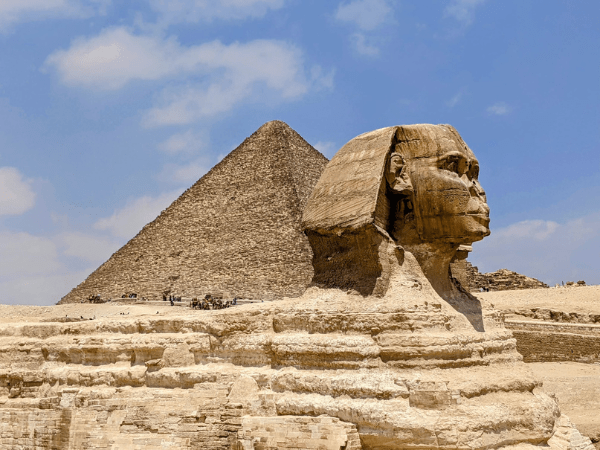
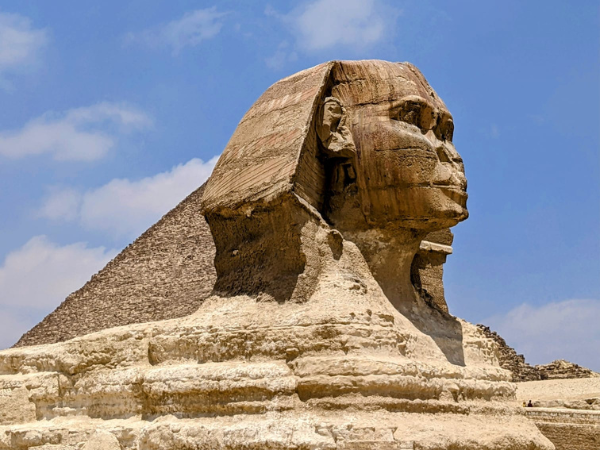
The main figure was carved from the limestone bedrock of Giza. Later masonry repairs are part of its long conservation story.

Understand the limestone lion with a royal head, the evidence connecting it to Khafre, the Dream Stela and the best way to see it with the Giza Pyramids. Plan the visit without confusing public viewpoints with special enclosure access.
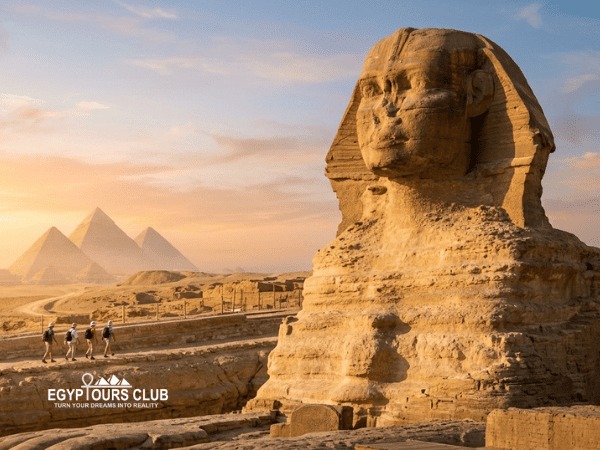
The Great Sphinx is a colossal limestone monument on the Giza Plateau, carved as a lion's body with a royal human head. It is usually dated to Egypt's Fourth Dynasty, around 2500 BCE, and most Egyptologists associate it with Pharaoh Khafre. The exact commissioning details are not recorded in an original inscription on the statue. Today, visitors see it from approved areas on the Giza Plateau, while access inside the Sphinx enclosure is a separate, permit-controlled arrangement.
The mainstream archaeological view places the Sphinx in the Fourth Dynasty of Egypt's Old Kingdom, usually during the reign of Khafre (c. 2558–2532 BCE). The strongest evidence is architectural: the Sphinx, its temple, Khafre's Valley Temple and the lower causeway occupy a tightly connected part of the same royal complex. Egyptian Ministry of Tourism and Antiquities research also notes similarities between the Sphinx's royal face and surviving images of Khafre.
What remains uncertain? No surviving original inscription carved on the Sphinx explicitly names the king who commissioned it. That is why the careful statement is most likely Khafre, rather than claiming the identity is beyond debate. Claims that the Sphinx is thousands of years older than the pyramids are not established by the mainstream archaeological evidence.
The main figure was carved from the limestone bedrock of Giza. Later masonry repairs are part of its long conservation story.
The Sphinx belongs visually and archaeologically beside Khafre’s pyramid, his Valley Temple and the adjoining causeway.
Khufu, Khafre and Menkaure created a ceremonial and burial landscape, not three isolated pyramids.
The lion's body communicates strength and royal protection. The human head is a royal figure, traditionally understood as combining a king's authority with the lion's power. It is not a mummy head. The Sphinx faces east toward the horizon, a direction that took on particular importance as later Egyptian rulers connected the monument with the rising sun.
The Sphinx extends roughly 73 metres (240 feet) from paws to tail and rises to about 20 metres (66 feet). Its body and head are not an evenly weathering surface: geological layers and restorations explain some of the different textures you see today.
The original surface was more finished than the weathered monument visitors encounter now. Carved limestone elements and later repairs have endured centuries of erosion and sand exposure.
The royal lion form is an Old Kingdom expression of kingship. In the New Kingdom, the Sphinx also became associated with Horemakhet, or “Horus in the Horizon,” reflecting a later solar identity.
Interpretations about a guardian role are reasonable in the wider royal complex, but the monument's exact original religious programme is not preserved in a single explanatory text.
The Great Sphinx attracts speculation, but a useful guide must separate the documented history from popular stories.
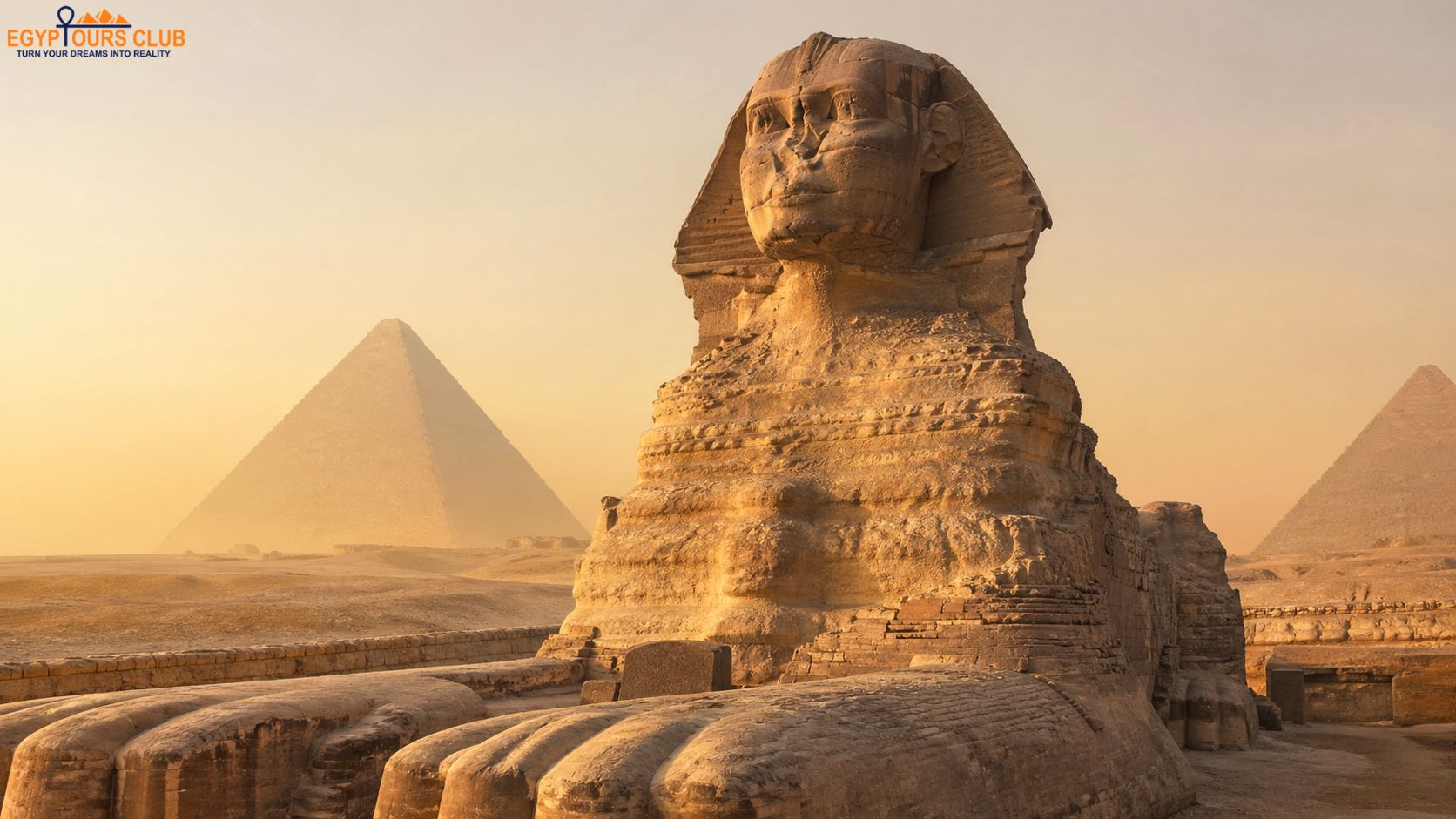
The missing nose predates Napoleon's invasion of Egypt in 1798. The claim that French soldiers shot it off is therefore not credible. The precise date and person responsible are not securely proven; do not repeat a single culprit as settled fact.
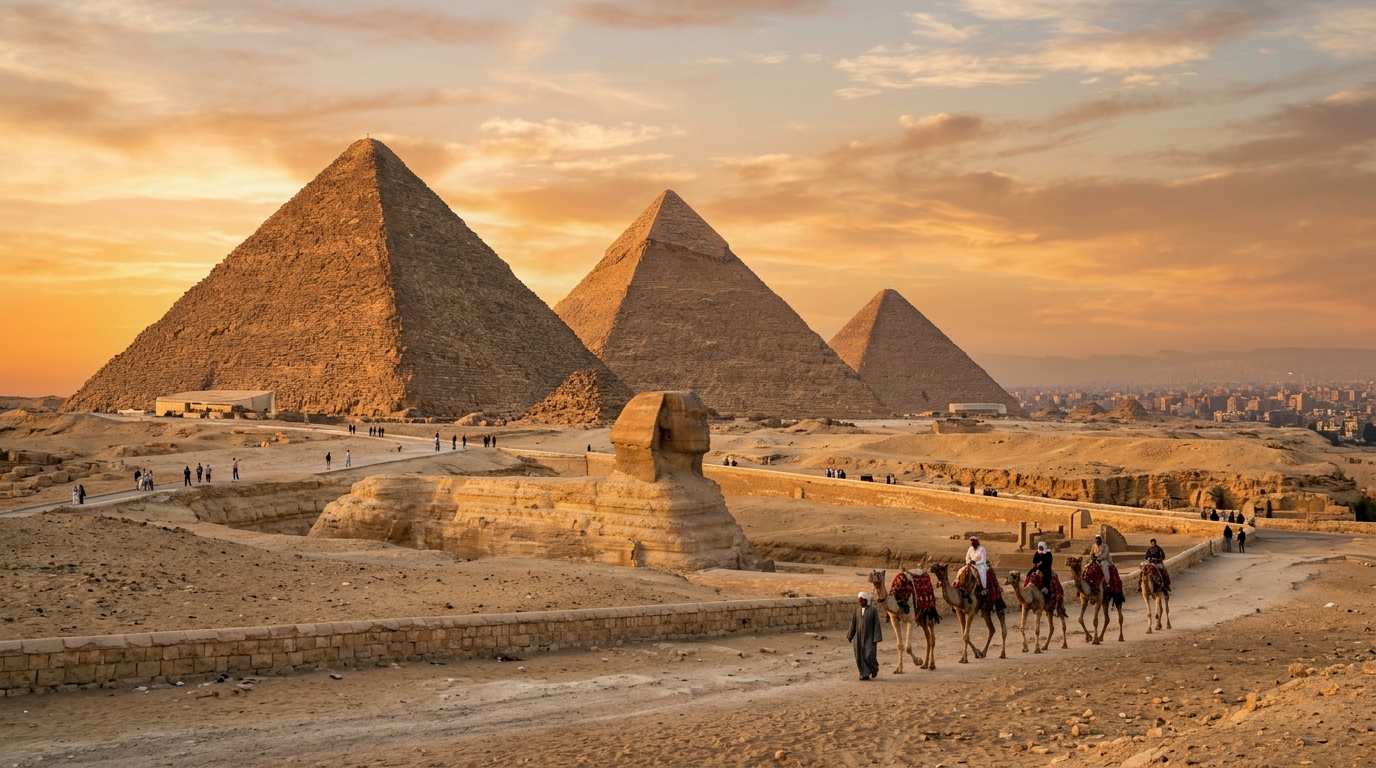
More than a thousand years after the Sphinx's likely construction, Thutmose IV placed a commemorative stela between its paws. Its story links the young royal, the sand-covered monument, the promise of kingship and a later campaign to honour the Sphinx. It is evidence of New Kingdom interpretation, not a construction record from Khafre's reign.
Explore the official account of the Sphinx and its Dream Stela.
Use the Sphinx as an archaeological stop rather than treating it as a single photograph. Each of these observations adds context, but not every archaeological structure is open to enter.
Look from the approved frontal area to study the face, surviving headdress form and massive paws. The Dream Stela sits between them, but proximity to its base is restricted on ordinary visits.
Open the detailed Sphinx visitor guideFrom a permitted side viewpoint, the lion’s reclining body reads more clearly. Notice the stratified limestone and repair blocks instead of assuming every exposed stone surface belongs to one original phase.
The Valley Temple belongs to Khafre’s pyramid complex beside the Sphinx precinct. Its relationship with the causeway and the Sphinx is among the strongest archaeological arguments for the Khafre association. Check which areas are currently accessible.
Learn about Khafre’s complex from the Ministry
Use a wider plateau viewpoint to compare the three major pyramids and understand where the Sphinx sits relative to royal tombs and temples. Avoid mixing a panorama stop with restricted archaeological excavation zones.
Open the ETC Pyramids of Giza guideThe temple directly associated with the Sphinx helps explain its ceremonial context. Visitors should not assume unrestricted entry to the temple precinct; archaeological visibility and permitted routes can vary.
See the official Giza Plateau site overview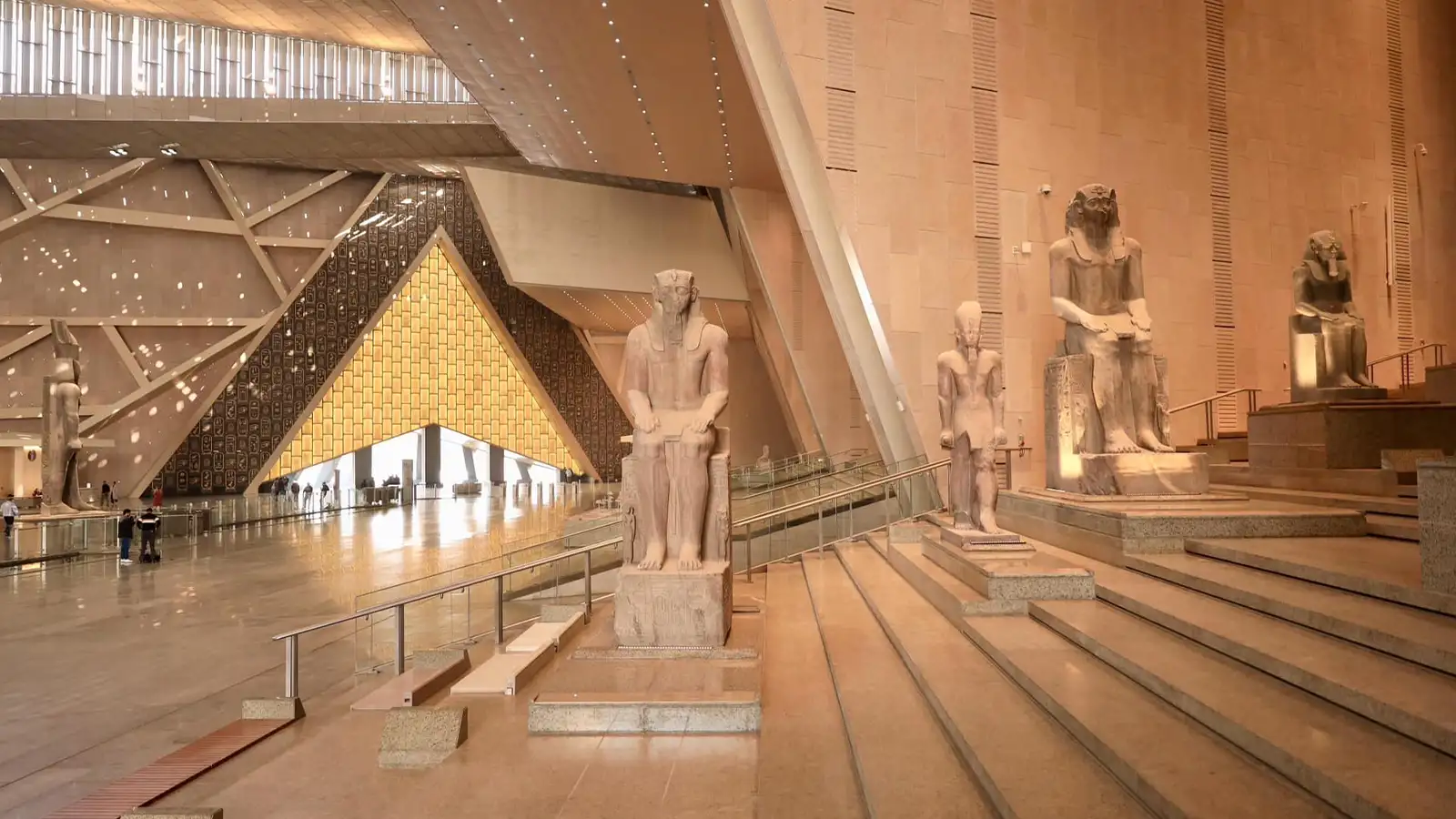
When time allows, continue to the Grand Egyptian Museum to see royal sculpture and collections in a modern museum context. It is a different attraction, not part of a standard Sphinx ticket.
Plan a separate Grand Egyptian Museum visitPlan around the actual Giza Plateau footprint, your hotel's location, permitted entrances and the walking comfort of your group. These are planning ranges, not guarantees of ticketing or travel time.
For a short private visit, check the Giza Pyramids Half-Day Tour with Sphinx & Valley Temple. For a full day including the museum, check the Grand Egyptian Museum, Pyramids & Sphinx private tour.
There is a real difference between seeing the Sphinx during a regular visit and arranging special access inside its protected enclosure. Most travelers view the monument from designated visitor viewpoints within the Giza Plateau. A private guided tour does not automatically grant access between the paws or inside the protected monument enclosure.
| Experience | What to expect | Important distinction | Next step |
|---|---|---|---|
| Regular Giza Plateau visit | Approved Sphinx viewpoints, pyramid areas, photographs and nearby archaeological context | Entry rules depend on current Giza Plateau ticket and access arrangements | Check official site information |
| Private guided Giza tour | Guide, route coordination, transport and standard-access sites specified in the product | Private transport and guiding are not the same as restricted Sphinx enclosure access | See the 3-hour private tour |
| Special Sphinx enclosure access | Permit-controlled arrangements may allow access to otherwise restricted parts of the enclosure | Subject to authority approval, dates, fees, security and current conservation rules; not automatically available | Ask ETC to check feasibility |
| Entry inside a pyramid | Optional interior corridors or chambers of selected pyramids | Separate from the Sphinx; may require extra tickets and may not suit all mobility levels | Review the Giza guide |
The basic preparation is straightforward. The most common mistake is trying to squeeze the entire plateau, museum and distant Cairo attractions into one short outing.
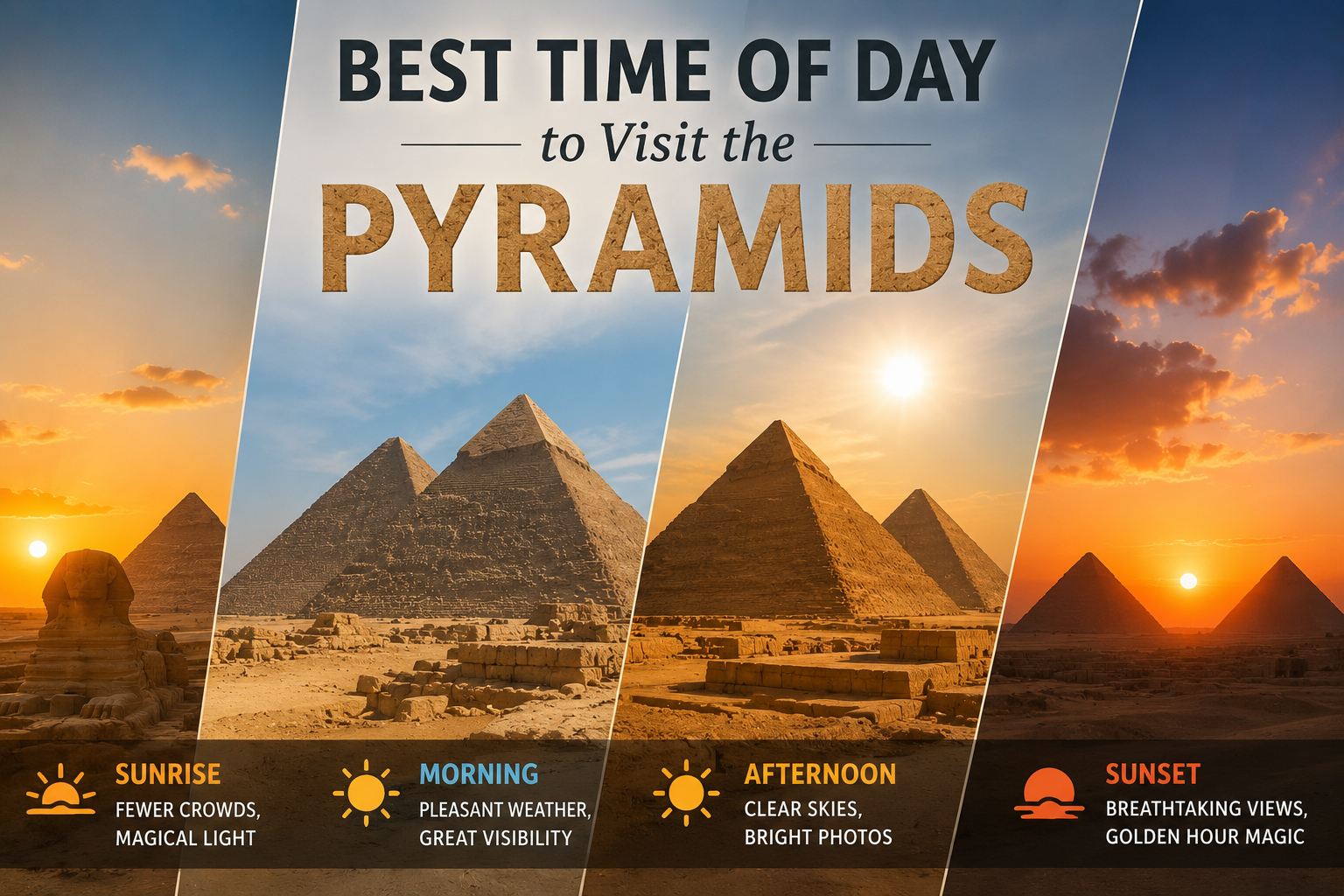
Earlier starts often reduce heat and crowd pressure. Golden-hour conditions can be attractive, but photography plans must fit the actual site hours and permitted routes.
Wear supportive shoes. Some approaches include uneven ground, exposed paths and long distances between the Sphinx, pyramids and panorama areas.
Carry drinking water, sunglasses and a sun hat. Giza can be very hot in summer, with limited shade around open monuments.
With children or older travelers, choose fewer monument interiors, shorter walking segments and flexible rest stops. A private route should adapt to comfort and interest.
Personal photography is common in permitted areas, but professional equipment, tripods and drone use can be restricted. Follow the latest on-site instructions.
Check pickup zone, tickets, whether the Valley Temple is included, optional pyramid interiors, guide language and whether any restricted-access experience is genuinely approved.
Choose the experience that matches your interests before adding extra sites. The Sphinx has its own distinct story, even though it sits inside the larger Giza landscape.
| Site or Experience | Best for | Typical planning focus | Relevant guide or tour |
|---|---|---|---|
| Great Sphinx | Royal symbolism, ancient sculpture, Dream Stela and Sphinx viewpoints | 45–90 min focused stop | Sphinx visitor guide |
| Pyramids of Giza | Fourth Dynasty tombs, pyramid engineering and panoramic views | Half day with Sphinx | Pyramids of Giza guide |
| Grand Egyptian Museum | Egyptian collections, royal statuary and museum interpretation | Separate museum visit | Grand Egyptian Museum guide |
| Private Giza tour | Efficient route, Egyptologist guide, pickup and flexible pacing | About 3 hours in the focused product | Private half-day Giza tour |
These references are useful for the historical record and current visitor planning. Check the official source close to your visit because ticket categories and site access are operational details, not permanent facts.
Clear answers on age, origins, ticketing, private visits and the best way to see the monument.
It is on the Giza Plateau near Cairo, close to Khafre’s Valley Temple and the three main Giza pyramids.
Most archaeologists associate it with Pharaoh Khafre of the Fourth Dynasty. However, the monument does not preserve an original inscription that definitively names its builder.
Under the mainstream Khafre dating, the Sphinx is approximately 4,500 years old. Its exact commission date is not directly inscribed on the monument.
The nose was missing before Napoleon’s campaign, so the popular cannon-fire story is not credible. The precise circumstances of the damage remain uncertain.
There is no normal tourist interior route. Standard visits use approved exterior viewpoints. Special access inside the protected enclosure is separately controlled and requires official authorization.
A normal Sphinx visit is part of the Giza Plateau archaeological visit, but permitted access areas and ticket arrangements should be checked close to the travel date. Special enclosure visits are a separate category.
It is a New Kingdom monument erected by Thutmose IV. Its inscription records a royal story linking the young prince to the sand-covered Sphinx and its solar identity.
Allow roughly 45 to 90 minutes for the Sphinx viewpoints and Valley Temple context. A visit combining the main pyramids and panorama typically needs considerably longer.
Yes. They fit well into a full Giza sightseeing day when you reserve enough time for both, allow transfer time and confirm current opening and ticket arrangements.
No. A private guided tour typically means an exclusive guide and vehicle for your party. Restricted Sphinx enclosure access is different and must be explicitly permitted and confirmed.
Egypt Tours Club can arrange private Egyptologist-guided Giza visits built around your hotel, time, interests and walking comfort. For a request involving restricted enclosure access, ask the team to check the current permit requirements and availability before making any promise.
Editorial note: this guide separates historical evidence, scholarly interpretation and changeable visitor access. No fixed ticket prices or opening times are stated. Historical and visitor sources were reviewed on 17 November 2026. Image backgrounds are ETC-hosted and used only for their accurately identified subject.

.png)