

Abu Simbel Temple Egypt | Ramses II, Sunrise Alignment & Tours
Abu Simbel Temple Egypt Guide | Ramses II, Sun Alignment & Aswan Tours
Aswan · Ramses II · Solar Alignment
Abu Simbel Temple Egypt Ramses II & Sun Alignment Guide
A rock-cut masterpiece where colossal statues, sacred chambers and Lake Nasser light turn history into a once-in-a-lifetime scene.
Abu Simbel Temple Egypt is one of the most powerful monuments in ancient Egypt. Built by Ramses II near Aswan, the complex is famous for the Great Temple, the Temple of Nefertari, the massive seated statues, the Abu Simbel sunrise alignment and its dramatic relocation above Lake Nasser.
Abu Simbel Temple EgyptRamses II TempleSunrise AlignmentTemple of NefertariAswan Day Trip
Abu Simbel Temple is a rock-cut temple complex in southern Egypt near Aswan, built by Ramses II and famous for its giant statues, Temple of Nefertari, Lake Nasser setting and sunrise alignment phenomenon. It is one of the most memorable places to visit from Aswan and a major highlight of Egypt tours that include Cairo, Luxor, Aswan and Abu Simbel.
Why Visit Abu Simbel
The Monument That Turns Power into Stone
Abu Simbel is not only another temple stop. It is a statement of royal power, divine devotion and architectural precision carved into the Nubian sandstone. The Great Temple of Abu Simbel was created for Ramses II, while the nearby Temple of Nefertari honors Queen Nefertari and the goddess Hathor.
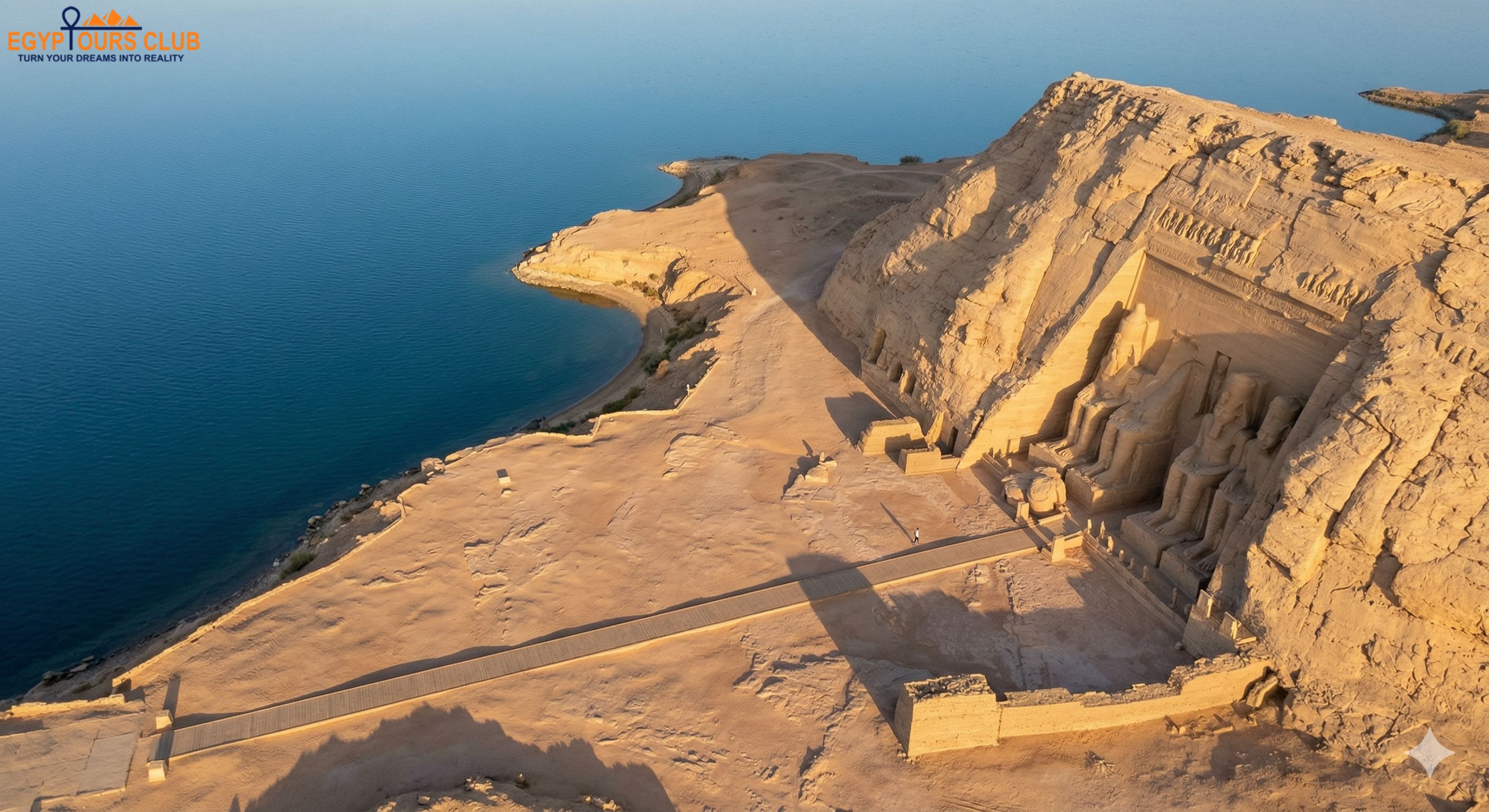
The site stands near Lake Nasser, far south of Aswan, which makes the journey feel different from the usual temple circuit. Travelers searching for Abu Simbel Temple Egypt, Ramses II Temple Abu Simbel, Abu Simbel day trip from Aswan, Temple of Nefertari Abu Simbel or Lake Nasser temples are usually looking for a landmark that feels grand, remote and unforgettable.
The strongest way to understand Abu Simbel is to see three layers together: the monumental facade, the sacred interior axis and the modern rescue story that moved the temples away from rising waters after the Aswan High Dam project.
Abu Simbel · Ramses II Temple
Abu Simbel in Pictures
Colossal Facade, Sacred Light and Lake Nasser Atmosphere
Each image tells a different part of the Abu Simbel experience: the mountain facade, the inner sanctuary, the solar event, the relocation story and the journey from Aswan.
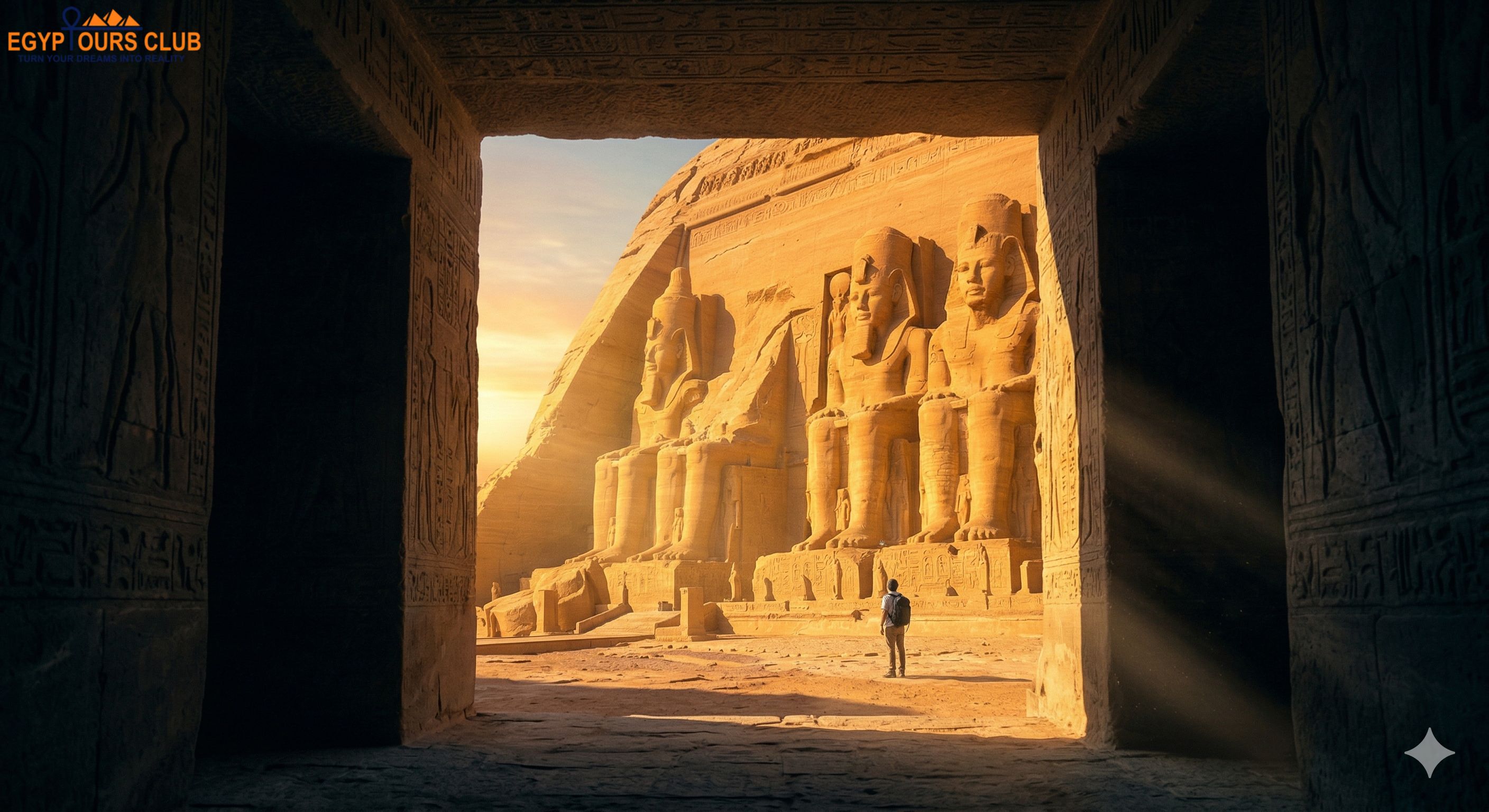
The Great Temple FacadeFour monumental seated statues of Ramses II dominate the entrance and create one of Egypt’s most iconic views.
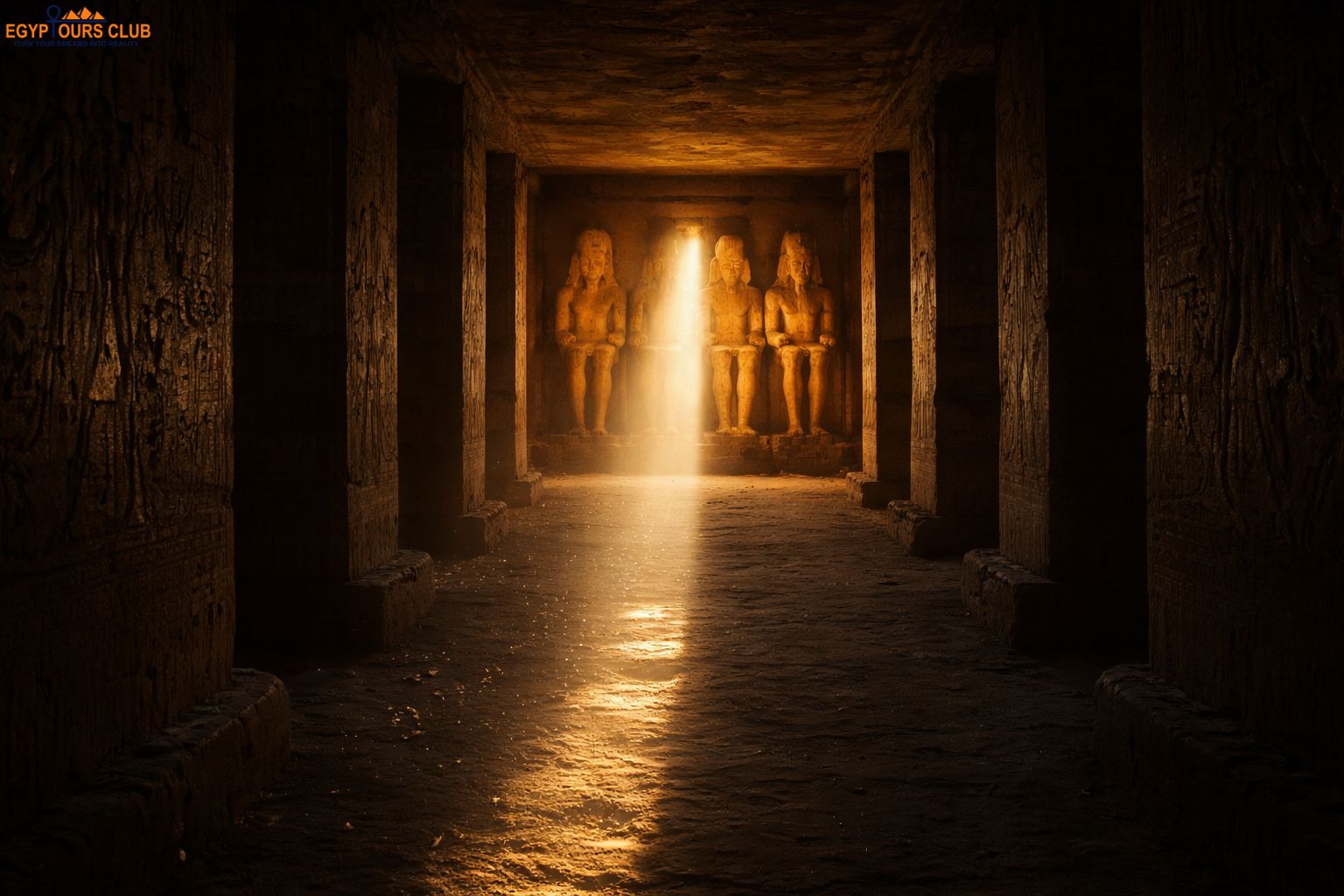
Inner Sanctuary LightThe temple axis is famous for sunlight reaching deep into the sacred chamber during the solar event.Lake Nasser SettingThe temple’s location gives Abu Simbel a dramatic desert-and-water atmosphere unlike any other Aswan visit.
History and Highlights
What Makes Abu Simbel One of Egypt’s Greatest Temples?
Abu Simbel combines royal scale, astronomical drama, sacred symbolism, global preservation and a journey that feels like crossing into the deep south of ancient Egypt.
Ramses II Colossal Statues
The Great Temple facade is dominated by four seated figures of Ramses II, designed to communicate power before visitors even enter.
Ramses IIGreat Temple
Sunrise Alignment
The Abu Simbel sunrise alignment is the temple’s most famous phenomenon, linking sacred space, sunlight and royal symbolism.
Solar eventInner sanctuary
Rock-Cut Architecture
The temple was carved into the mountain, creating a dramatic route from the bright facade to darker chambers inside.
Rock-cut templeAncient engineering
The Relocation Story
Abu Simbel was moved piece by piece in the 1960s to protect it from rising water, making the site a symbol of world heritage preservation.
RelocationPreservation
Lake Nasser Views
The surrounding desert and Lake Nasser give Abu Simbel a cinematic setting, especially for travelers continuing toward Nubian Egypt.
Lake NasserSouthern Egypt
Aswan Day Trip Highlight
Abu Simbel is one of the strongest day trips from Aswan and pairs naturally with Philae Temple, Nile cruises and Upper Egypt routes.
AswanDay trip
How to Visit
Best Way to Visit Abu Simbel from Aswan
Best for First-Time Visitors
Visit Abu Simbel as a private or guided day trip from Aswan for the smoothest experience.
Start early to enjoy cooler temperatures and softer light on the temple facade.
Allow time for both the Great Temple of Ramses II and the Temple of Nefertari.
Ask your guide to explain the sun alignment, relocation and the difference between the two temples.
Best for Premium Routes
Pair Abu Simbel with an Aswan stay, a Nile cruise or a wider Cairo–Luxor–Aswan itinerary.
Consider a flight option when schedule comfort matters more than road time.
Use a private guide if you want stronger storytelling and better pacing inside the complex.
For photography, plan the facade first, then interior details and Lake Nasser views.
Timing and Practical Notes
Abu Simbel Planning Details
Abu Simbel is remote compared with many Egyptian temples, so timing, transport and route design matter.
Item
Planning Detail
Best Use
Best starting point
Aswan
The most common base for Abu Simbel day tours.
Main temple
The Great Temple of Ramses II
Best for colossal statues, facade photography and royal symbolism.
Second temple
Temple of Nefertari
Essential for understanding the full Abu Simbel complex.
Best time
Early morning or cooler travel months
Better light, easier walking and more comfortable pacing.
Best pairing
Aswan, Philae Temple, Nile cruise or Lake Nasser route
Turns the visit into a complete Upper Egypt experience.
Recommended Experiences
Best Abu Simbel Tours and Routes
The strongest Abu Simbel experience depends on your pace: classic Aswan day trip, private premium route, flight option or a full Egypt itinerary including Luxor and Aswan.
Aswan · Day Trip
Abu Simbel Day Trip from Aswan
A focused visit to the Great Temple, Temple of Nefertari and Lake Nasser setting with guided explanation.
Helpful Routes for Abu Simbel, Aswan and Nile Cruise Travelers
Build a stronger Egypt itinerary by connecting Abu Simbel with the natural travel path around Aswan, Philae Temple, Lake Nasser, Nile cruises and the classic Cairo–Luxor–Aswan route.
Abu Simbel is a rock-cut temple complex near Aswan, built by Ramses II and known for its giant statues, Temple of Nefertari and solar alignment.
Why is Abu Simbel famous?
It is famous for the colossal Ramses II statues, the Great Temple facade, the sunrise alignment, the Temple of Nefertari and the dramatic relocation project.
Where is Abu Simbel located?
Abu Simbel is located in southern Egypt near Lake Nasser, south of Aswan and close to the Sudanese border.
How do you get to Abu Simbel from Aswan?
Most travelers visit by private vehicle, group day trip or domestic flight, depending on schedule and comfort level.
Is Abu Simbel worth visiting?
Yes. It is one of Egypt’s most impressive temple experiences, especially for travelers interested in Ramses II, ancient engineering and iconic photography.
What are the two temples at Abu Simbel?
The complex includes the Great Temple of Ramses II and the smaller Temple of Nefertari, dedicated to Queen Nefertari and Hathor.
When is the Abu Simbel sun alignment?
The solar event is traditionally associated with two dates each year, around February and October, when sunlight reaches the inner sanctuary.
Can Abu Simbel be included in a Nile cruise itinerary?
Yes. Abu Simbel is commonly added to Aswan and Nile cruise routes, especially on longer Egypt packages.
Egypt Tours Club · Aswan and Abu Simbel Experts
Ready to See Abu Simbel at Its Most Powerful?
Visit the Great Temple of Ramses II, the Temple of Nefertari and the Lake Nasser landscape with a route that fits your Egypt journey, whether you prefer a focused Aswan day trip or a complete Cairo, Luxor, Aswan and Abu Simbel itinerary.