


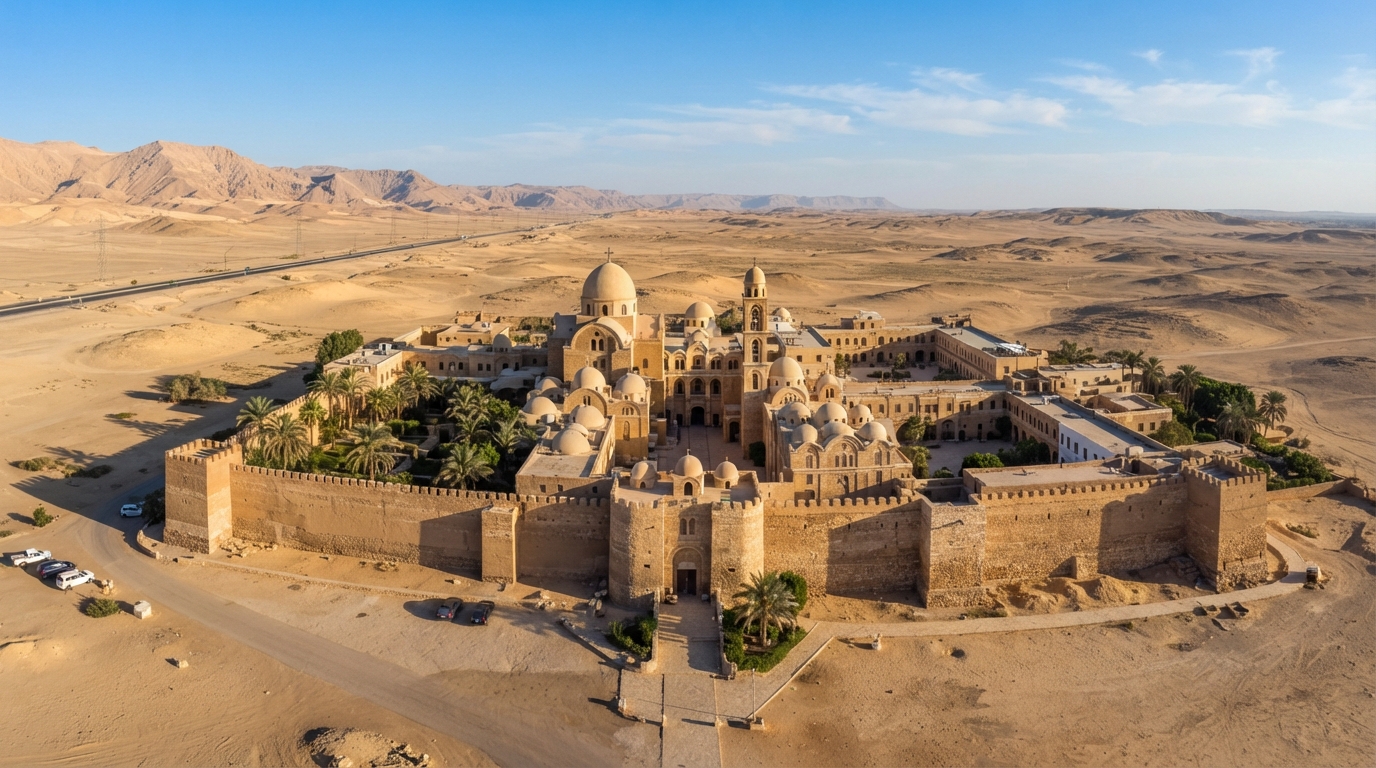
Monastery of Saint Bishoy, Wadi El-Natrun | Anba Bishoy Guide | Egypt Tours Club
Monastery of Saint Bishoy, Wadi El-Natrun . banner

Monastery of Saint Bishoy, Wadi El-Natrun

Egypt Tours Club

Wadi El-Natrun monastery planning by a licensed local Egypt travel team

Saint Bishoy · Wadi El-Natrun · Coptic Monasticism

Monastery of Saint Bishoy, Wadi El-Natrun: Complete Guide to Anba Bishoy Monastery

Discover one of Egypt’s oldest living Coptic monasteries in the desert of Wadi El-Natrun, with Saint Bishoy’s relics, ancient churches, defensive architecture, Holy Family tradition and more than sixteen centuries of monastic life.

Quick Heritage Answer

Why is the Monastery of Saint Bishoy important?

The Monastery of Saint Bishoy is one of the great surviving communities of Wadi El-Natrun, the ancient monastic landscape of Scetis. Founded in the late fourth century, it preserves living worship alongside historic churches, Saint Bishoy’s relic tradition, defensive architecture and monastic service buildings.

Its Holy Family connection belongs to the wider sacred geography of Wadi El-Natrun rather than to a claim that the first-century Holy Family entered the present monastery. This distinction makes the site especially valuable for understanding how sacred memory and later Coptic monasticism developed in the same desert landscape.

Plan a Wadi El-Natrun Heritage Route

Read the Monastery Clearly

Essential Christian heritage experiences at Anba Bishoy Monastery

Each highlight focuses on a specific feature of the monastery so the images, history and visitor context stay aligned with the attraction being described.

Interior worship and relic celebration at Saint Bishoy Monastery in Wadi El-NatrunSpiritual Heart

Ancient Church of Saint Bishoy

Living worshipHistoric church

The ancient Church of Saint Bishoy is the spiritual center of the monastery. Its surviving form reflects centuries of rebuilding, liturgical use and restoration, so visitors should read it as a living Coptic church rather than a frozen fourth-century monument.

Relics of Saint Bishoy during the 2026 feast celebration at Saint Bishoy MonasteryPilgrimage Focus

Relics of Saint Bishoy

Saint BishoyActive devotion

For Coptic pilgrims, the relic shrine is one of the monastery’s most important sacred spaces. The Coptic Orthodox Church confirms that the saint’s relics are preserved here and remain part of contemporary liturgical and devotional life.

Saint Bishoy Monastery in Wadi El-Natrun during a contemporary Coptic Orthodox celebrationDesert Architecture

Ancient Fort and Monastery Walls

Defensive towerScetis architecture

The historic fort and enclosure walls show how desert monastic communities combined prayer with practical defense. Secure upper levels, storage and protected worship space helped monks survive periods of insecurity and raid.

Coptic clergy and worshippers inside Saint Bishoy Monastery during the saint feast celebrationSacred Memory

Well of the Martyrs and Monastic Memory

Martyr traditionLiving memory

The Well of the Martyrs belongs to the monastery’s sacred memory of violence endured by the monastic communities of Wadi El-Natrun. Visitors should distinguish devotional tradition from the archaeological evidence available for individual episodes.

Saint Bishoy Monastery in Wadi El-Natrun during the saint feast celebrationDaily Monastic Life

Ancient Refectory, Mill and Working Monastery

Work and prayerHistoric service spaces

The ancient refectory and mill show that monasticism depended on organized daily work as well as prayer. Grinding grain, baking bread, storing food, drawing water and hosting guests formed part of the spiritual rhythm of the community.

Coptic Orthodox celebration at Saint Bishoy Monastery in Wadi El-Natrun showing its continuing modern religious lifeLiving Coptic Church

Multiple Churches, Pope Shenouda III and Myron

Modern Coptic lifeLiturgical continuity

Anba Bishoy contains several churches and the shrine of Pope Shenouda III, while the monastery has also served as a place for preparing the holy Myron. These layers connect ancient desert monasticism with the contemporary Coptic Orthodox Church.

Choose by Available Time

The strongest ways to visit Saint Bishoy and Wadi El-Natrun

Keep the route geographically coherent. A focused monastery visit works for limited time, while a full Wadi El-Natrun day gives the Christian monastic landscape the context it deserves.

Focused visit

Saint Bishoy Monastery

  • Begin with the ancient Church of Saint Bishoy.
  • Visit the relic shrine respectfully.
  • Study the fort, walls and historic service spaces.
  • Allow time for active worship and access changes.
Plan a focused monastery visit
Full heritage day

Wadi El-Natrun monasteries

  • Start at Anba Bishoy.
  • Continue to the Monastery of the Syrians.
  • Add Deir al-Baramus when access allows.
  • Continue to Saint Macarius for the wider Scetis story.
Build the Wadi El-Natrun route
Holy Family context

Cairo, Wadi El-Natrun and beyond

  • Connect the desert with the Holy Family tradition.
  • Continue to Old Coptic Cairo.
  • Add Mostorod, Matariya or Maadi where practical.
  • Extend south for a dedicated Holy Family pilgrimage.
Continue the Holy Family story

Planning note: Anba Bishoy is an active monastery. Current visitor access can change according to services, feast days, restoration work and community needs. The monastery’s official website reported visitor restrictions in July 2026, so confirm access close to your travel date.

Saint Bishoy Monastery in Wadi El-Natrun during a contemporary Coptic Orthodox celebration

Trusted Church and Heritage References

Continue with authoritative information about Anba Bishoy and Wadi El-Natrun

Use official church, heritage and monastery sources to verify history, sacred tradition, current access and the wider monastic landscape.

External pages open in a new tab. Because this is a living monastery, verify current access and photography rules before travel.

Helpful Heritage Answers

Monastery of Saint Bishoy questions before you go

Direct answers help visitors distinguish monastic history, Holy Family tradition, living devotion and current visitor practice.

Is the Monastery of Saint Bishoy one of the oldest monasteries in Egypt?

Yes. The Coptic Orthodox Church dates the monastery to the late fourth century and identifies Saint Bishoy the Great as its founder.

Did the Holy Family visit the Monastery of Saint Bishoy?

Not the monastery as it exists historically. Christian tradition places the Holy Family in Wadi El-Natrun in the first century, while Anba Bishoy Monastery was founded in the late fourth century. The connection is to the region and its sacred memory.

Are Saint Bishoy’s relics kept at the monastery?

Yes. The Coptic Orthodox Church states that the saint’s relics are preserved there, and Pope Tawadros II anointed the relics during the saint’s feast celebrations in July 2026.

Is the monastery still active?

Yes. Anba Bishoy remains an active Coptic Orthodox monastery with monks, churches, liturgical life, pilgrimage and contemporary ecclesiastical functions.

What are the main things to see?

Key features include the ancient Church of Saint Bishoy, the relic shrine, ancient fort, historic cells, Well of the Martyrs, old refectory and mill, additional churches and the shrine of Pope Shenouda III.

Can non-Christian visitors enter?

Visitors of different backgrounds commonly visit major Coptic monasteries, but everyone should follow current access rules and respect worship, dress standards, photography policies and restricted areas.

Private Coptic Heritage Planning

Plan a respectful Wadi El-Natrun monastery route

Share your travel date, Cairo or Alexandria hotel, available time and Christian heritage interests. The local team can help build a private route while accounting for monastery access and realistic driving time.