

15 Best Colossi of Memnon Tours | Luxor West Bank & Guided Trips | Egypt Tours Club
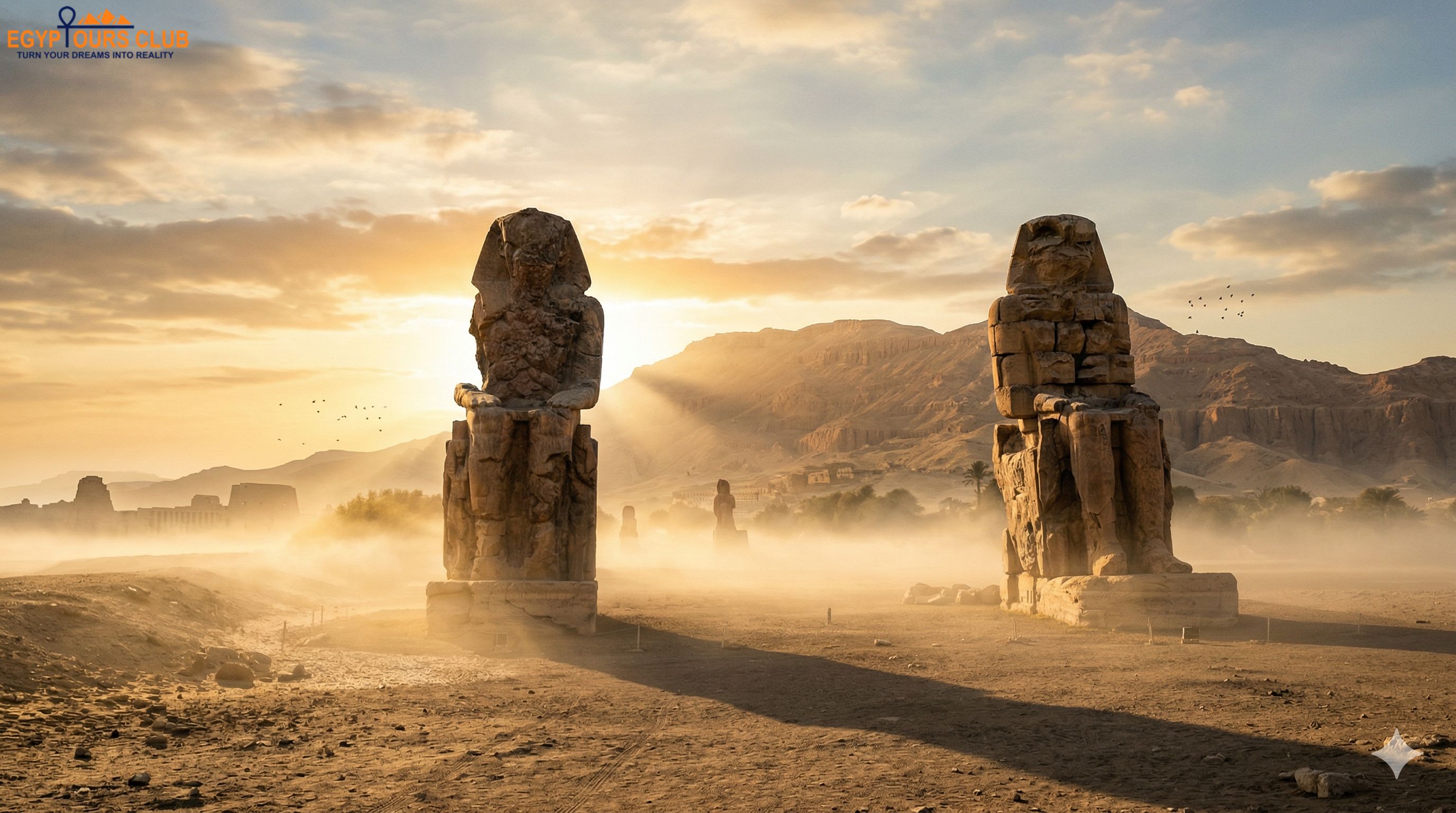
The Colossi of Memnon . banner

The Colossi of Memnon

Egypt Tours Club

Luxor West Bank · Amenhotep III · 18th Dynasty · Ancient Thebes

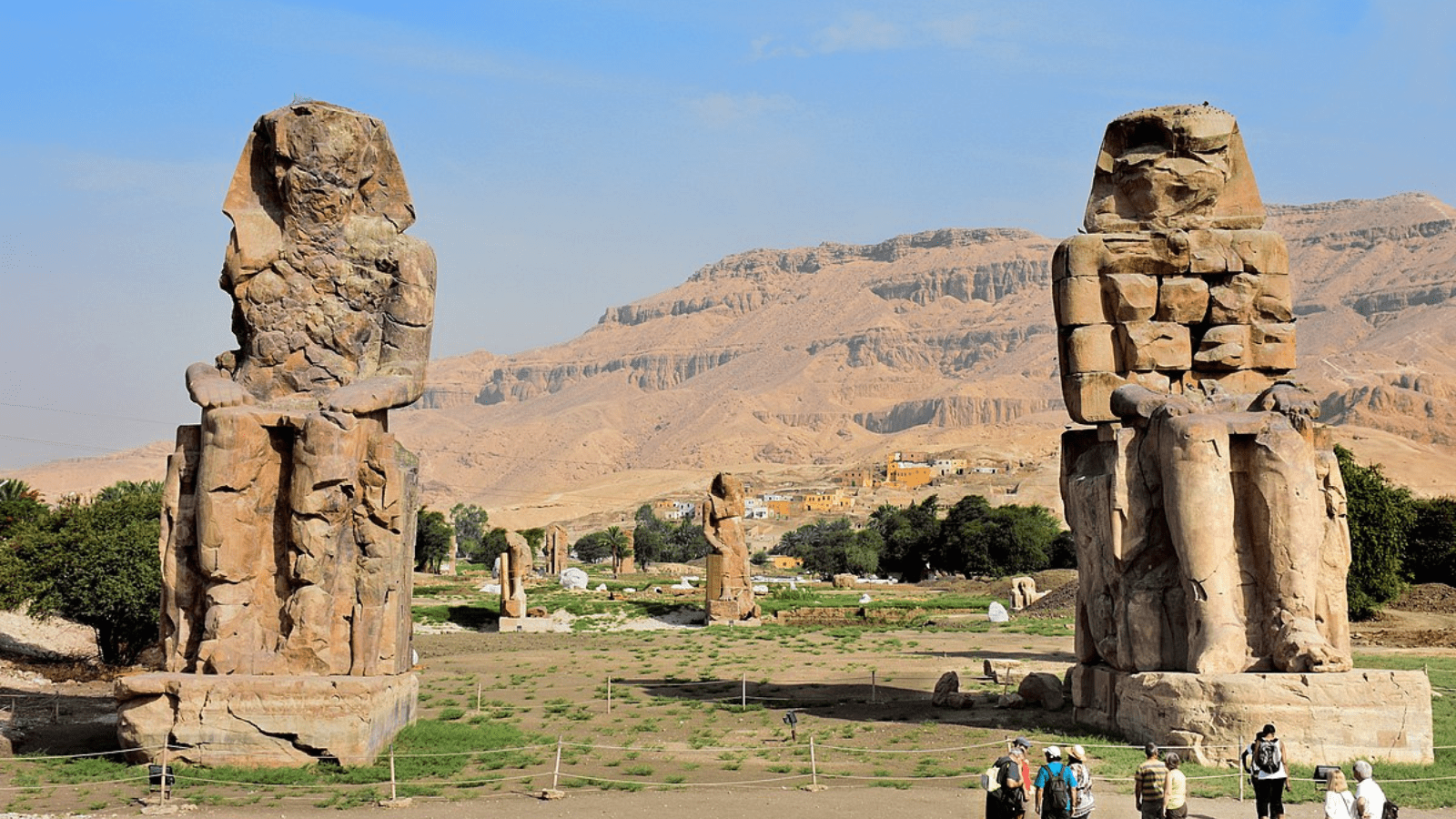
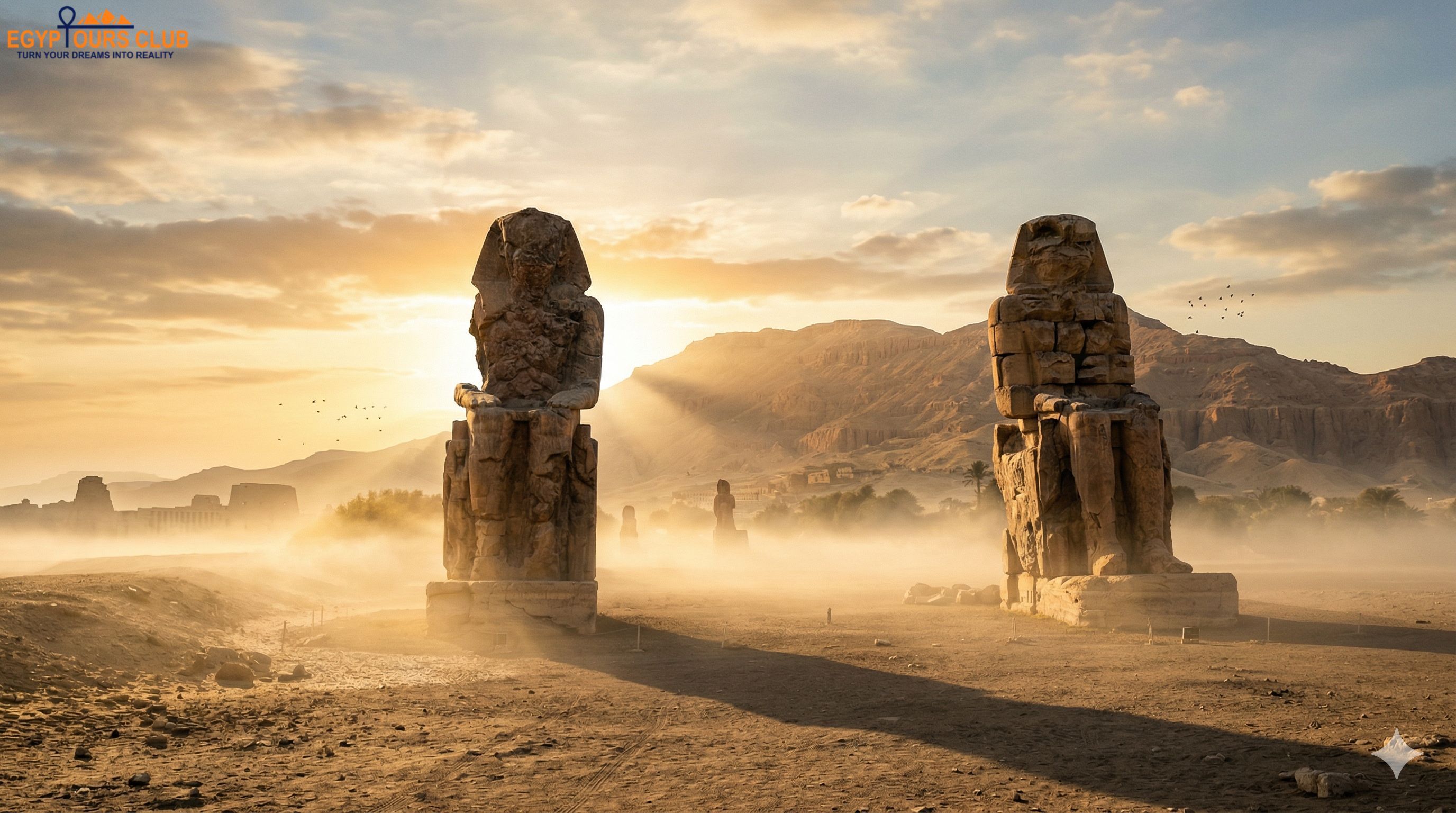
Stand before two enormous seated statues of Pharaoh Amenhotep III, each about 18 meters high, and discover the vanished mortuary temple they once guarded. This short West Bank stop connects New Kingdom royal power, Queen Tiye, the Temple of Millions of Years, the famous “singing” northern colossus, Greek and Roman tourism, earthquakes, archaeology and modern conservation.

The Colossi of Memnon: Monumental Guardians of Amenhotep III

Explore Alexandria’s modern center of knowledge through its sea-facing architecture, vast reading hall, museums, exhibitions, manuscripts and science spaces. Then connect the visit logically with the Graeco-Roman Museum, Kom El Shoqafa, Qaitbay Citadel and the Corniche.

Quick Travel Answer

Are the Colossi of Memnon worth visiting?

Yes. The visit is relatively short, but the historical importance is enormous. The statues are surviving entrance monuments of Amenhotep III’s vast mortuary temple and are easy to include in almost any Luxor West Bank itinerary.

The strongest visit explains what is no longer standing: the lost Temple of Millions of Years, royal sculpture, festival architecture and the later Greek and Roman story of the “singing” northern colossus.
Read the Statues in Context

Best things to see at the Colossi of Memnon

Look beyond the two giant figures to the lost temple, royal family imagery, throne symbolism, the singing-colossus legend and the archaeological landscape behind them.

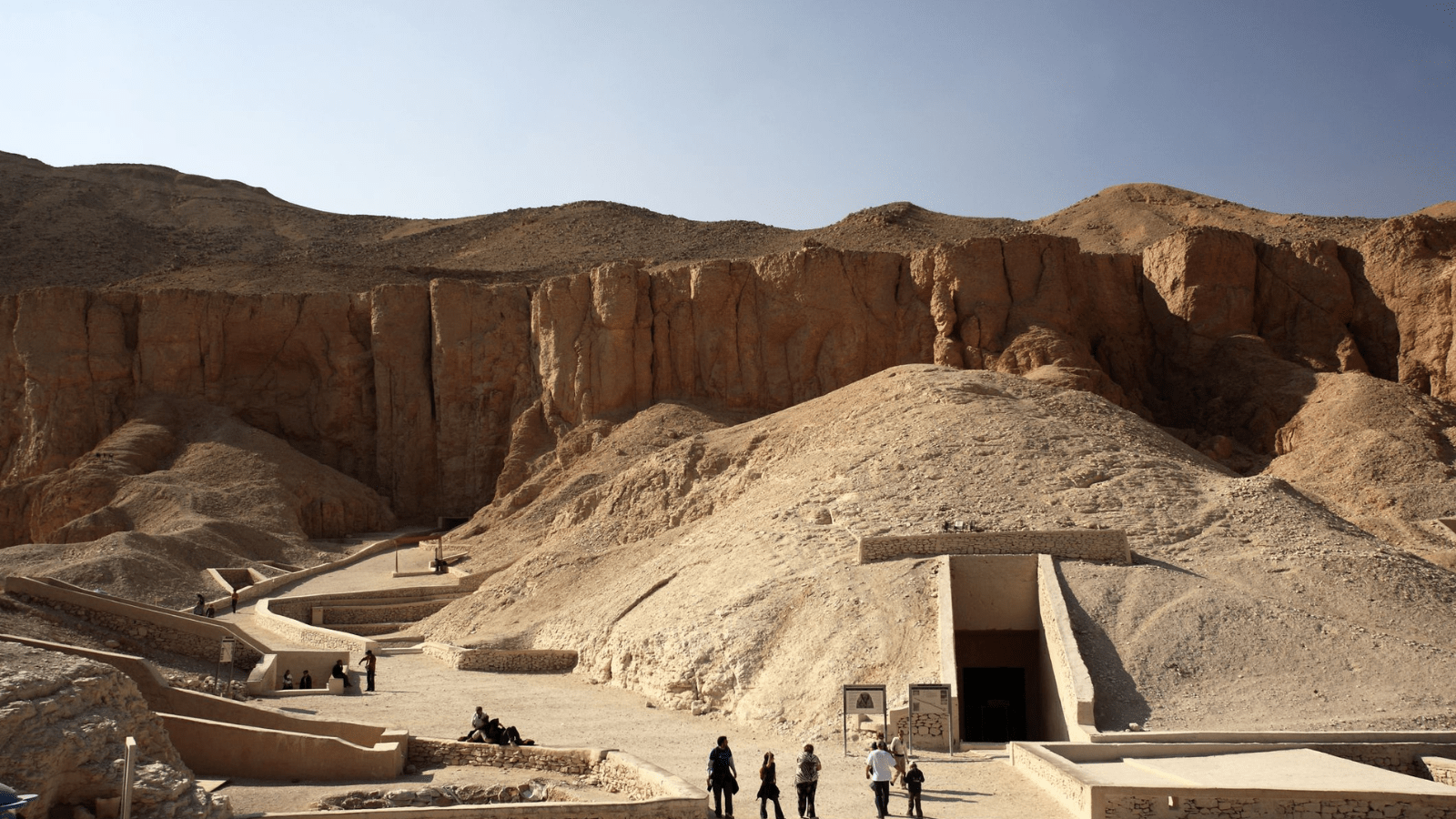
Valley of the Kings in Luxor, paired with a Colossi of Memnon West Bank routeROYAL TOMBS

Valley of the Kings Pairing

Royal tombsWest Bank route

The Colossi work naturally as a gateway before or after the Valley of the Kings, connecting Amenhotep III’s monumental landscape with Luxor’s royal necropolis.

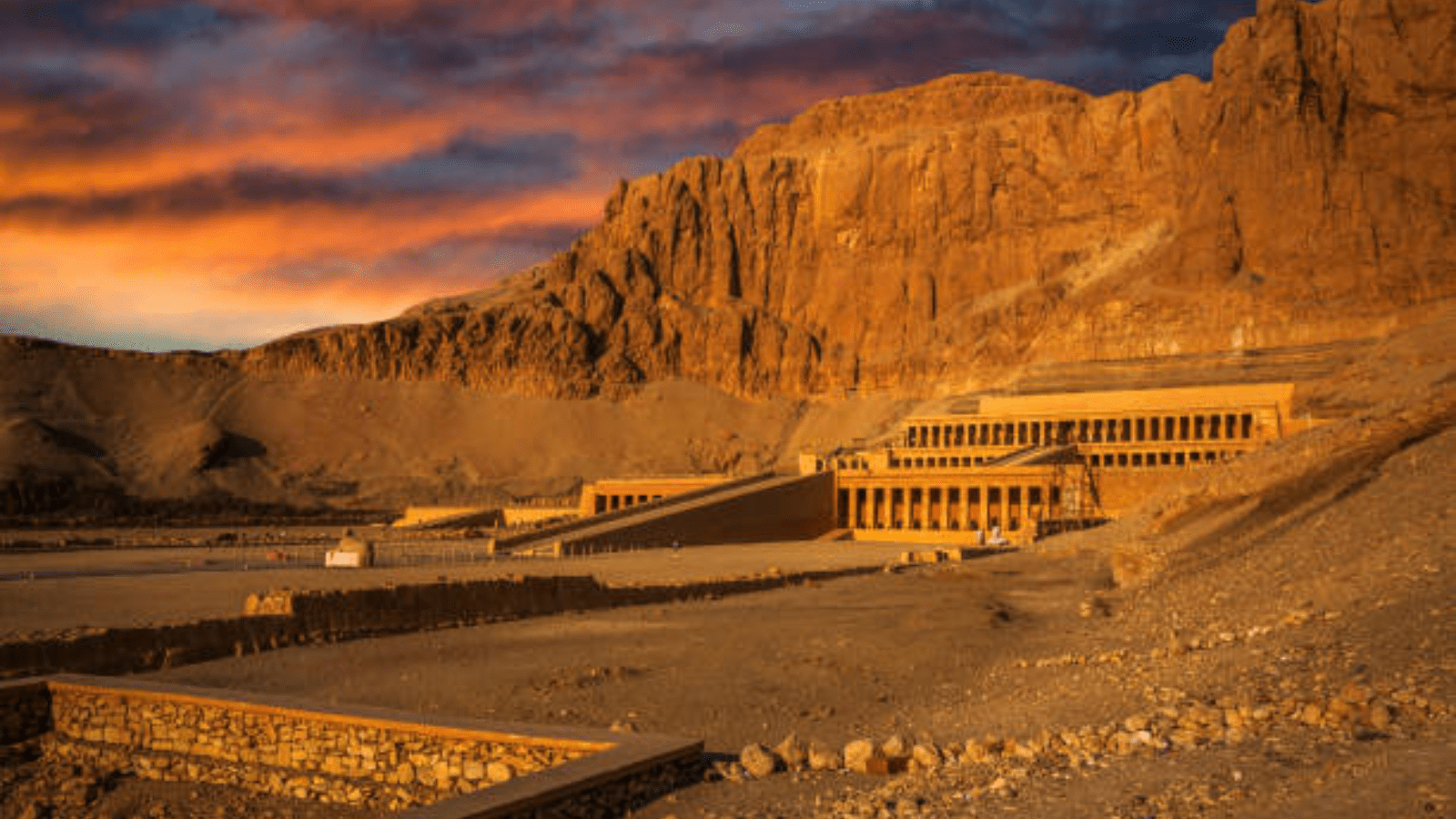
Temple of Queen Hatshepsut at Deir el-Bahari on Luxor West BankDEIR EL-BAHARI

Hatshepsut Temple Route

Temple terracesWest Bank

Hatshepsut Temple and the Colossi together create a strong West Bank monuments route, contrasting a preserved mortuary temple with Amenhotep III’s largely vanished complex.

Hot air balloons over Luxor West Bank at sunrise near the Colossi of Memnon routeSUNRISE ADD-ON

Hot Air Balloon Add-On

Aerial viewLuxor sunrise

A sunrise balloon flight can pair beautifully with a ground-level West Bank route, giving a wide aerial view before visiting the Colossi and nearby monuments.

Internal Link Map

From the Colossi to the exact Luxor page you need

Connect the statues with royal tombs, mortuary temples, the West Bank planning hub and bookable Luxor routes.

Choose by Time and Interest

The best Colossi of Memnon and West Bank routes

The statues work best as a short contextual stop inside a larger Luxor West Bank day.

20–40 minutes

Focused Colossi Stop

  • Both seated statues
  • Northern “singing” colossus
  • Royal family figures
  • Throne decoration
  • Temple ruins behind
Open the Visitor Guide
Classic half day

Kings + Hatshepsut + Memnon

  • Valley of the Kings
  • Hatshepsut Temple
  • Colossi of Memnon
  • Private Luxor pickup
View the Classic Tour
Deep West Bank

Kings + Artisans + Temples

  • Valley of the Kings
  • Deir el-Medina
  • Selected mortuary temples
  • Colossi context stop
Plan a Deeper West Bank Day
Temple comparison

Colossi + Medinet Habu

  • Amenhotep III’s lost temple
  • Ramesses III’s preserved temple
  • Compare royal mortuary architecture
  • Reliefs and monumental scale
Build the Temple Route
Full Luxor day

West Bank + Karnak

  • Early royal tombs
  • Hatshepsut Temple
  • Colossi of Memnon
  • Karnak on the East Bank
Compare Full-Day Routes
Flexible

Private Luxor Route

  • Hotel or cruise pickup
  • Heat-aware timing
  • Choose tomb depth
  • Add only realistic stops
Create a Tailor-Made Route

Planning note: the supplied guide recommends around 20–40 minutes for most visitors. Access around the active Amenhotep III temple conservation area can vary; follow current site signs and official restrictions.

Continue Across Ancient Thebes

What to visit before or after the Colossi

Use nearby sites to compare hidden royal burials, monumental mortuary temples and the lives of the people who built them.

Royal tombs

Valley of the Kings

Compare hidden royal burial chambers with the public mortuary temple landscape represented by the Colossi.

Open Valley of the Kings
Mortuary temple

Hatshepsut Temple

Compare the preserved cliffside terraces with Amenhotep III’s largely vanished floodplain temple.

Open Hatshepsut Temple
Artisan history

Deir el-Medina

Meet the community of skilled royal tomb builders who lived on the West Bank.

Open Deir el-Medina
Route hub

Luxor West Bank

Compare tomb valleys, temples and short contextual stops before building your day.

Open the West Bank Guide
City planning

Luxor Travel Guide

Balance East Bank temples, West Bank archaeology, heat and transport.

Plan Luxor
Private guiding

Luxor Day Tours

Choose the right guided route for your available hours and archaeology interests.

Compare Luxor Tours

From a Short Stop to a Complete Egypt Journey

Travel routes that naturally include the Colossi of Memnon

Use these pages when the statues belong inside a West Bank half day, a complete Luxor day or a wider Egypt itinerary.

Half day

Classic West Bank

Valley of the Kings, Hatshepsut Temple and the Colossi of Memnon.

Open the Half-Day Tour
Luxor hub

All Luxor Day Tours

Compare West Bank, East Bank and complete Luxor sightseeing routes.

Compare Luxor Day Tours
Destination

Luxor Travel Guide

Choose the right number of days and group monuments by bank.

Open the Luxor Guide
Multi-day

Egypt Tour Packages

Extend Luxor into Cairo, Aswan, a Nile cruise, Alexandria or the Red Sea.

Compare Egypt Packages
Custom

Tailor-Made Egypt

Adjust guide language, pickup, tomb depth, walking pace and additional destinations.

Build a Tailor-Made Trip
Colossi of Memnon at Luxor West Bank, monumental statues of Amenhotep III

Authoritative and Planning Sources

Confirm the Ancient Thebes context and plan the West Bank

The supplied article uses Egypt’s Ministry of Tourism and Antiquities for Amenhotep III temple history and conservation context. UNESCO records Ancient Thebes with its Necropolis as a World Heritage property. Egypt Tours Club’s live Colossi and West Bank pages connect that history to practical route planning.

Access arrangements, excavation boundaries, opening conditions and photography rules can change. Follow current official signage and local instructions.

Company and Operator

Who is behind Egypt Tours Club?

Keep the traveler-facing brand and the licensed operating company clearly distinguished.

Egypt Tours Club

Egypt Tours Club is the traveler-facing travel brand operated by Vagus Travel Co. It provides destination information, private tours, day trips, multi-day packages and tailor-made trip planning.

  • Traveler-facing Egypt travel brand
  • Private Cairo & Giza day tours and cultural planning
  • Multi-city Egypt packages and tailor-made itineraries

Useful Travel Answers

Colossi of Memnon questions before you go

Direct answers about Amenhotep III, the Memnon name, the singing statue, the lost mortuary temple, archaeology, UNESCO context and practical visit length.

Where are the Colossi of Memnon?

They stand on the West Bank of Luxor at the entrance to the ancient mortuary temple of Amenhotep III.

Who do the Colossi of Memnon represent?

They represent Pharaoh Amenhotep III of Egypt’s 18th Dynasty.

When were the Colossi built?

They date to Amenhotep III’s reign, approximately 1390–1352 BC.

How tall are the Colossi of Memnon?

Each statue is approximately 18 meters high.

Why are they called Memnon?

Greek and Roman visitors associated the northern statue with Memnon, a mythological Ethiopian hero whose mother was Eos, goddess of dawn.

Did the Colossi really sing?

Ancient writers reported that the damaged northern colossus made a sound around sunrise.

Why did the statue make a sound?

A likely natural explanation involves temperature changes and moisture interacting with cracks in the stone, although the exact mechanism cannot be proven with certainty.

Why did the singing stop?

Ancient accounts connect the end of the phenomenon with repairs carried out during the reign of Roman Emperor Septimius Severus.

What temple stood behind the Colossi?

They stood at the entrance to the mortuary temple, or Temple of Millions of Years, of Amenhotep III.

Why was Amenhotep III’s temple destroyed?

Earthquake damage was a major factor, while flooding, later stone reuse and centuries of deterioration also contributed.

Are archaeologists still working there?

Yes. Archaeological and conservation work continues to reconstruct the lost temple landscape.

What have archaeologists found?

Discoveries include royal sphinxes, Sekhmet statues, Horus statue fragments, decorated walls, column bases and processional architecture.

Who was Queen Tiye?

Tiye was Amenhotep III’s Great Royal Wife and one of the most prominent queens of the 18th Dynasty.

Are the Colossi part of a UNESCO World Heritage Site?

They belong to the wider Ancient Thebes with its Necropolis World Heritage landscape.

How long should I spend there?

Around 20–40 minutes is suitable for most visitors.

What is the best attraction to visit after the Colossi?

The Valley of the Kings is the most common next stop. Medinet Habu is especially useful for understanding a well-preserved royal mortuary temple.

Private Luxor West Bank Planning

Build the right Colossi of Memnon and West Bank route

Share your travel date, Luxor hotel or Nile cruise pickup, available hours, group size and tomb interests. Egypt Tours Club can place the Colossi naturally with the Valley of the Kings, Hatshepsut Temple, Deir el-Medina, Medinet Habu and other realistic West Bank stops.