

Wadi El Natrun Monasteries | Complete Visitor Guide | Egypt Tours Club
Wadi El Natrun Monasteries . banner

Wadi El Natrun Monasteries

Egypt Tours Club

Holy Family and Coptic heritage planning by a licensed local Egypt travel team

Holy Family Trail · Wadi El Natrun · Coptic Heritage

Wadi El Natrun Monasteries: Complete Visitor Guide to Egypt’s Sacred Desert Valley of Scetis

Explore Wadi El Natrun in Egypt’s Western Desert: the four surviving Coptic monasteries of Saint Bishoy, the Syrians, Saint Macarius and Al-Baramus, their Desert Fathers heritage, fortified architecture, frescoes and practical visitor planning between Cairo and Alexandria.

Quick Travel Answer

Why is Wadi El Natrun Monasteries important?

Wadi El Natrun Monasteries is one of the most important destinations on Egypt’s Holy Family route. Coptic tradition identifies Wadi El Natrun as the cradle of Christian monasticism and a major stop on Egypt’s Holy Family Trail, traditionally lasting about six months, and associates the Monastery of Saint Bishoy with the dwelling where the family stayed.

The monastery is also an active center of Coptic Orthodox monastic life. Visitors come for the ancient church, the defensive keep, later churches, icons, manuscripts and the wider spiritual landscape of Egypt’s Western Desert.

Explore Egypt’s Coptic Christian Heritage
Inside the Monastery

The essential sacred, architectural and monastic highlights

Read Wadi El Natrun as a living monastery and a layered heritage complex: Holy Family tradition, early Christian memory, fortified monastic architecture, later churches and scholarship all meet at Wadi El Natrun.

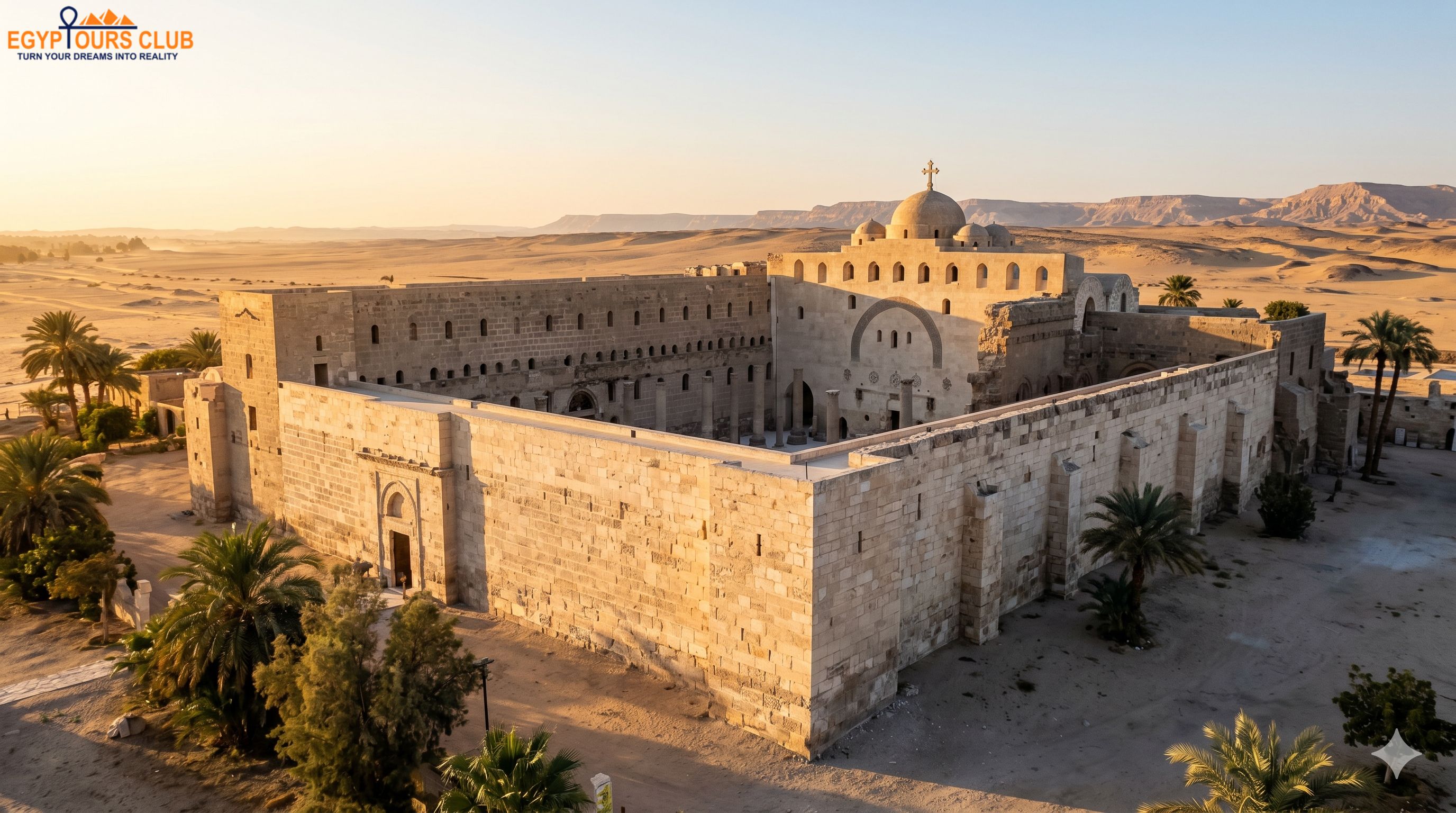
Aerial view of the Monastery of Saint Bishoy in Wadi El NatrunSaint Bishoy

Monastery of Saint Bishoy (Deir Anba Bishoy)

RelicsWell of the Martyrs

Founded in the late fourth century by Saint Bishoy, this is the valley’s most widely visited monastery. Key stops include the Church of Saint Bishoy, the saint’s relics, the Well of the Martyrs and the shrine of Pope Shenouda III.

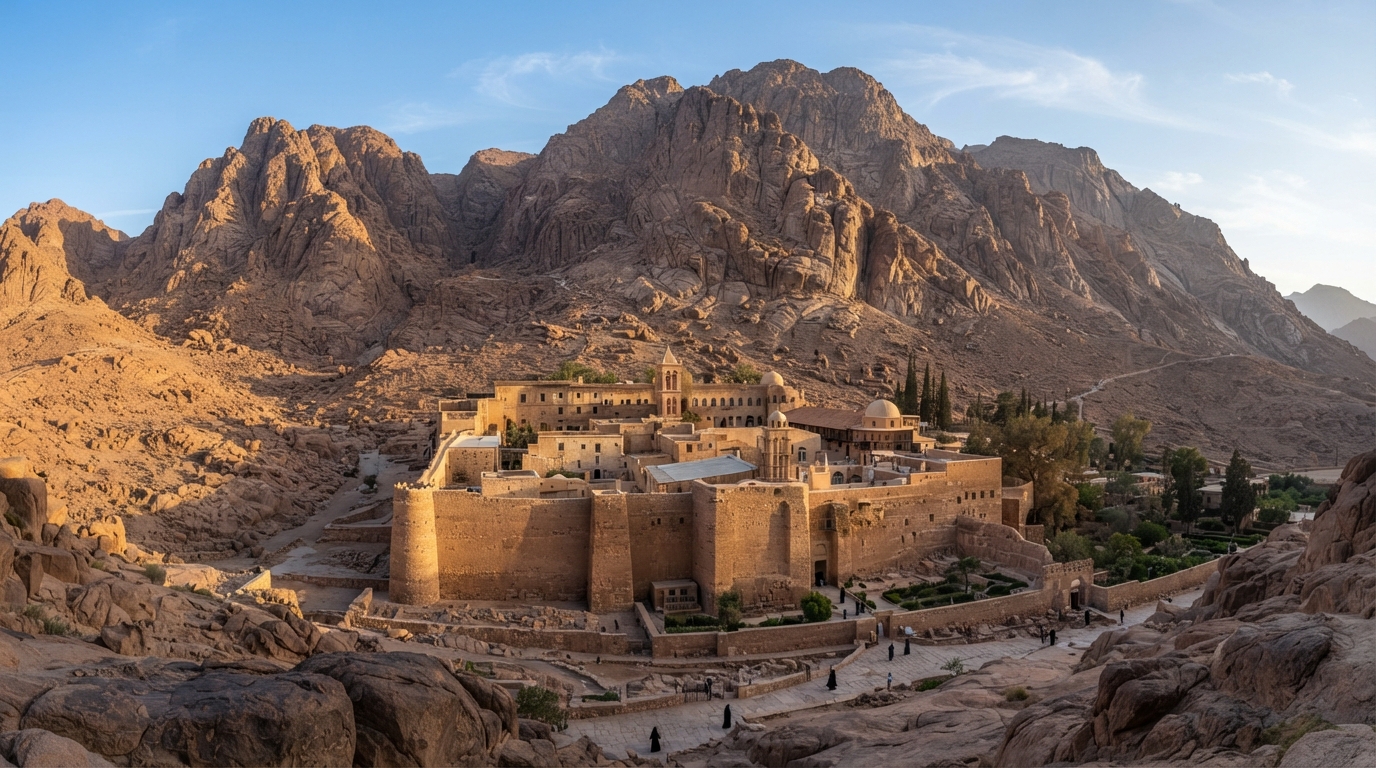
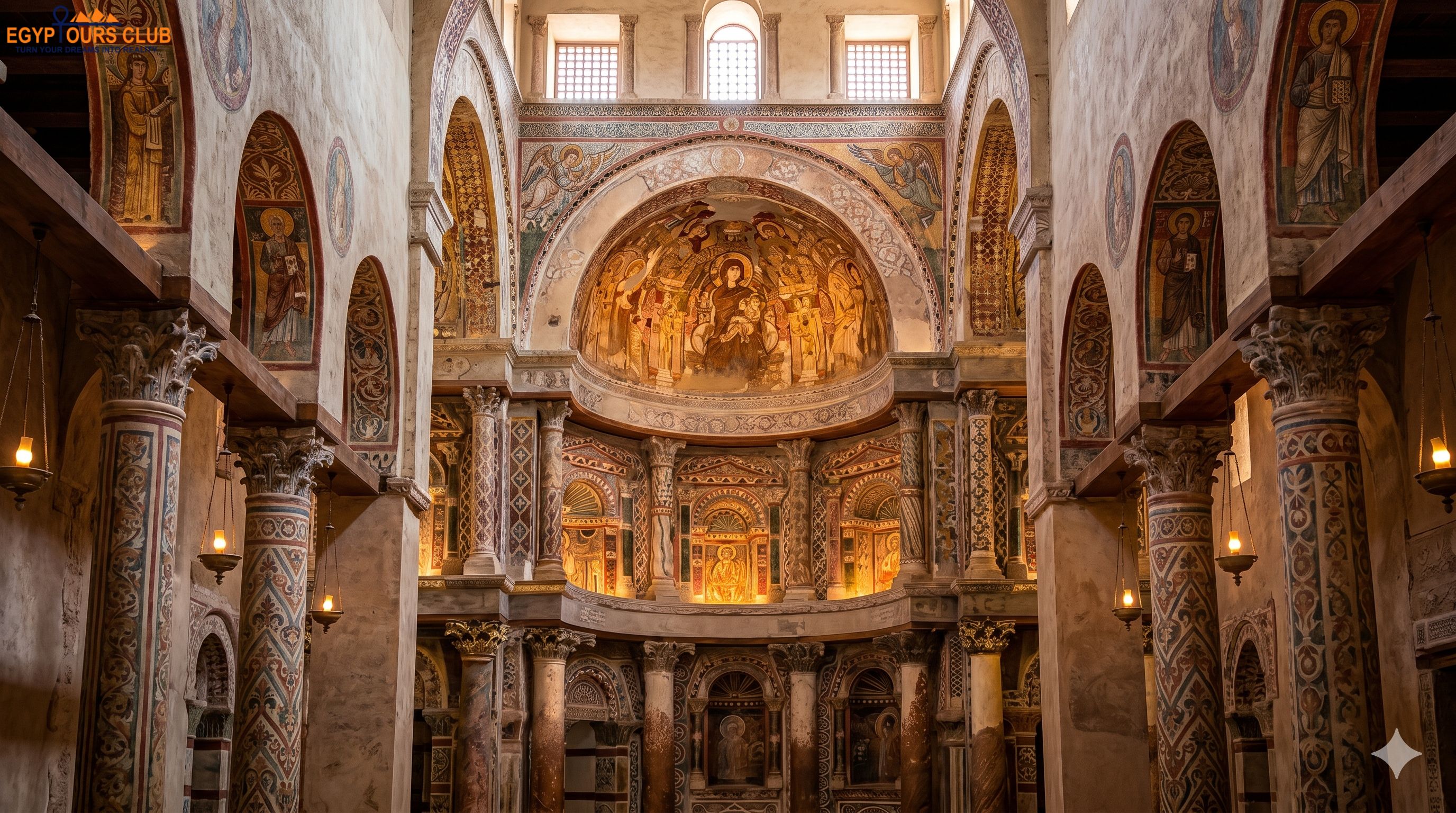
Coptic painted church interior illustrating the fresco tradition discussed for the Syrian MonasterySyriac Heritage

Syrian Monastery (Deir al-Surian)

FrescoesHistoric library

Deir al-Surian preserves one of Wadi El Natrun’s richest cross-cultural Christian legacies, with medieval frescoes, the Tree of Saint Ephrem and a historic manuscript tradition linking Coptic and Syriac scholarship.

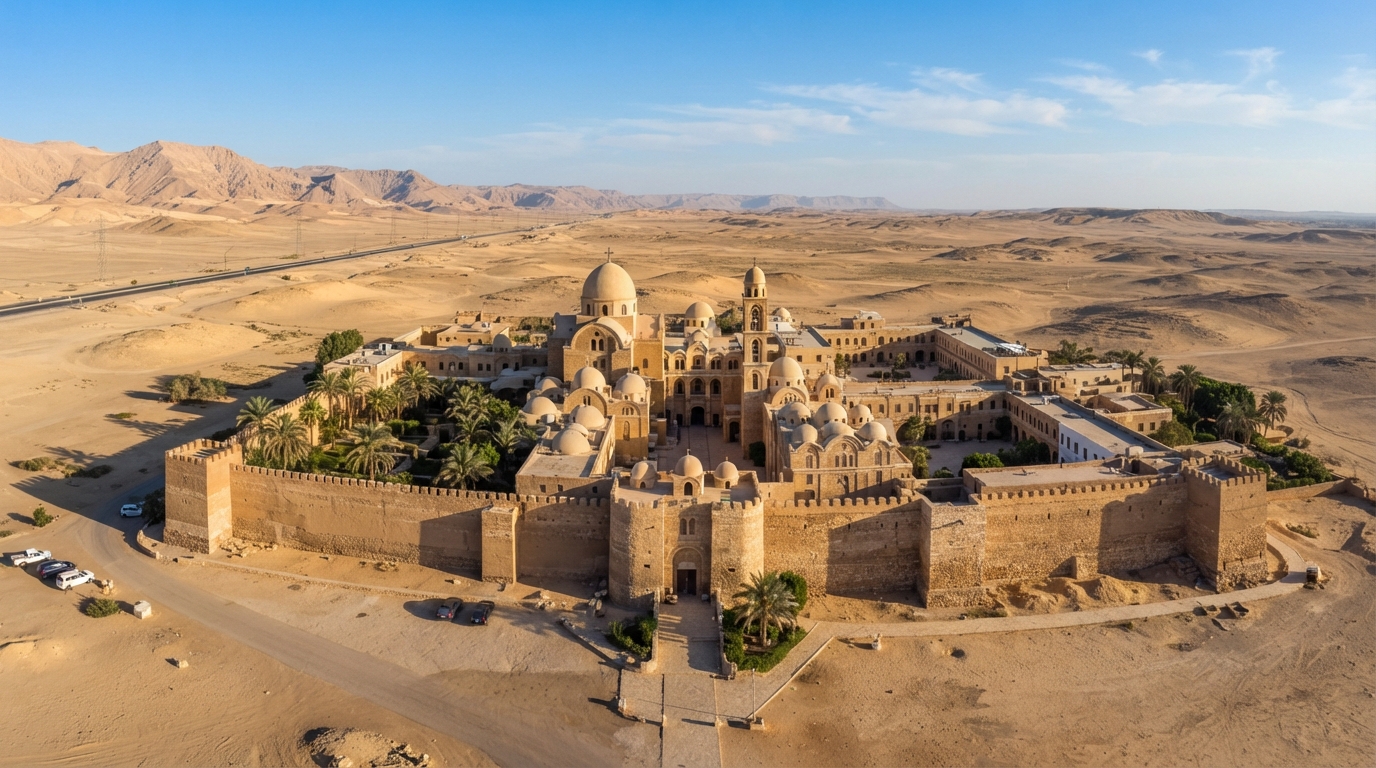
Aerial view of a fortified Coptic monastery in the Egyptian desertDesert Solitude

Paromeos Monastery (Deir al-Baramus)

Saint Moses the BlackSacred art

The northernmost and most secluded surviving monastery, Al-Baramus is associated with Saints Maximus and Domitius and with Saint Moses the Black, preserving a particularly quiet desert-monastic atmosphere.

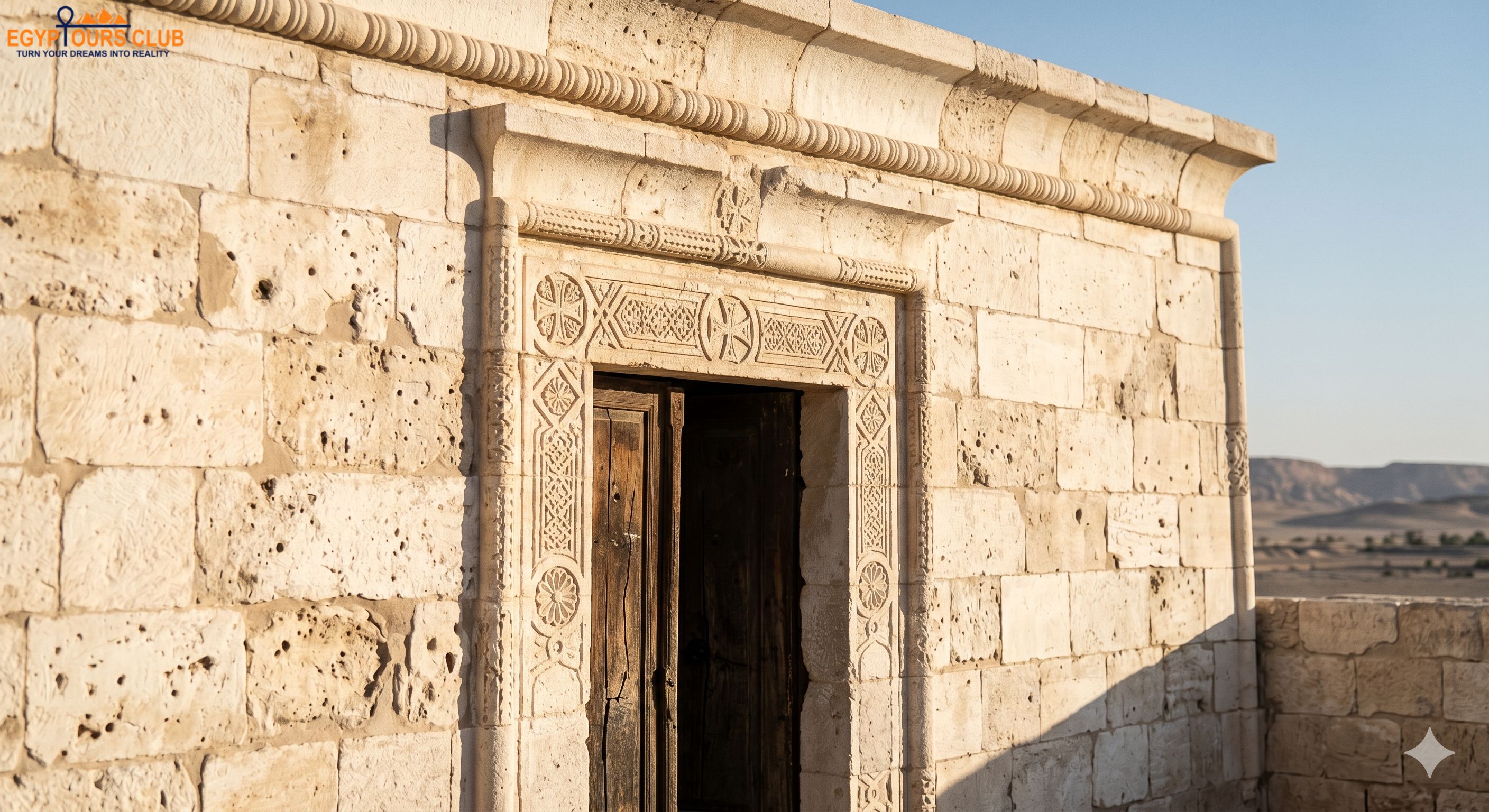
Carved Coptic stone doorway illustrating early Christian monastic architectureDesert Fortress

Fortified Monastery Architecture

KeepDrawbridge

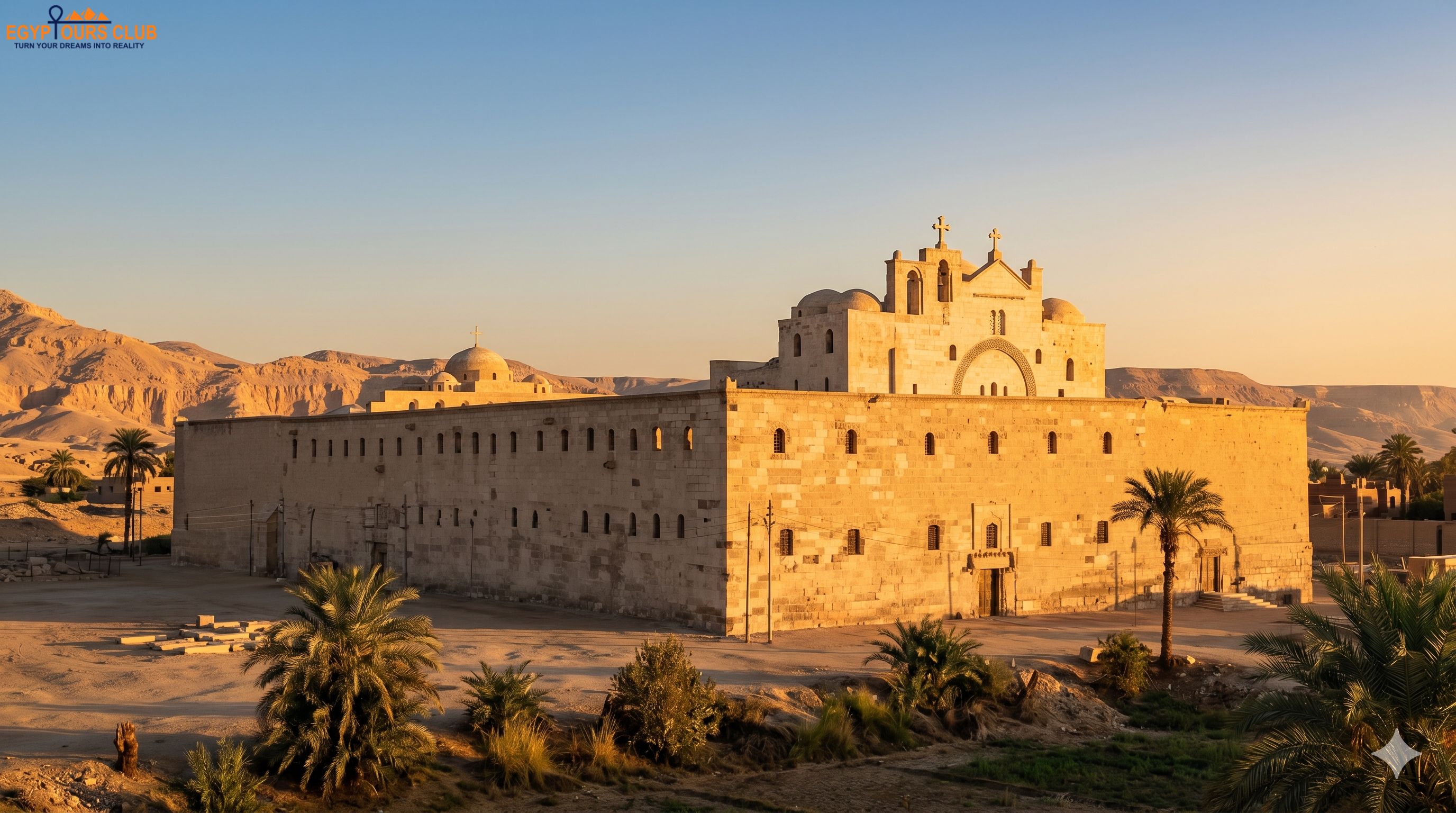
Wadi El Natrun monasteries evolved into fortified compounds with high enclosure walls, defensive keeps, elevated drawbridges, wells, bakeries, vaulted churches and protected storage spaces.

Historic fortified monastery in an Egyptian desert landscape illustrating monastic seclusionLiving Heritage

Desert Fathers and Living Monasticism

PrayerWork

Wadi El Natrun remains a living center of Coptic Orthodox monasticism, where the heritage of the Desert Fathers continues through prayer, scholarship, hospitality and active monastic communities.

Choose by Available Time

The strongest ways to include Wadi El Natrun in an Egypt itinerary

The monastery works best as part of a carefully routed Middle and Egypt’s Western Desert journey rather than a rushed out-and-back sightseeing stop.

2–3.5 hours

Focused Wadi El Natrun visit

  • Arrive at Al-Qusiya and Wadi El Natrun.
  • Begin with the Monastery of Saint Bishoy.
  • Continue to the defensive keep and later churches.
  • Leave time for quiet observation and respectful photography.
Arrange a private visit
3-day pilgrimage

Cairo, Minya and Beheira Holy Family route

  • Day 1: Coptic Cairo, Hanging Church and Abu Serga.
  • Day 2: Continue through Minya and the Mount El-Teir tradition.
  • Day 3: Wadi El Natrun at Al-Qusiya and Deir Drunka near Beheira.
Start with Coptic Cairo
Culture + archaeology

Minya and Beheira heritage journey

  • Combine Wadi El Natrun with Minya’s archaeological landscape.
  • Add Beni Hasan, Tell el-Amarna or Tuna el-Gebel where timing allows.
  • Keep sacred-site etiquette separate from archaeological-site planning.
  • Use private transfers for efficient regional routing.
Build the Egypt’s Western Desert route

Planning note: Visiting hours, liturgical access, photography rules and feast-day arrangements can change. Confirm current monastery guidance close to the visit, especially during major Coptic observances.

Aerial view of Saint Bishoy Monastery in Wadi El Natrun, part of the historic monastic landscape of Scetis

Trusted Heritage References

Continue with official information about Wadi El Natrun and the Holy Family route

Use the monastery’s own website and Egyptian official tourism and heritage sources to distinguish devotional tradition, current pilgrimage context and national Holy Family route information.

Religious traditions are presented as traditions of the Coptic Church. Current access and visitor arrangements should be confirmed before travel.

Helpful Travel Answers

Wadi El Natrun Monasteries questions before you go

Direct answers help travelers understand the monastery’s Holy Family tradition, location, visit length and sacred-site etiquette.

What makes Wadi El Natrun Monasteries unique?

It is one of the most important Holy Family sites in Coptic tradition. Wadi El Natrun is associated with the family’s longest stay in Egypt, and the Monastery of Saint Bishoy stands at the spiritual center of the monastery.

Where is Wadi El Natrun Monasteries?

The monastery is near Al-Qusiya in Beheira Governorate, Egypt’s Western Desert, roughly 48 km north of Beheira city and about 325 km south of Cairo.

How long should I spend at Wadi El Natrun?

Allow roughly two to three and a half hours for a comfortable visit covering the ancient church, fortress, later churches and the atmosphere of the active monastery.

Can non-Christian travelers visit?

The monastery is visited by travelers interested in Egyptian history, Coptic heritage and sacred architecture. All visitors should follow current access rules and behave respectfully in active worship spaces.

What should I wear?

Choose modest clothing that covers shoulders and knees. Quiet behavior and respectful photography are important because Wadi El Natrun is an active monastery and pilgrimage site.

Can I combine Wadi El Natrun with Minya and Beheira?

Yes. A regional route can connect Minya heritage sites with Wadi El Natrun near Al-Qusiya and Deir Drunka near Beheira, while a longer pilgrimage can begin with Coptic Cairo.

Is the Holy Family stay historically documented?

The Gospel of Matthew records the Flight into Egypt but does not list the Egyptian stops. The identification of Wadi El Natrun and the length of the stay belong to longstanding Coptic tradition preserved in church sources.

When is the best time to visit?

October through April generally offers milder Egypt’s Western Desert weather. Religious feasts and liturgical seasons can affect access and crowd levels, so confirm arrangements before travel.

Private Holy Family Planning

Build a respectful Cairo–Minya–Beheira heritage route

Share your travel dates, hotel locations, group size, pilgrimage interests and available days. Egypt Tours Club can help organize a private route around Coptic heritage and Egypt’s Western Desert travel time.