The Ancient Egyptian Zodiac is best understood in two layers: the popular modern list of Egyptian Zodiac signs linked with gods and birth dates, and the real ancient celestial tradition seen in temples such as Dendera. This guide explains both clearly, without turning myth into false history.
Quick Answer
The Ancient Egyptian Zodiac usually refers to modern deity-based signs such as Amun-Ra, Isis, Horus, Anubis, Bastet and Sekhmet. The Dendera Zodiac, however, is a real ancient celestial relief connected with Egyptian astronomy, temple symbolism and sacred sky imagery.
What Is the Ancient Egyptian Zodiac?
The Ancient Egyptian Zodiac is a popular term used for a deity-based astrology system where each sign is linked to an Egyptian god or goddess. Instead of Aries, Taurus or Scorpio, modern Egyptian astrology signs are usually named after divine figures such as Amun-Ra, Isis, Horus, Anubis, Bastet and Sekhmet.
Travelers often ask for Egyptian Zodiac signs, Egyptian horoscope signs, Egyptian astrology meanings or “what is my Egyptian Zodiac sign?” The answer is useful and fun, but it needs context: the personality sign system is mostly a modern symbolic interpretation, while ancient Egypt’s true strength was its astronomy, calendars, temple alignments and sacred sky imagery.
That is why this guide connects both sides: the modern Egyptian Zodiac signs and meanings people enjoy, and the historical world behind them, including the Dendera Zodiac at the Temple of Hathor, Egyptian gods, Nile seasons and temple symbolism.
Accuracy Note
The Dendera Zodiac is a real ancient celestial relief. The 12 Egyptian Zodiac signs with fixed personality traits and birth dates are modern interpretations. Treat them as symbolic mythology, not as a single proven ancient Egyptian horoscope book.
The 12 Egyptian Zodiac Signs and Their Meanings
The most common version of the Egyptian Zodiac includes 12 deity-based signs. Each sign gives readers an easy doorway into Egyptian mythology, but the deeper value is how these gods connect with temples, rituals and travel experiences across Egypt.
The Leader
Confident, visionary and persuasive. Amun-Ra is connected with divine kingship, creation and the sacred power of the sun, especially at Karnak Temple.
The Nurturer
Calm, protective and emotionally grounded. Mut symbolism reflects care, balance, motherhood and the quiet strength behind sacred order.
The Earth Soul
Loyal, sensitive and connected with land, nature and practical stability. Geb gives the Egyptian Zodiac a grounded, earth-centered meaning.
The Resilient One
Passionate and transformative. Osiris is linked with renewal, resurrection and the afterlife, making this sign one of the most powerful mythic symbols.
The Protector
Compassionate, intuitive and loyal. Isis represents magic, motherhood, healing and devotion, best experienced through Philae Temple in Aswan.
The Thinker
Analytical, curious and communicative. Thoth is associated with writing, wisdom, measurement and the intellectual side of Egyptian sacred life.
The Just Warrior
Brave, focused and fair-minded. Horus connects the sky, kingship and protection, making this sign ideal for people drawn to justice and direction.
The Inner Guide
Introspective and spiritual. Anubis is linked with mummification, tombs and the transition between life and eternity.
The Challenger
Bold, restless and disruptive. Seth represents storms, conflict and reinvention, which makes this sign intense but dynamic.
The Charmer
Creative, magnetic and protective. Bastet connects beauty, music, home, feminine power and feline grace.
The Powerful One
Independent, intense and courageous. Sekhmet represents solar fire, warlike strength and healing power.
The Giver
Peaceful, generous and community-minded. Hapi, the Nile flood deity, symbolizes fertility, nourishment and the rhythm of life in Egypt.
Egyptian Zodiac Signs by Birth Date
Many readers want to find their Egyptian Zodiac sign by birthday. The table below uses the most common modern date ranges, but dates can vary between sources. Use it as a symbolic guide, not as a strict ancient calendar.
| Egyptian Zodiac Sign | Common modern birth dates | Main traits | Best Egypt travel connection |
|---|---|---|---|
| Hapi / Nile | Jan 1–7 · Jun 19–28 · Sep 1–7 · Nov 18–26 | Generous, peaceful, nurturing, adaptable. | Nile landscapes, river symbolism and Aswan Day Tours. |
| Amun-Ra | Jan 8–21 · Feb 1–11 | Leader, confident, optimistic, inspiring. | Karnak Temple Tours and Theban theology. |
| Mut | Jan 22–31 · Sep 8–22 | Protective, wise, calm, loyal. | Karnak’s sacred landscape and goddess symbolism. |
| Geb | Feb 12–29 · Aug 20–31 | Grounded, emotional, practical, nature-connected. | Nile Valley scenery and rural Egypt experiences. |
| Osiris | Mar 1–10 · Nov 27–Dec 18 | Resilient, passionate, transformative, intense. | Afterlife art and Valley of the Kings Tours. |
| Isis | Mar 11–31 · Oct 18–29 · Dec 19–31 | Compassionate, intuitive, healing, protective. | Philae Temple Tours and Aswan mythology. |
| Thoth | Apr 1–19 · Nov 8–17 | Intelligent, analytical, curious, expressive. | Temple inscriptions, sacred writing and museum collections. |
| Horus | Apr 20–May 7 · Aug 12–19 | Brave, just, ambitious, protective. | Edfu Temple, royal scenes and Upper Egypt routes. |
| Anubis | May 8–27 · Jun 29–Jul 13 | Deep, thoughtful, spiritual, truth-seeking. | Tombs, mummification scenes and Luxor necropolis tours. |
| Seth | May 28–Jun 18 · Sep 28–Oct 2 | Bold, change-loving, energetic, disruptive. | Mythology stories about conflict, kingship and order. |
| Bastet | Jul 14–28 · Sep 23–27 · Oct 3–17 | Creative, charming, graceful, protective. | Egyptian Museum objects and feline goddess traditions during Cairo Day Tours. |
| Sekhmet | Jul 29–Aug 11 · Oct 30–Nov 7 | Powerful, independent, passionate, brave. | Sekhmet statues, Karnak collections and Luxor temple art. |
How to Use This Table
If your goal is to know your Egyptian Zodiac sign, compare your birthday with the table above. If your goal is ancient history, focus more on the Dendera Zodiac, temple ceilings, decans, Sirius, calendars and Egyptian astronomy.
The Dendera Zodiac: Egypt’s Most Famous Celestial Relief
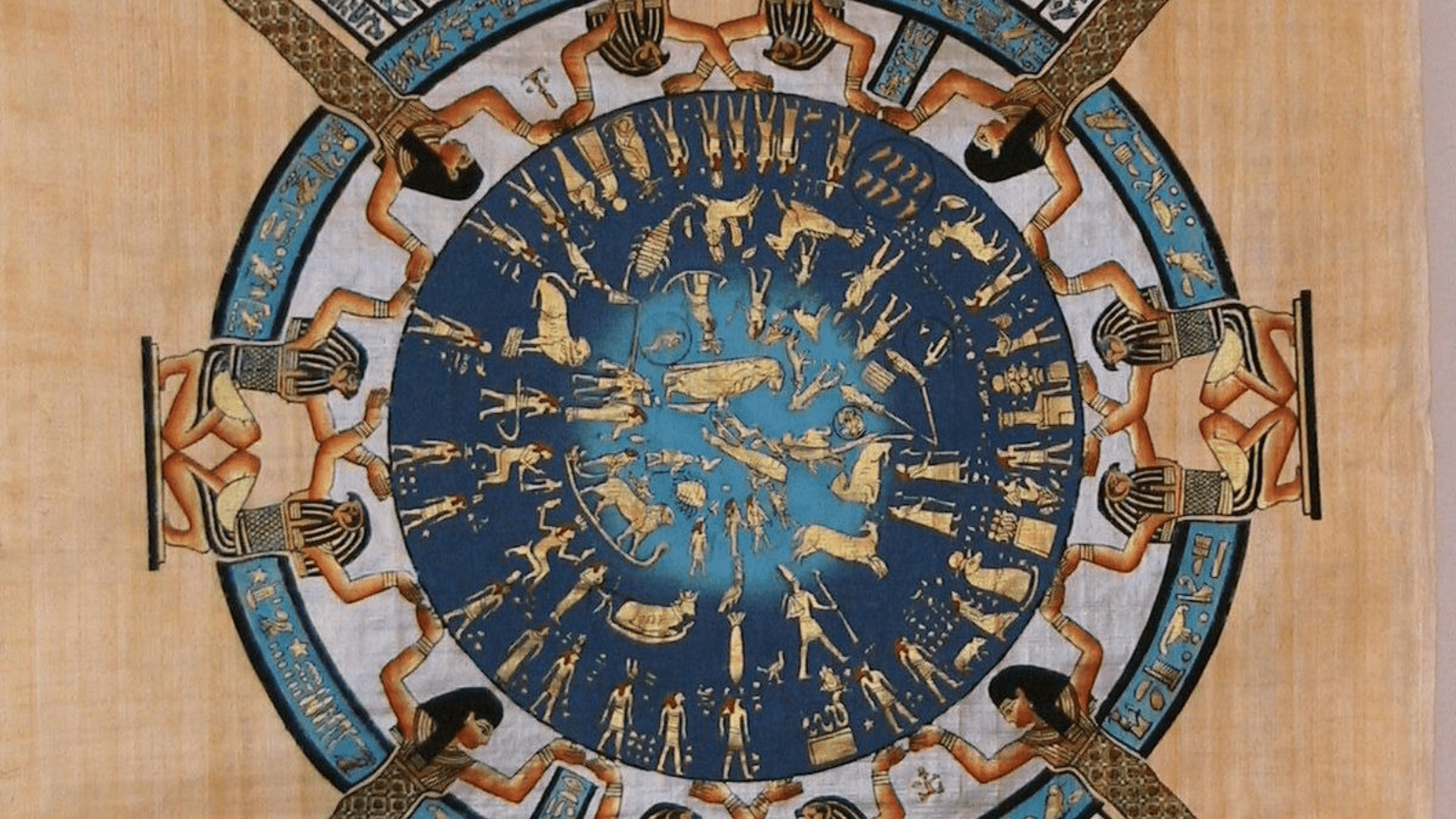
The strongest historical connection between ancient Egypt and zodiac imagery is the Dendera Zodiac, a circular celestial relief originally from the ceiling of the Temple of Hathor at Dendera. Unlike modern personality-sign lists, the Dendera Zodiac is a real archaeological object connected with Egyptian celestial art.
Dendera matters because it shows how sky imagery, sacred architecture and temple ritual worked together. The temple was not just a building; it was designed as a symbolic universe where gods, stars, time and ritual order were carved into stone.
For travelers interested in Egyptian astronomy, ancient Egyptian astrology, Hathor worship and celestial ceilings, Dendera is one of the most important stops in Upper Egypt. Many visitors include it with Luxor Day Tours, Karnak Temple, Abydos, the Valley of the Kings or a tailored mythology itinerary.
Important Travel Note
The original Dendera Zodiac relief is no longer on the temple ceiling, but Dendera Temple remains one of Egypt’s most valuable places for understanding celestial symbolism, goddess worship and sacred architecture.
Egyptian Astronomy: More Than a Horoscope
Ancient Egyptian astronomy was practical and sacred at the same time. The sky helped measure time, organize calendars, track seasonal patterns, support agricultural planning and structure religious festivals. The rising of Sirius was especially important because it was connected with the Nile flood and the rhythm of the Egyptian year.
This is why the Ancient Egyptian Zodiac should not be reduced to a personality quiz. The real historical story is bigger: Egyptians connected gods, stars, Nile cycles, royal ideology, afterlife beliefs and temple design into one sacred worldview.
Agriculture
Celestial cycles helped organize flooding, planting, harvest timing and the rhythm of life along the Nile.
Temple Design
Temples used cosmic symbolism, sacred alignment and celestial ceilings to express divine order.
Royal Power
Kingship was connected with gods, stars, solar cycles and the eternal order known as maat.
Ritual Timing
Festivals, offerings and ceremonies were linked with calendars, seasons and sacred time.
Mythology
Gods and celestial bodies were connected through temple inscriptions, sacred stories and symbolic scenes.
Afterlife
Stars, sky journeys and rebirth were central to Egyptian ideas about eternity and royal transformation.
Egyptian Zodiac vs Western Zodiac
The Egyptian Zodiac and Western Zodiac both connect birth timing with symbolic identity, but they belong to different cultural frames. The Western system uses signs such as Aries, Taurus and Leo, while the Egyptian version searched online today is usually organized around gods and goddesses.
| Feature | Egyptian Zodiac | Western Zodiac |
|---|---|---|
| Main symbols | Egyptian gods and goddesses such as Amun-Ra, Isis, Horus and Anubis. | Signs such as Aries, Taurus, Gemini, Leo and Scorpio. |
| Core meaning | Modern symbolic personality meanings connected with Egyptian mythology. | Astrological personality, planets, houses and zodiac signs. |
| Historical caution | The popular sign-date system is modern; Dendera is the stronger historical monument. | Developed through Babylonian, Greek, Roman and later astrological traditions. |
| Travel connection | Dendera, Karnak, Philae, Edfu, Luxor temples and the Valley of the Kings. | Less directly tied to one physical travel route in Egypt. |
How to Choose the Right Egyptian Zodiac and Temple Route
The best route depends on what you want from the trip. Some travelers want the Dendera Zodiac only, while others want a fuller route through Egyptian gods, celestial ceilings, Nile temples and afterlife symbolism.
| Traveler interest | Best route | Why it fits |
|---|---|---|
| Dendera Zodiac focus | Dendera Temple Zodiac Guide | Best for Hathor, zodiac ceiling history, celestial reliefs and sacred temple art. |
| Gods and temple symbolism | Luxor Day Tours | Best for Karnak, Luxor Temple, tomb ceilings, solar journeys and Theban mythology. |
| Isis and Nile symbolism | Aswan Day Tours | Best for Philae Temple, Isis worship, Nile island scenery and late Egyptian temple traditions. |
| Full ancient Egypt route | Egypt Classic Tour Packages | Best for combining Cairo, Luxor, Aswan, Nile temples, royal tombs and major ancient sites. |
| Slow cultural journey | Nile Cruise Packages | Best for connecting Luxor, Edfu, Kom Ombo and Aswan through river landscapes and temple stops. |
| Special mythology focus | Tailor-Made Egypt Tours | Best for a custom route around Dendera, Karnak, Philae, gods, symbols and sacred astronomy. |
Where to Explore the Egyptian Zodiac in Egypt
If you want to experience the world behind the Ancient Egyptian Zodiac, the best route is not one monument only. It is a journey through temple ceilings, gods, Nile landscapes, afterlife scenes and celestial symbols across Upper Egypt.
Dendera Temple
The strongest site for zodiac imagery, Hathor worship, celestial ceilings and sacred astronomy.
Read Dendera Temple Guide →Karnak Temple
Essential for Amun-Ra, solar theology, ritual processions, Sekhmet statues and sacred architecture.
Explore Karnak Temple Tours →Philae Temple
Best for Isis, sacred island atmosphere, Nile symbolism and late Egyptian temple art.
Explore Philae Temple Tours →Valley of the Kings
Powerful for afterlife stars, solar journeys, tomb ceilings and cosmic rebirth imagery.
Explore Valley of the Kings Tours →For the smoothest route, combine Dendera with a guided Luxor-based itinerary. Travelers who love mythology can also connect it with Aswan and Philae through Aswan Day Tours or create a wider route with Tailor-Made Egypt Tours.
Why the Egyptian Zodiac Still Matters Today
The Egyptian Zodiac remains fascinating because it gives modern readers a personal entry point into ancient Egyptian myth. A visitor may begin by asking, “What is my Egyptian Zodiac sign?” but the better journey goes deeper into gods, temples, calendars, stars and the sacred rhythm of the Nile.
For travelers, this topic is a strong bridge between curiosity and experience. You can read about Bastet, Horus, Isis or Anubis online, but seeing their symbols carved into temple walls or painted inside tombs gives the subject a completely different meaning.
Key Takeaway
The Egyptian Zodiac is not only a personality topic. Used carefully, it becomes a gateway into Egyptian mythology, Dendera’s celestial ceiling, temple symbolism and the ancient Egyptian relationship with the sky.
Explore More on Egypt Tours Club
Continue your journey through Egyptian gods, zodiac imagery, sacred symbols and temple routes.
-min.png)