Coptic Cairo and Babylon Fortress
This compact zone includes historic churches, the Coptic Museum, Ben Ezra Synagogue and surviving Roman fortress remains. It is the easiest heritage cluster to explore mostly on foot.

Plan Old Cairo by historic zone, not by attraction count. Start with Coptic Cairo and Al-Fustat, then use transport if you want to continue to Ibn Tulun, the Citadel, Al-Muizz Street or Khan El Khalili.
For a first visit to Old Cairo, spend three to four hours around Coptic Cairo and Al-Fustat. Prioritize the Hanging Church, Abu Serga, the Coptic Museum, Babylon Fortress remains and Ben Ezra Synagogue when access allows. For a full heritage day, continue by vehicle to a separate Islamic Cairo cluster, then finish around Al-Muizz Street and Khan El Khalili.
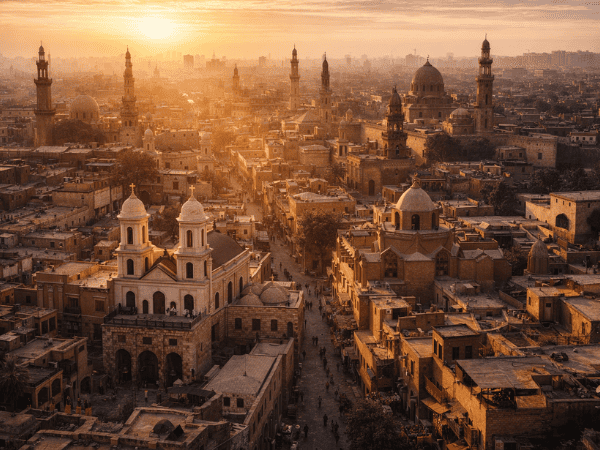
Travel guides often use “Old Cairo” too loosely. Coptic Cairo and Al-Fustat form one historic area, while the medieval core around Al-Muizz Street and Khan El Khalili belongs to Historic Islamic Cairo farther north. The Citadel and Ibn Tulun Mosque create another useful sightseeing cluster.
This compact zone includes historic churches, the Coptic Museum, Ben Ezra Synagogue and surviving Roman fortress remains. It is the easiest heritage cluster to explore mostly on foot.
Fustat was founded after the Arab conquest and became Egypt’s first Islamic capital. It belongs to the wider Old Cairo district and adds an important early Islamic layer to the area.
Al-Muizz Street, Khan El Khalili and many major medieval monuments belong to the later historic city. They pair well with Coptic Cairo, but they should not be treated as one continuous walking district.
The strongest route follows history and geography. Start with the compact Coptic area, then choose one Islamic Cairo extension if you have enough time.
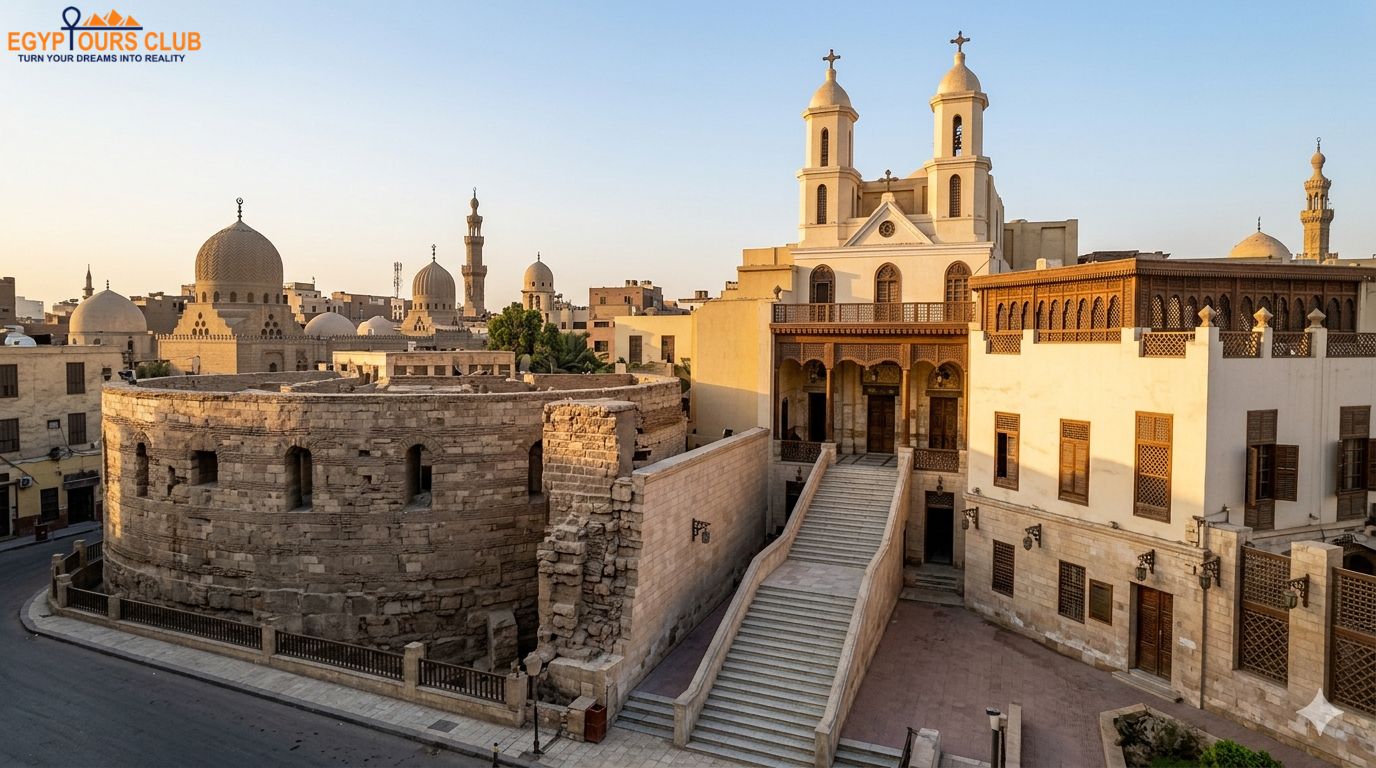
The Hanging Church is one of the best-known landmarks in Coptic Cairo. Its elevated position above parts of the Roman fortress helps explain the church’s name and its relationship with the older defensive structures beneath the district.
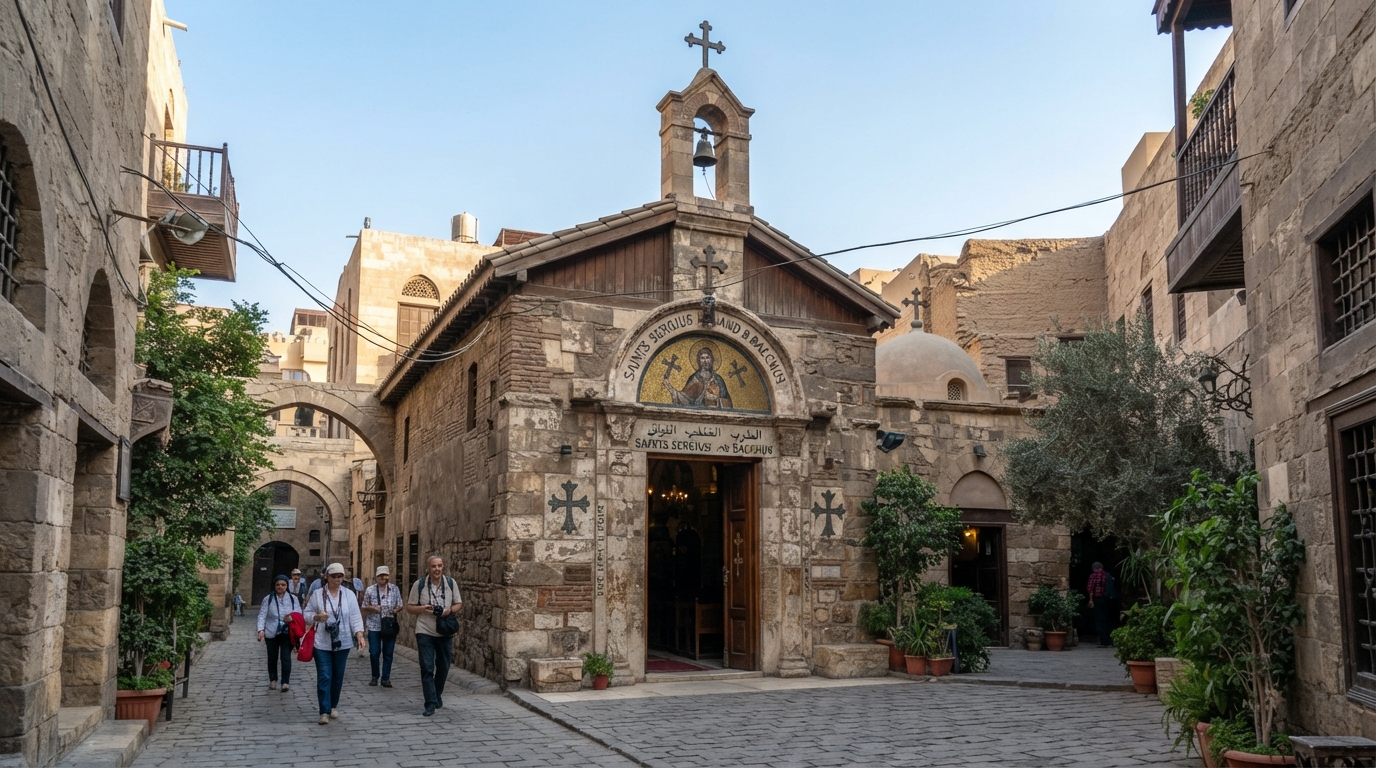
Abu Serga is one of the most important churches in the Coptic Cairo cluster. It is closely associated with the Coptic tradition of the Holy Family’s refuge in Egypt. Treat that tradition with respect while keeping devotional belief separate from what archaeology can prove.
The Coptic Museum adds object-based context to the churches nearby, while the surviving fortress towers and masonry reveal the Roman layer under the district. Seeing both makes the area read as one historical landscape rather than a list of separate monuments.
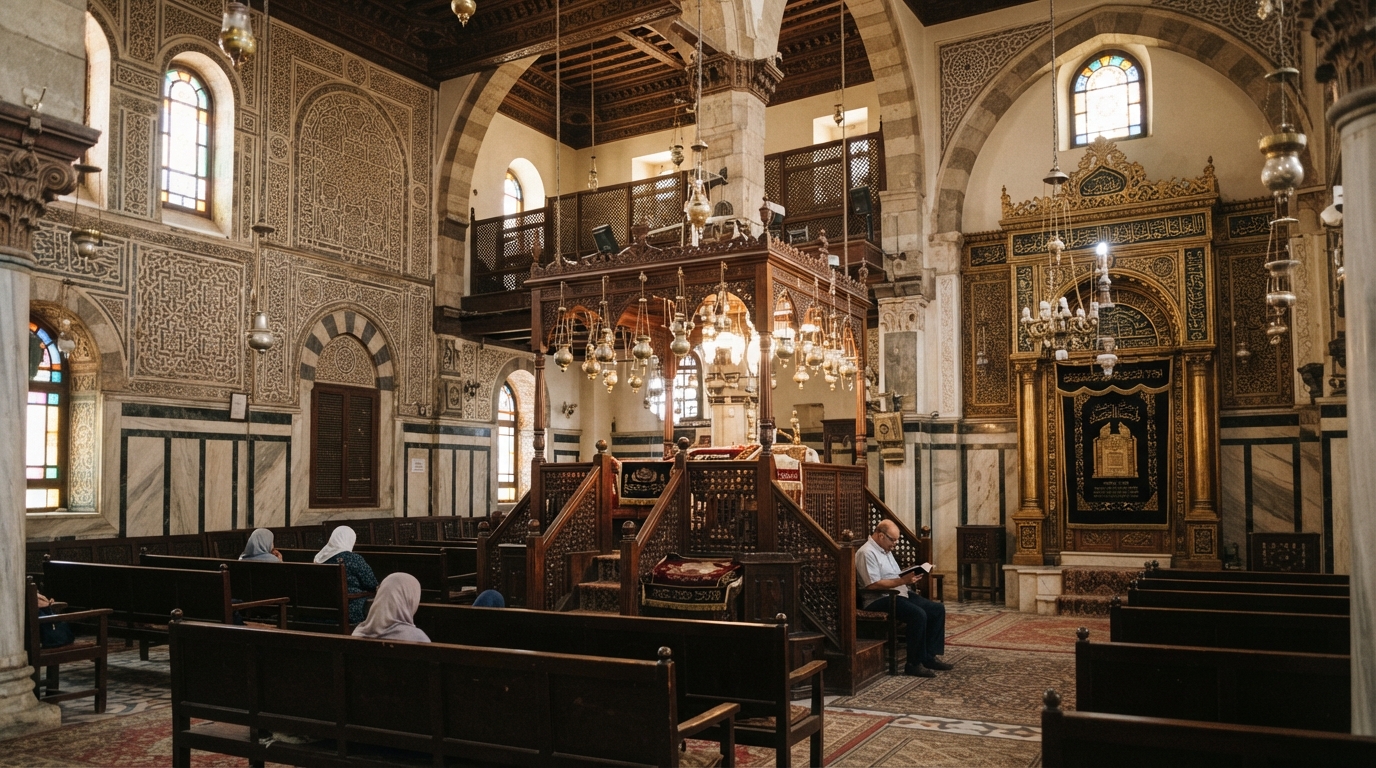
Ben Ezra adds another layer to the district’s religious history. Access and visitor arrangements can change, so treat it as an important addition rather than a guaranteed stop in a tightly timed itinerary.
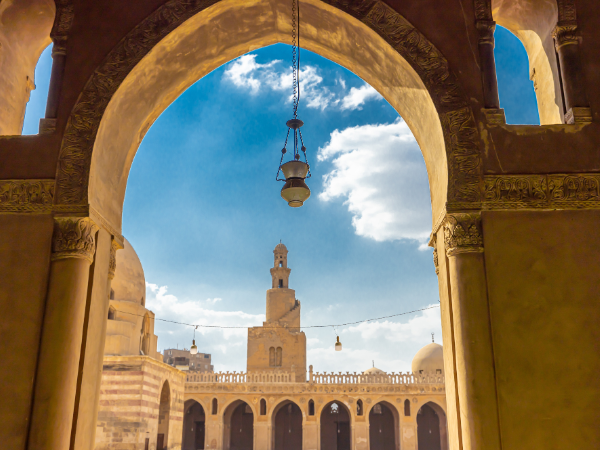
Ibn Tulun is a separate stop from Coptic Cairo and is worth the transfer for travelers interested in early Islamic architecture. Its broad courtyard, arcades and spatial scale feel very different from the narrower lanes of the Coptic quarter.
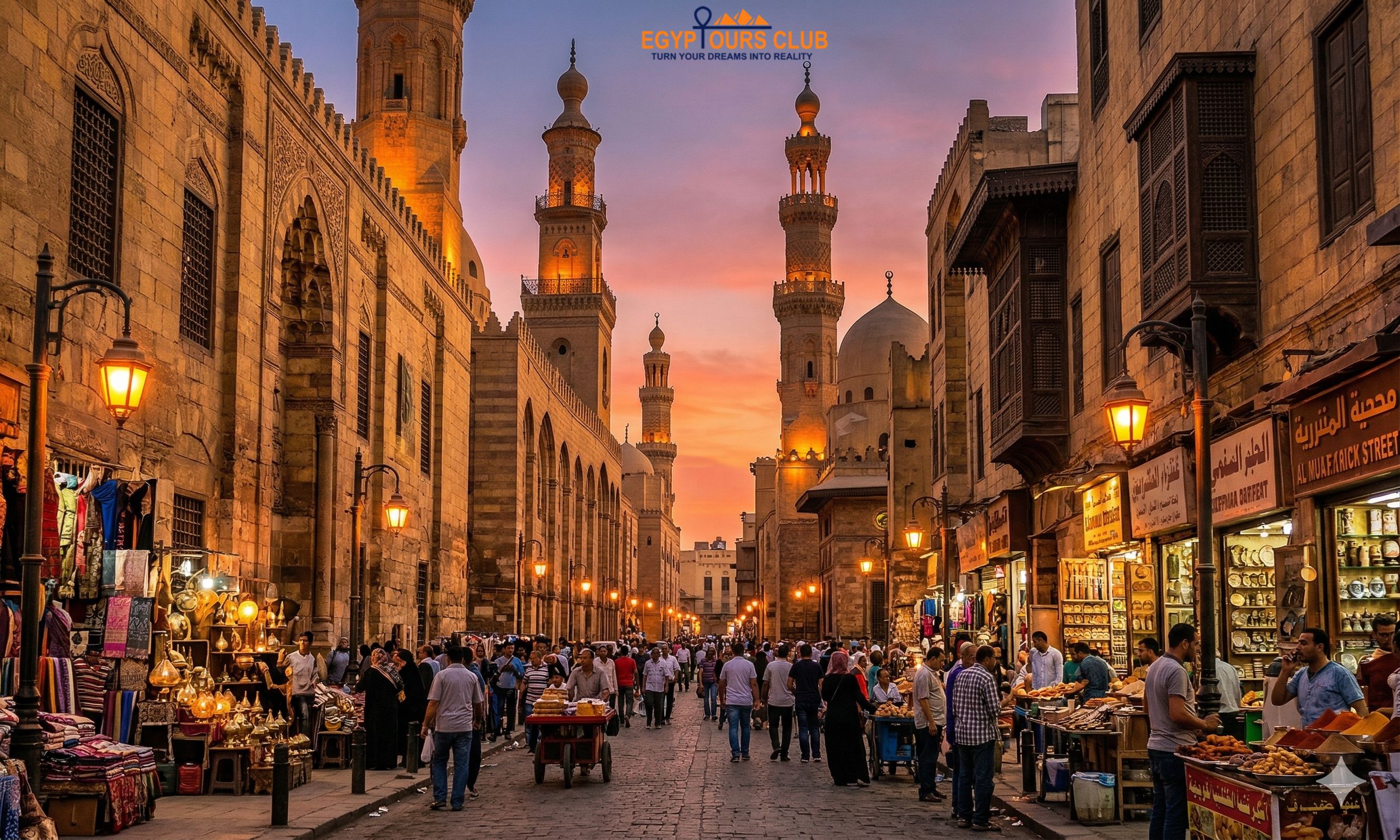
Al-Muizz is best treated as a historic urban walk, not a single attraction. Slow down to compare façades, portals, minarets, domes, historic houses and the way later dynasties altered the medieval city.
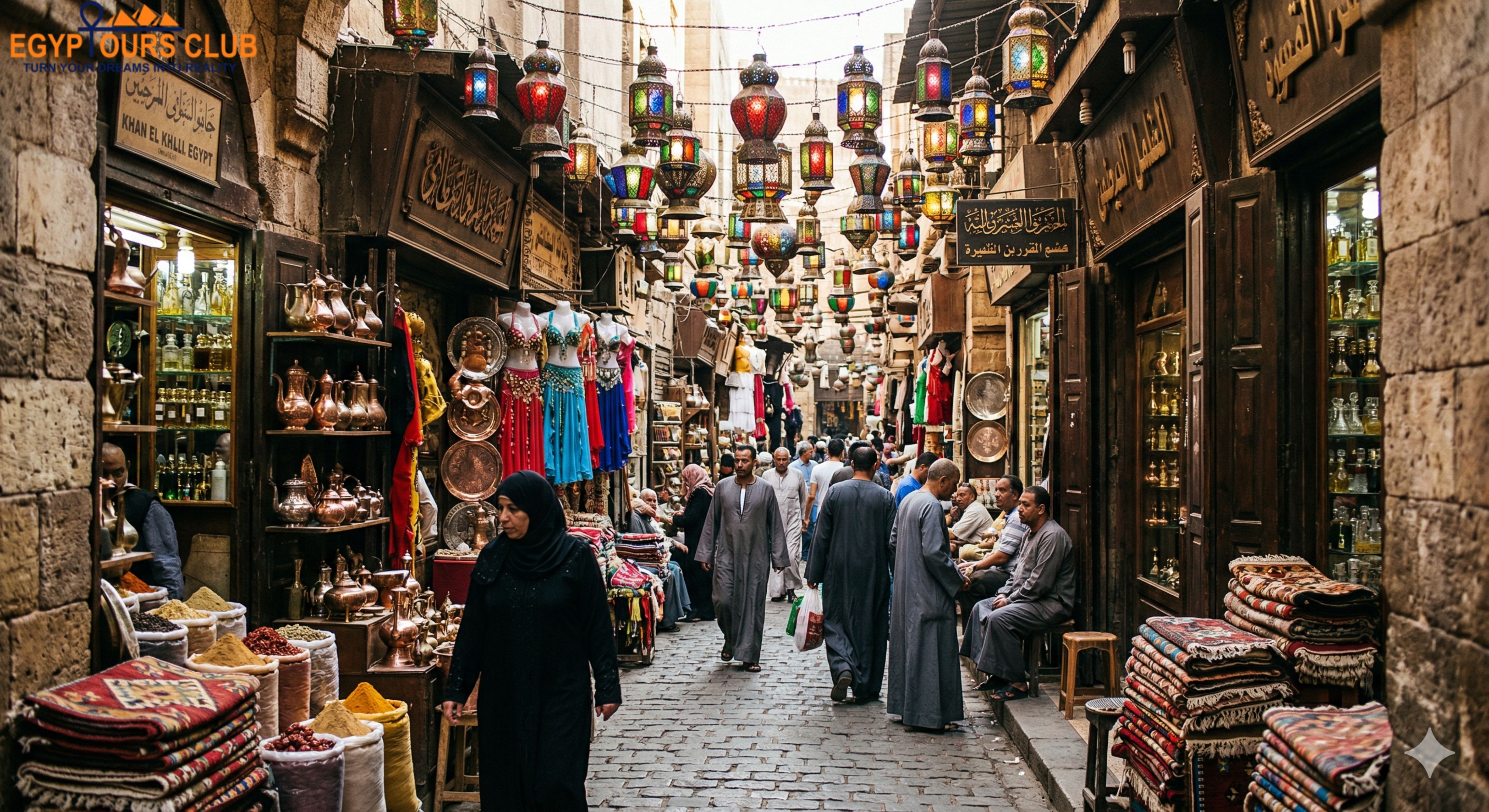
Khan El Khalili works best after a focused Historic Cairo walk. Give yourself time for side lanes, crafts, cafés and people-watching instead of treating the bazaar as a five-minute souvenir stop.
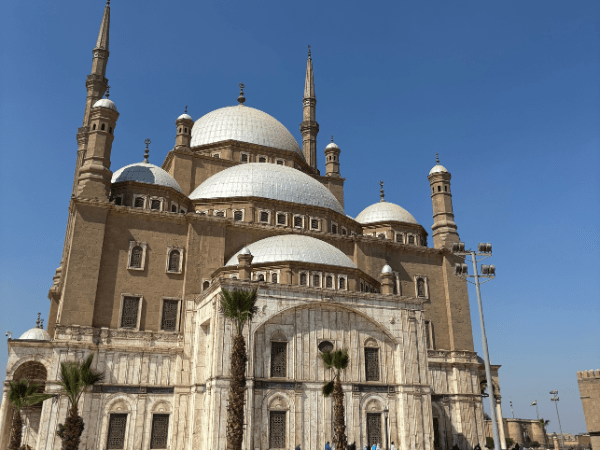
The Citadel adds a different layer to a Cairo heritage day, but it should not be forced into a route that already includes several churches, a museum, Ibn Tulun, Al-Muizz and Khan El Khalili. Cutting every stop short produces a worse day.
A focused half-day is enough for the main Coptic Cairo cluster. A full day works when you want to connect that area with one Historic Islamic Cairo cluster using private transport.
Pick the area that matches your main interest first. Add a second zone only if you have enough time for transport and walking.
| Photo | Area | Best for | Typical visit | Walking load | Best next page |
|---|---|---|---|---|---|
| Coptic Cairo | Churches, Coptic art, Holy Family traditions, Roman layers | 3 to 4 hours | Moderate, compact lanes and some steps | Old Cairo heritage guide |
 | Al-Fustat | Early Islamic capital context and wider Old Cairo history | Depends on selected stops | Mixed, transport helps | Official Al-Fustat page |
| Ibn Tulun / Citadel cluster | Islamic architecture, mosque history and city views | 2 to 3 hours | Moderate | Ibn Tulun guide |
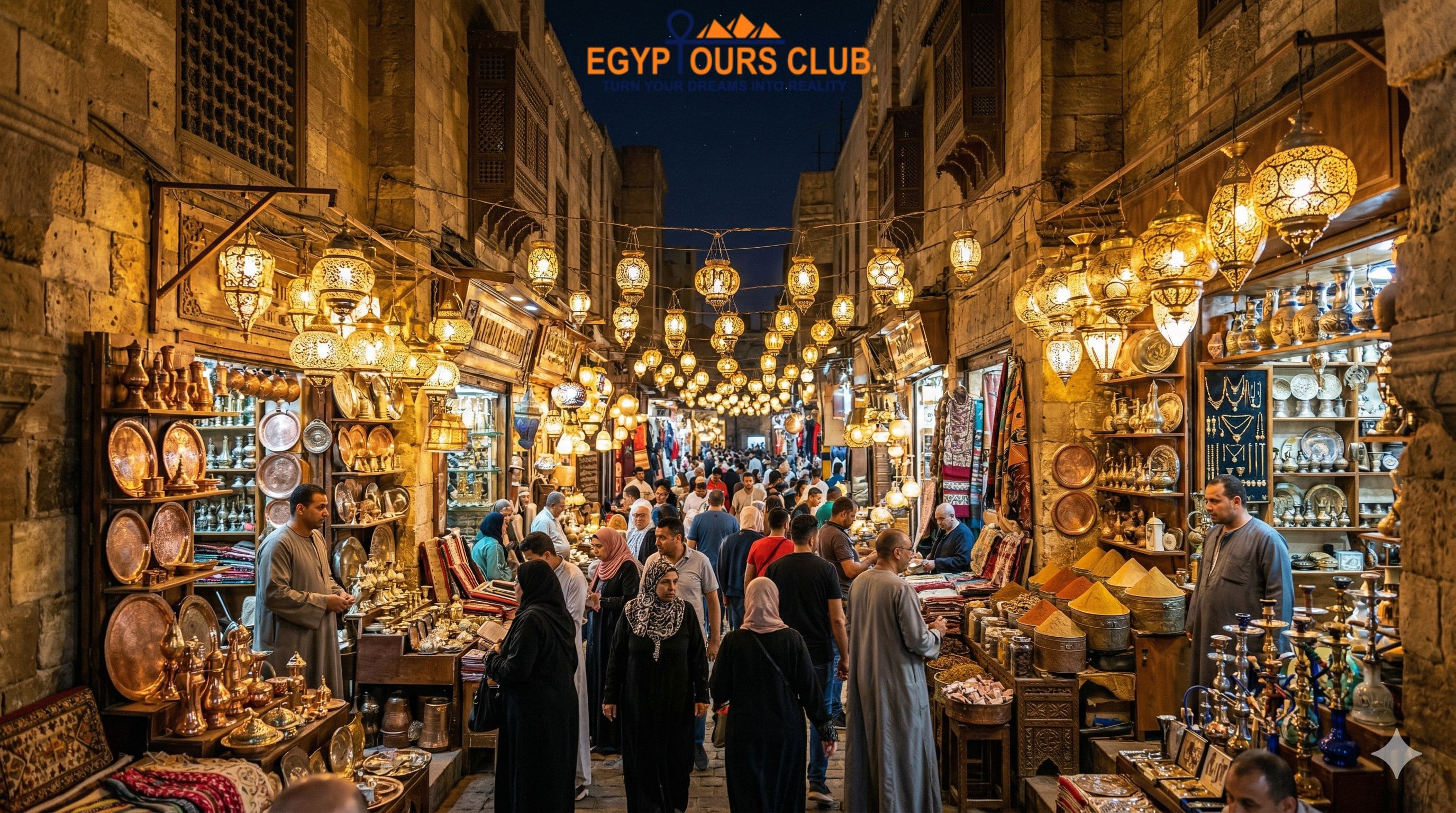 | Al-Muizz + Khan El Khalili | Medieval streets, architecture, markets and evening atmosphere | 3 to 4 hours | Highest walking load | Al-Muizz guide |
Practical advice for visiting churches, mosques and historic streets comfortably, respectfully and without wasting time between districts.
Churches and mosques are active places of worship. Cover shoulders and knees, keep voices low, remove shoes where requested and follow local instructions.
Coptic Cairo, Ibn Tulun, the Citadel and Al-Muizz are not one continuous pedestrian route. Use a vehicle between clusters and walk once you reach the area worth exploring on foot.
Put ticketed museums and monuments earlier in the day when possible, then use markets and outdoor street atmosphere later. Same-day access can still change because of religious use, conservation work or local arrangements.
Historic paving, thresholds, stairs and uneven surfaces make comfortable walking shoes more useful than formal footwear.
Religious use takes priority over sightseeing. Access can pause during worship, Friday prayer, church services, feast days or special religious events.
Old Cairo is strongest when someone connects the Roman, Coptic, Jewish and Islamic layers. A knowledgeable guide is more useful here than a rapid sequence of monument names.
Coptic Cairo, Fustat, the Citadel and Al-Muizz belong to different historical and geographical clusters. Treating them as one place produces bad route planning.
Save walking for the heritage streets and monument interiors. Use transport for the gaps that add no sightseeing value.
A rushed day with ten monuments is weaker than a balanced route with enough time to understand the architecture, faith and urban history.
These sources are useful for historical context and current official visitor information. Check the official monument pages again close to travel because access arrangements can change.
No. The term “Old Cairo” is often used loosely. Coptic Cairo and Al-Fustat form one historic zone, while Islamic Cairo around Al-Muizz belongs to a different area. You can combine them in one heritage day, but use transport between the main clusters.
Allow about three to four hours for a focused Coptic Cairo visit. A full day works better when you also want Ibn Tulun, the Citadel, Al-Muizz Street or Khan El Khalili.
Prioritize the Hanging Church, Abu Serga, the Coptic Museum, Babylon Fortress remains and Ben Ezra Synagogue when access allows. These stops give the clearest introduction to the district’s Christian, Roman and Jewish layers.
It is not a practical sightseeing walk for most visitors. Use transport between the zones and save your energy for the historic streets, churches, mosques and museum interiors.
Khan El Khalili belongs to the wider Historic Islamic Cairo experience rather than the compact Coptic Cairo district. It pairs naturally with Al-Muizz Street and works well as a late-day finish.
Wear comfortable walking clothes with shoulders and knees covered or easy to cover. Choose supportive shoes, and be ready to remove footwear where required inside mosques.
You can visit independently, but a knowledgeable guide adds real value because the main interest is how Roman, Coptic, Jewish and Islamic layers connect across different parts of Cairo.
Start with Coptic Cairo in the morning, then use private transport to one Islamic Cairo cluster. Walk a focused section of Al-Muizz Street and finish at Khan El Khalili if your pace and monument access allow.
Egypt Tours Club plans private Egypt trips and Cairo day tours around available time, walking comfort, historical interests and the sites you care about most. For Old Cairo, that means choosing the right clusters instead of forcing every monument into one day.
Editorial note: religious access, ticketing, conservation work and site arrangements may change. Check priority monuments close to your travel date. The article intentionally avoids hard-coded ticket prices and detailed opening hours where frequent rechecking would be required. Page visuals are loaded from Egypt Tours Club image storage and are matched to the attraction or historic zone shown.