
Book an Egypt Mythology Tour: Egyptian Sun Gods Explained
✨ Overview
The world of Egyptian sun gods is one of the strongest entry points into ancient Egyptian religion, mythology, and sacred kingship. If you want to understand how the ancient Egyptians saw creation, renewal, divine power, and cosmic order, you have to understand the ancient Egyptian sun gods. Britannica explains that a single solar deity could appear in multiple forms, with the most important being Khepri as the morning form, Re-Harakhty as a form of Re associated with Horus, and Atum as the old or evening form. World History Encyclopedia also describes Ra (Re) as the central Egyptian sun god and notes that he later merged with other deities such as Horus and Amun.
That makes Egyptian sun gods explained a perfect tourism topic, not just a history topic. A reader may begin with informational questions like who were the Egyptian sun gods, what did Egyptian sun gods represent, or why were sun gods important in ancient Egypt. But once they understand that solar worship shaped temple alignment, divine imagery, and royal identity, they naturally want to know where to see Egyptian sun gods in Egypt, which temples preserve solar iconography, and whether it is worth booking an ancient Egyptian religion tour or a private Egypt mythology tour. Egypt’s official monuments platform even highlights solar alignment events at Karnak, showing how solar symbolism still shapes the visitor experience today.
This is exactly why the topic converts. The Egyptian solar gods are not abstract figures living only in books. They are visible in temple reliefs, divine names, solar disks, wall carvings, and sacred architectural layouts across Egypt. That makes them ideal for both deep educational content and high-intent travel content like Egyptian sun gods tour Egypt, Egypt cultural tour sun gods, luxury Egypt history tour, and book Egypt mythology tour.
🏛️ Who Were the Egyptian Sun Gods?
A major keyword and user question is: who were the Egyptian sun gods?
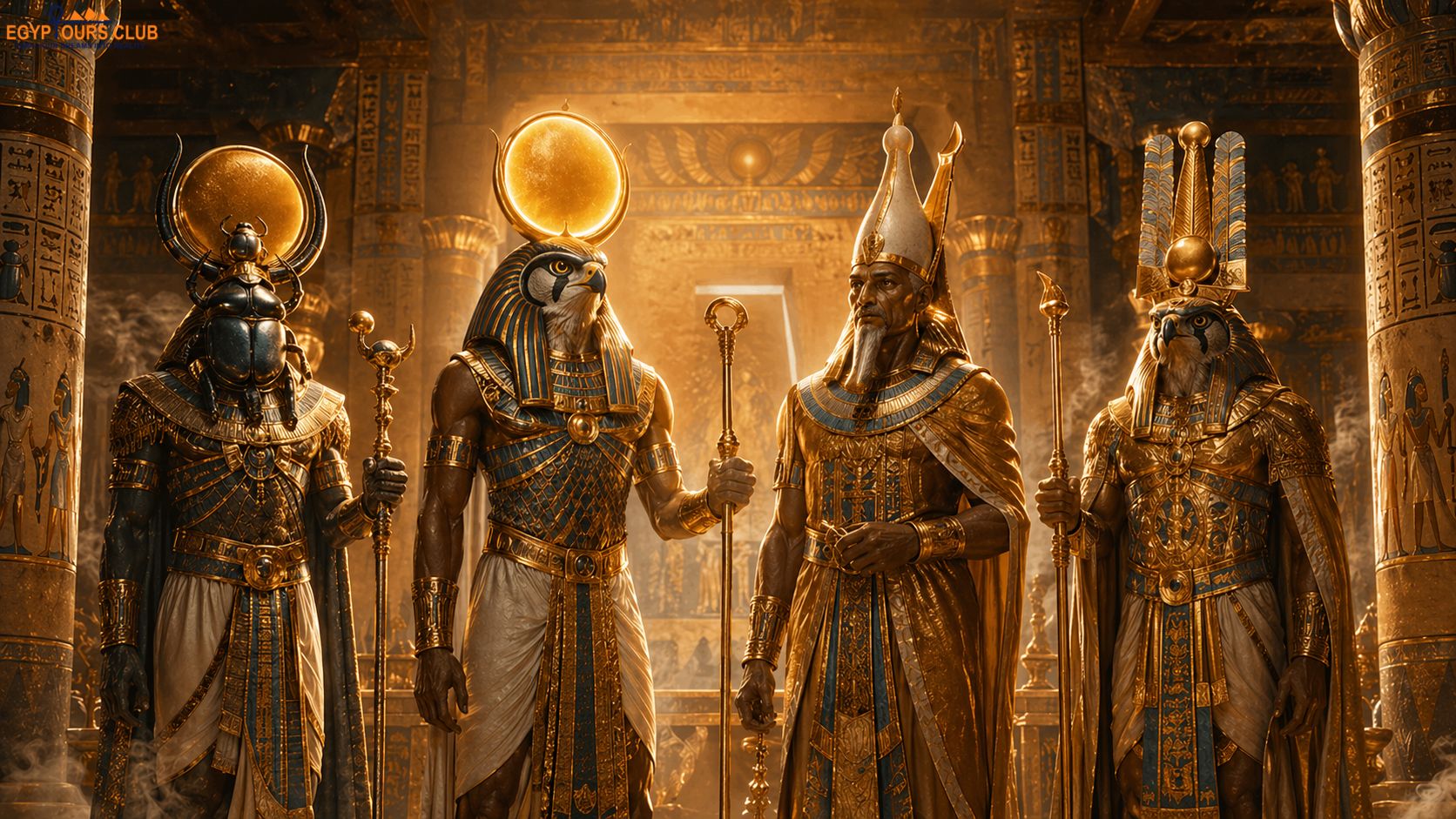
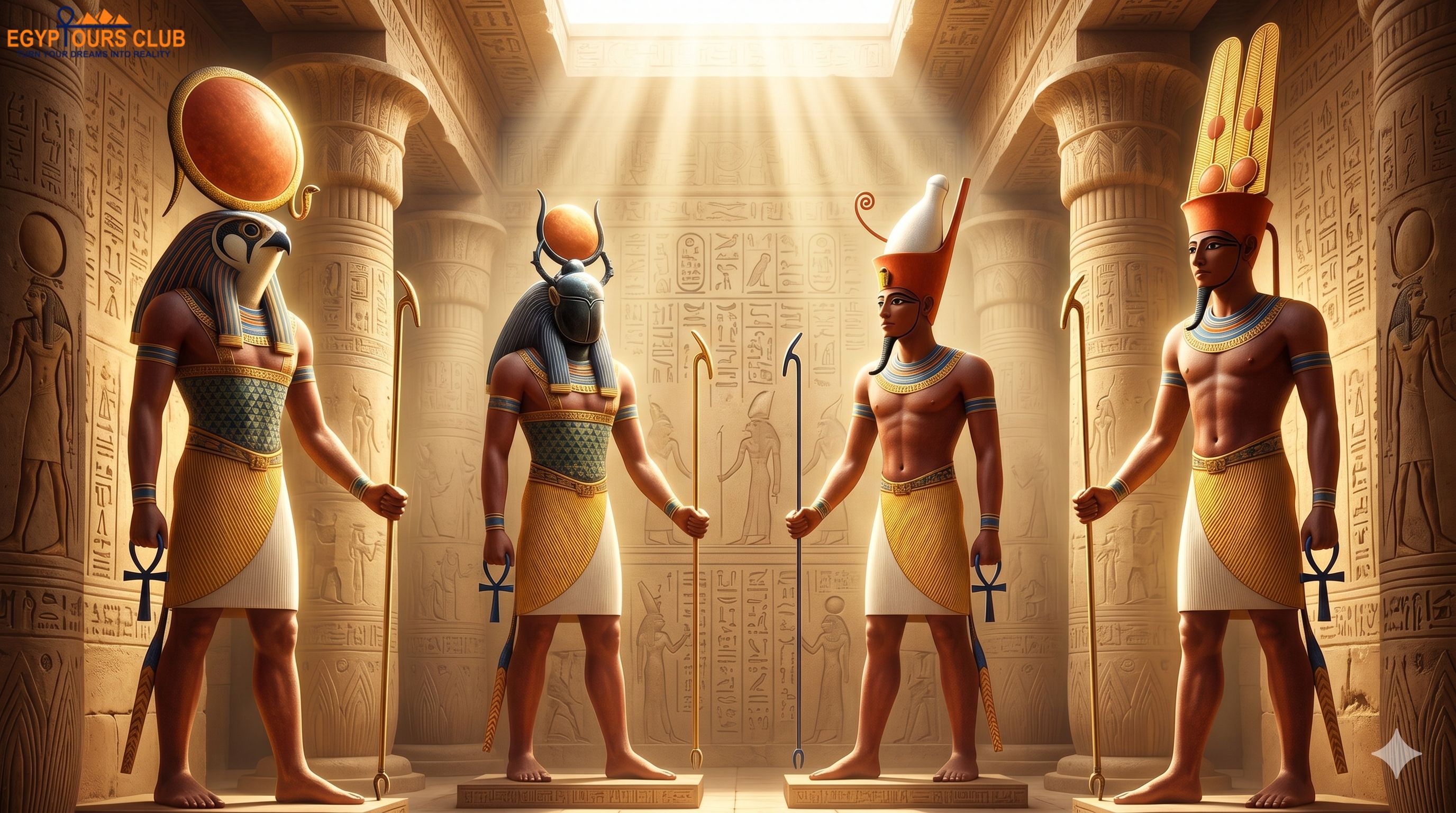
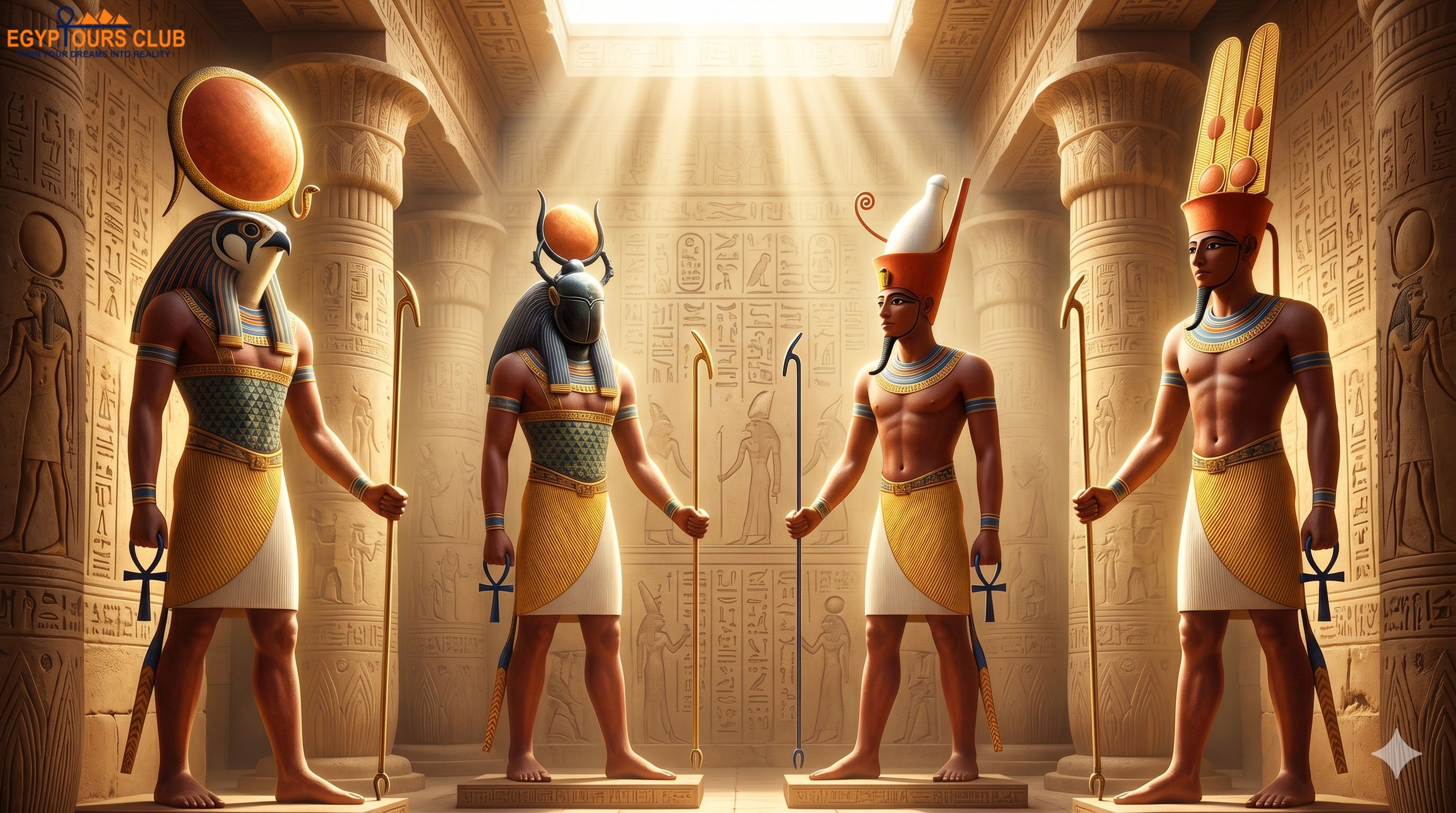
The best answer is that the Egyptian gods of the sun were not always treated as separate, isolated figures. In ancient Egyptian religion, solar divinity could take multiple forms depending on time of day, theology, place, and royal ideology. Britannica explains that among the most important names of the sun god were Khepri, Re-Harakhty, and Atum. World History Encyclopedia adds that Ra later merged with Horus as Ra-Horakhty, with Amun as Amun-Ra, and with Atum in evening associations.
So when people ask Egyptian sun gods explained simply, the clearest framework is this:
- Ra / Re Egyptian god = the central sun god and creator force
- Khepri sun god Egypt = the morning sun and transformation
- Atum sun god Egypt = the evening sun and completion
- Ra-Horakhty Egypt = a merged form of Re and Horus
- Amun-Ra sun god = a major combined state deity in later periods
- Aten sun disk Egypt = the visible solar disk, especially important in Amarna religion
This is why sun god forms in ancient Egypt is such an important phrase. The ancient Egyptians did not always divide solar power into rigid categories the way modern readers expect. They often expressed divine power through overlap, merger, and transformation.

☀️ What Did Egyptian Sun Gods Represent?
Another major query is: what did Egyptian sun gods represent?
The answer is far bigger than “the sun.” The ancient Egyptian solar deities represented creation, rebirth, kingship, order, time, and the daily renewal of the cosmos. Britannica’s treatment of Egyptian religion emphasizes that solar forms reflected changing divine identities, while Ra’s role in broader Egyptian belief connected him to creation and cosmic authority. Britannica Kids also notes that Re was the supreme sun god and most prominent creator god, and that Egyptian kings proclaimed themselves sons of Re.
That means the Egyptian sun god meaning was layered:
- the rising sun = rebirth and transformation
- the noon sun = power, visibility, kingship
- the setting sun = completion, return, death-and-renewal cycle
This is why ancient Egyptian sun gods and their meanings are so compelling for modern readers and travelers. The solar gods were not only astronomical ideas. They were central to how Egyptians understood life itself, divine order, the role of the king, and the continuing rhythm of the universe.
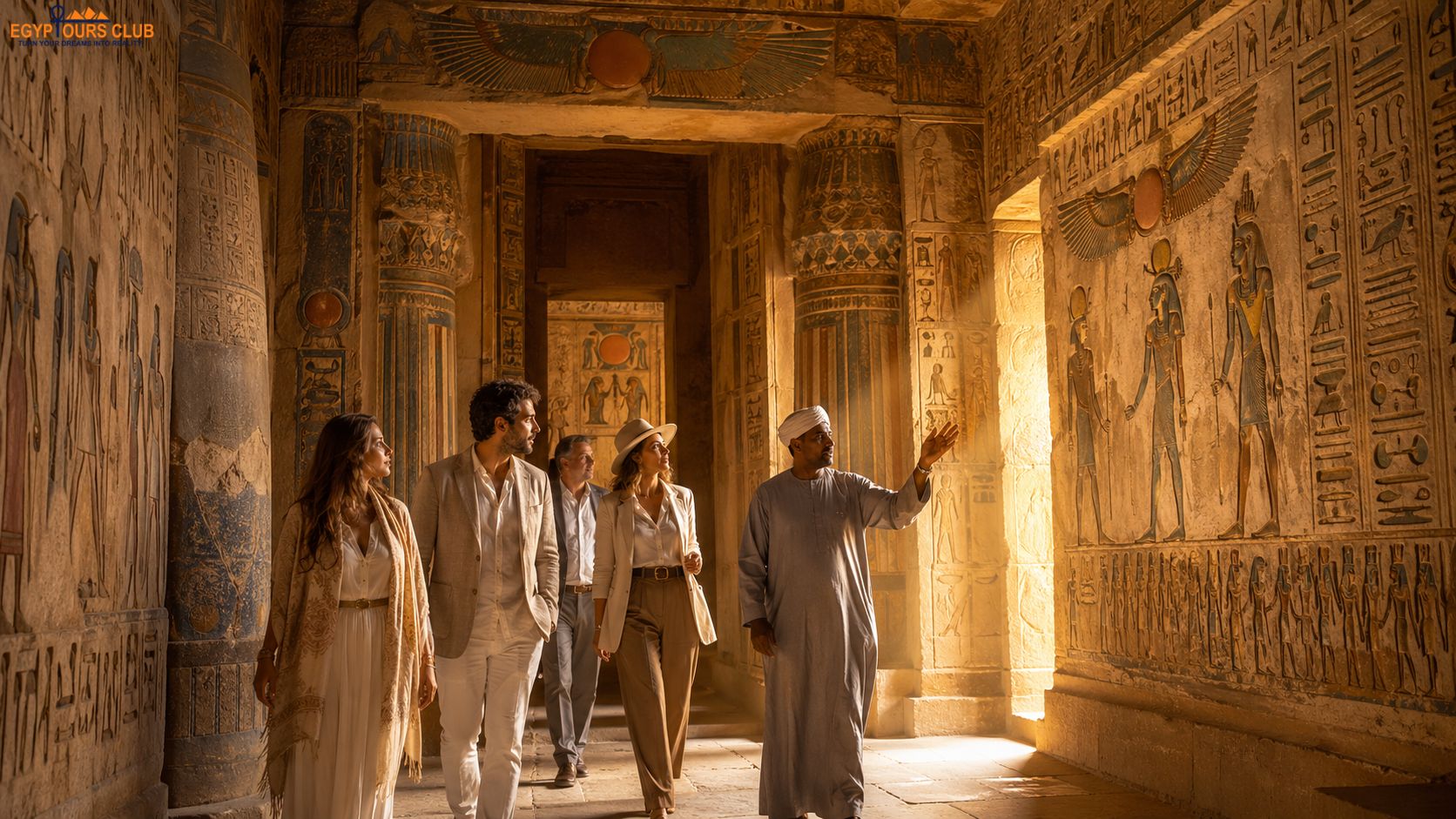
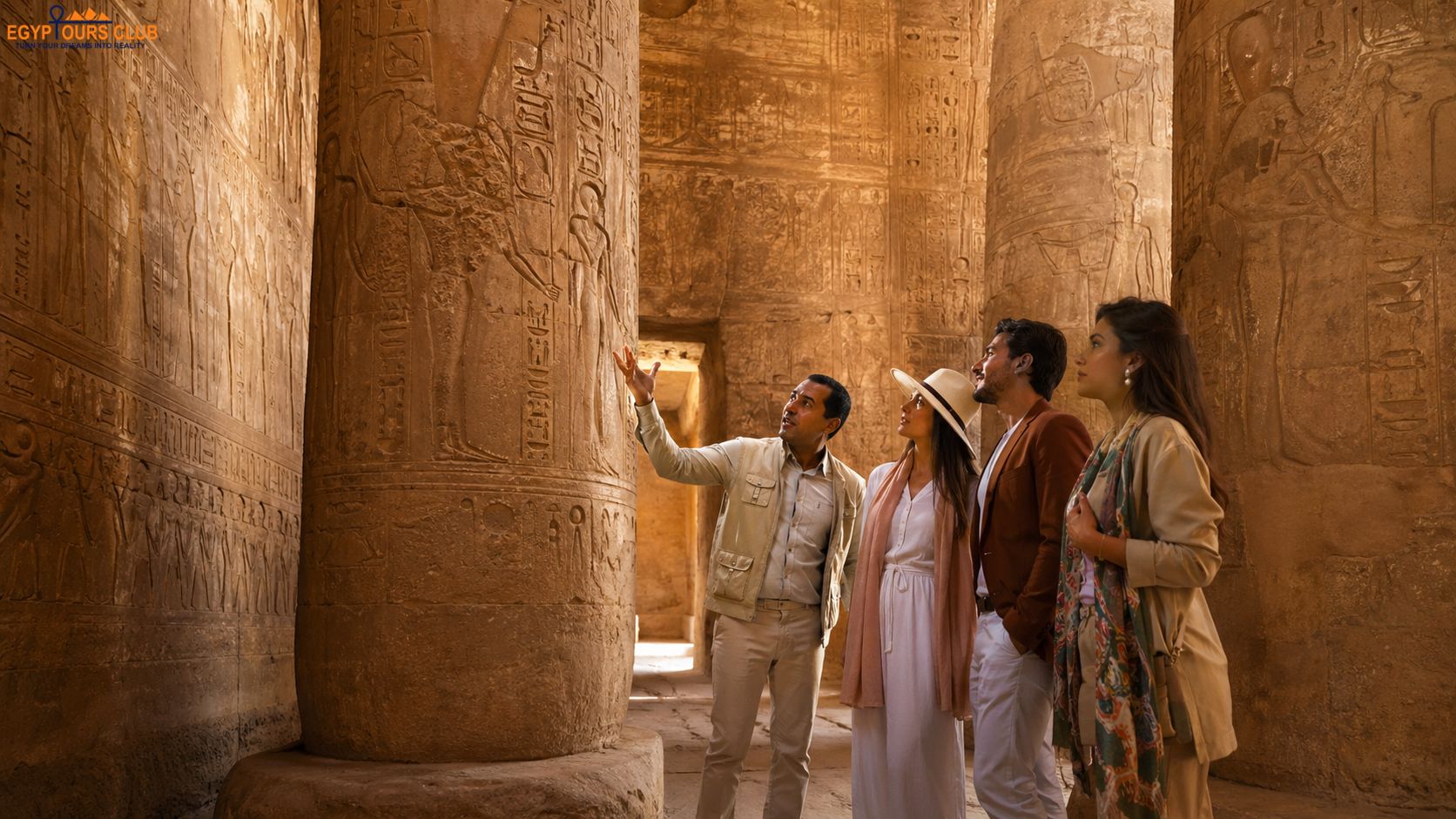
For tourism, this matters because once a traveler understands solar symbolism, a temple visit becomes dramatically richer. A wall carving is no longer “just a carving.” It becomes part of Egyptian solar religion and a visible expression of sacred power. That is the exact point where informational content begins to support guided ancient Egypt religion tour and private Egypt heritage tour intent. This is an inference based on the historical centrality of solar theology and its visible preservation in monuments.
📜 History of Egyptian Sun Gods
A powerful informational cluster is history of Egyptian sun gods.
The history begins early and grows more complex over time. Ra sun god Egypt was one of the oldest and most important deities in the Egyptian pantheon. World History Encyclopedia describes Ra as one of the oldest Egyptian gods and notes that he became merged with others, producing forms like Ra-Horakhty and Amun-Ra. Britannica likewise treats Khepri, Re-Harakhty, and Atum as major forms of the sun god rather than separate unrelated figures.
This matters because how many sun gods did ancient Egypt have is not a question with one simple number. The better answer is that Egyptian religion allowed one solar power to be expressed in multiple names, forms, and theological combinations. That is why most important Egyptian sun gods is a more useful keyword than trying to force a fixed numeric list.
📊 Solar Gods Snapshot Table
| Solar Deity | Main Association |
|---|---|
| Ra / Re | central solar and creator power |
| Khepri | morning sun, transformation |
| Atum | evening sun, completion |
| Re-Harakhty | Re in association with Horus |
| Amun-Ra | major later form of combined supreme divinity |
| Aten | solar disk emphasis in Amarna period |
The underlying associations in this table come directly from Britannica and World History Encyclopedia.
👑 Why Were Sun Gods Important in Ancient Egypt?
A core keyword is: why were sun gods important in ancient Egypt?
They were important because solar worship touched nearly everything: creation theology, kingship, temple ritual, daily cosmic order, and religious identity. Britannica notes that the pharaoh’s title “Son of Re” placed the king in a close relationship with the leading figure in the pantheon, especially by the Fourth Dynasty. That means the sun gods in ancient Egypt were not peripheral figures. They were central to how the state itself imagined divine authority.
This is also why Egyptian solar religion is such a strong authority phrase. Solar gods mattered in:
- the identity of the king
- the interpretation of daily time
- the structure of myth and creation
- the design and symbolism of temples
- royal and public religious life
For travel conversion, this section is extremely important. Once readers understand that solar deities shaped Egypt’s sacred architecture and royal ideology, they become more likely to want a luxury Egypt history tour, Egypt cultural tour sun gods, or private Egypt mythology tour that explains these connections at the monuments themselves. This is an inference based on the strong relationship between solar theology and the monuments travelers can visit today.
🎨 Egyptian Sun Gods in Temples, Artwork, and Carvings
This is where the article should start leaning harder into booking intent.
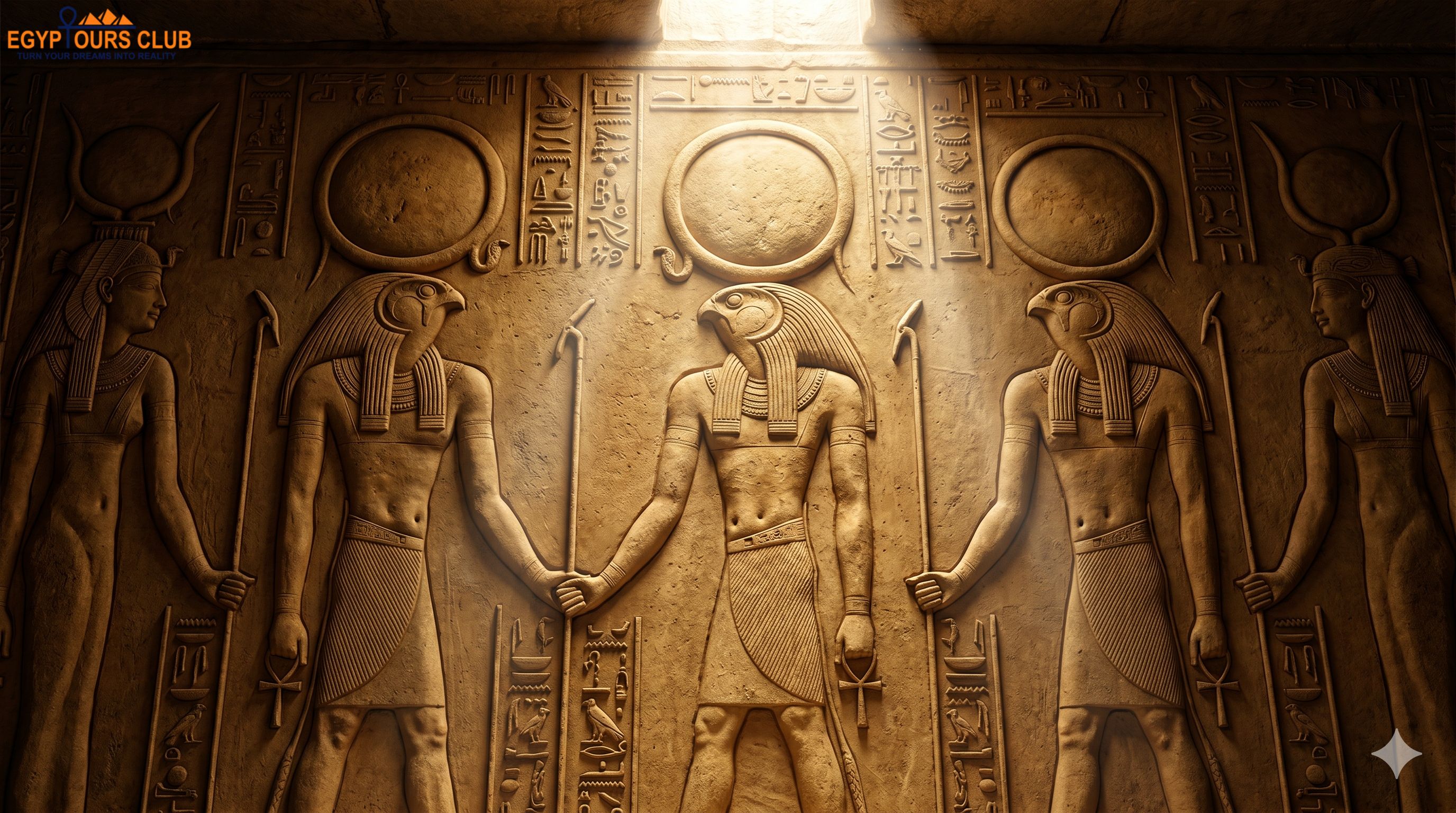
The Egyptian sun gods in temples are one of the strongest visual angles in this topic. Search phrases like Egyptian sun gods artwork, sun god carvings Egypt, ancient Egyptian solar symbols, sun disk in ancient Egypt, Egyptian sun god images, Ra temple art Egypt, solar deity carvings Egypt, and Egyptian sun gods wall reliefs are powerful because they connect meaning to physical experience.
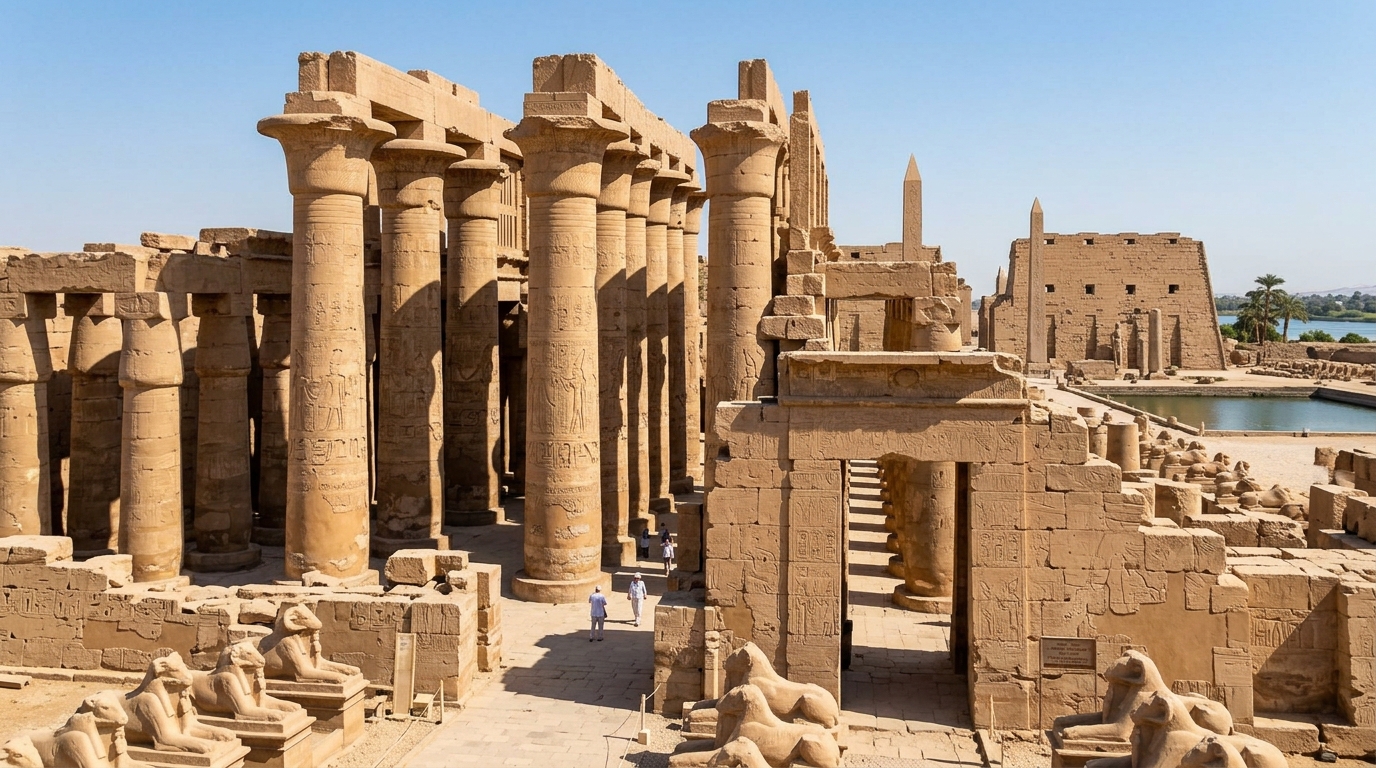
Egypt’s official monuments platform highlights a modern solar alignment event at Karnak, reminding us that solar symbolism was not abstract — it was architectural and experiential. The Sun Temples Project also explains that Fifth Dynasty sun temples formed a unique category of royal monuments dedicated to the sacred landscape of solar religion in ancient Egypt.
That is exactly where conversion happens. A traveler who sees that solar worship is visible in real temples and ritual spaces starts thinking less like a casual reader and more like someone ready to book:
- temples of Ra in Egypt tour
- Egyptian sun gods tour Egypt
- ancient Egyptian religion tour
- private Egypt heritage tour
The more visual the article becomes, the more naturally it supports where to see Egyptian sun gods in Egypt.

🇪🇬 Where to See Egyptian Sun Gods in Egypt
This is the strongest travel-intent section in the entire page.
If someone searches where to see Egyptian sun gods in Egypt, they are already moving toward a trip-planning mindset. The most useful answer is not to list random names but to connect solar religion to real experiences:
- temples aligned with solar phenomena
- carved reliefs showing solar disks and divine forms
- museum collections with solar iconography
- broader sacred sites connected to Ra, Amun-Ra, and royal solar theology
The official solar-alignment coverage at Karnak is especially useful here because it proves that solar meaning is still part of the lived visitor experience in Egypt today. That makes Egyptian sun gods tour Egypt and guided ancient Egypt religion tour very natural extensions of the informational content.
✅ Best conversion-focused angles
- temples of Ra in Egypt tour for travelers wanting a theme-based journey
- private Egypt mythology tour for guests who want expert interpretation
- Egypt cultural tour sun gods for travelers seeking more than standard sightseeing
- luxury Egypt history tour for clients who value comfort and depth
- book Egypt mythology tour for direct purchase intent
This is where your article becomes commercially strong. The user has learned the names, the meanings, and the theological differences. Now they need the practical next step: how to experience those meanings in Egypt itself.
🧳 Why Booking a Private Egypt Mythology Tour Adds More Value
This is the most conversion-oriented section, and it should take a large share of the article because that is your real business goal.
A traveler interested in Egyptian sun gods explained is rarely looking only for a dictionary entry. In many cases, they are exactly the kind of client who wants a deeper, more curated, more intellectual Egypt experience. That is why private Egypt mythology tour, private Egypt heritage tour, guided ancient Egypt religion tour, and book Egypt mythology tour are not add-ons — they are the natural next step.
A private experience adds value because:
- the visitor understands the difference between Ra, Atum, Khepri, Ra-Horakhty, and Amun-Ra in the right context
- temple carvings become meaningful rather than decorative
- solar alignments, disks, and royal iconography become part of the story
- the itinerary can be tailored around cultural depth rather than speed
This is especially important for premium brands because luxury Egypt history tour clients do not want a rushed “see everything, understand nothing” day. They want themed experiences with narrative coherence. And Egyptian solar gods provide exactly that: a clear storyline running through myth, kingship, temple space, and sacred symbolism. This argument is an inference grounded in the historical richness of solar cult material and the visible presence of solar themes in monuments and curated heritage experiences.
📊 Why This Topic Converts Well
| User interest | Best matching travel offer |
|---|---|
| wants mythology explained | private Egypt mythology tour |
| loves symbolism and temples | guided ancient Egypt religion tour |
| wants curated premium history | luxury Egypt history tour |
| wants a themed cultural itinerary | Egypt cultural tour sun gods |
| ready to buy now | book Egypt mythology tour |

❓ FAQs About Egyptian Sun Gods
Who were the Egyptian sun gods?
The main Egyptian sun gods included Ra/Re, Khepri, Atum, Re-Harakhty, and later forms such as Amun-Ra.
What did Egyptian sun gods represent?
They represented creation, renewal, kingship, cosmic order, and the changing phases of the sun across the day.
What is the difference between Ra, Atum, and Khepri?
Britannica explains that Khepri is the morning form, Re-Harakhty is a form of Re associated with Horus, and Atum is the old or evening form. World History Encyclopedia also describes Ra’s merging with other forms over time.
Why were sun gods important in ancient Egypt?
They were central to religion, kingship, temple ideology, and the Egyptian understanding of divine order and creation.
Where can I see Egyptian sun gods in Egypt?
You can experience solar symbolism in temples, reliefs, and museum collections, and in some cases even through solar alignment events such as those noted at Karnak.
🏁 Final Thoughts
Egyptian sun gods explained is exactly the kind of topic that can rank well and convert well at the same time. It has strong informational depth, clear entity structure, visual richness, and a very natural commercial bridge. A reader may arrive through Egyptian sun gods, who were the Egyptian sun gods, difference between Ra Atum and Khepri, or Amun-Ra sun god — and then move organically toward where to see Egyptian sun gods in Egypt, Egyptian sun gods tour Egypt, and finally book Egypt mythology tour.
That is exactly the right formula for a tourism company: teach first, deepen interest second, and let the booking feel like the most natural next step.