


Who Is Osiris? The Egyptian God of the Afterlife Explained | Egypt Tours Club
Who Is Osiris? The Egyptian God of the Afterlife Explained . banner

Who Is Osiris? The Egyptian God of the Afterlife Explained

Who Is Osiris? Egyptian God of the Afterlife, Myth, Symbols & Meaning | Egypt Tours Club
𓋹 Egyptian Mythology Guide

Who Is Osiris? The Egyptian God of the Afterlife

Discover the story of Osiris, the ancient Egyptian god of the afterlife, resurrection, rebirth, sacred kingship and judgment — and learn why his myth shaped Egypt’s deepest beliefs about death and eternal life.

Egypt Tours Club Updated May 2026 12 min read Osiris · Afterlife · Isis · Horus · Seth · Egyptian Mythology

Osiris is one of the most important gods in ancient Egyptian religion. He is best known as the Egyptian god of the afterlife, but his meaning reaches far beyond death: he represents resurrection, justice, sacred kingship, fertility and eternal renewal.

Quick Answer: Who Is Osiris?

If you want the simplest answer, Osiris was the Egyptian god of the afterlife, resurrection, rebirth and sacred kingship. In Egyptian mythology, he was killed by his brother Seth, restored through the power of Isis, and became the divine ruler of the dead.

That is why people searching for who is Osiris, what is Osiris the god of, Osiris Egyptian god, or god of the afterlife Egypt usually arrive at the same central idea: Osiris gave ancient Egyptians a model for life after death.

One-Sentence Summary

Osiris is the ancient Egyptian god of the afterlife, resurrection, rebirth, judgment and sacred kingship.

Topic Answer
Name Osiris
Main role Egyptian god of the afterlife, resurrection and rebirth.
Common title Lord of the underworld and ruler of the dead.
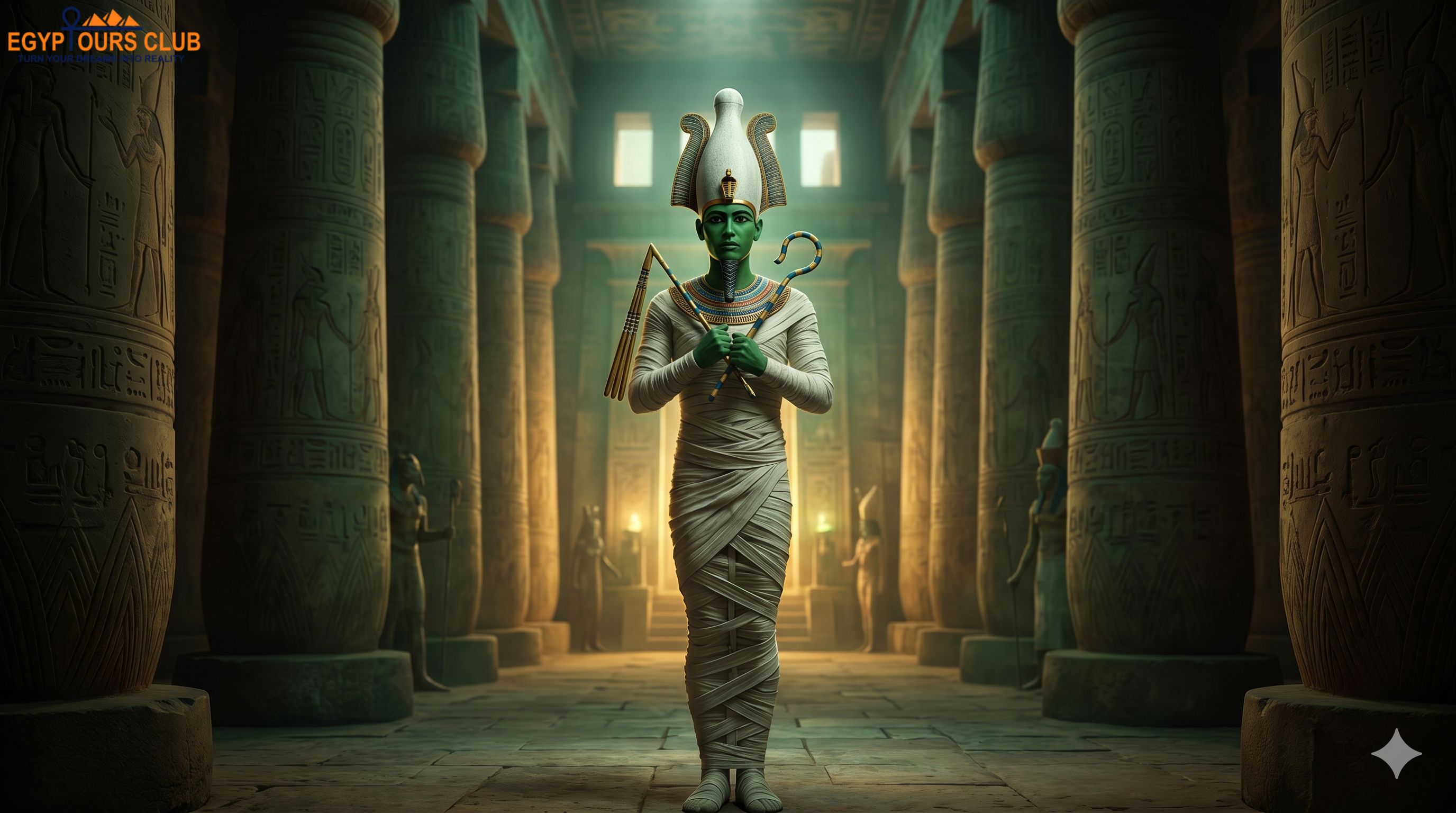
Main symbols Atef crown, crook, flail, green skin and mummy-like body.
Key relationships Husband of Isis, father of Horus and brother of Seth.
Myth focus Death, resurrection, justice, kingship and eternal life.

Who Is Osiris in Egyptian Mythology?

To understand who is Osiris in Egyptian mythology, you need to see him within the divine family of ancient Egypt. Osiris was the husband of Isis, the father of Horus, and the brother and victim of Seth. These relationships form one of the most powerful myths in Egyptian religion.

Osiris was remembered as a wise and civilizing ruler. He represented order, fertility, agriculture and legitimate kingship. But after his death and resurrection, he became something even greater: the Osiris underworld god, the ruler who receives and judges the dead.

This is why Osiris was not only a funerary figure. He was a bridge between life and death, earth and underworld, king and ancestor, suffering and renewal.

Osiris Egyptian god of the afterlife shown as a divine ruler with ancient Egyptian symbols
Osiris is best known as the Egyptian god of the afterlife, but his myth also connects kingship, fertility, resurrection and justice.

The Osiris Story: Betrayal, Resurrection and Justice

The Osiris story is one of the central myths of ancient Egypt. It begins with Osiris as a rightful ruler and Seth as the jealous brother who plots against him. Seth kills Osiris and seizes power, creating a crisis of order, legitimacy and divine justice.

Isis then searches for Osiris and restores him through divine magic. This restoration does not return Osiris to ordinary earthly life. Instead, it transforms him into the ruler of the afterlife. This is the heart of the Osiris resurrection myth and the answer to how did Osiris become god of the afterlife.

Horus, the son of Isis and Osiris, later challenges Seth to restore rightful kingship. The myth therefore explains more than a family conflict. It explains how order defeats disorder, how kingship continues, and how death can become the beginning of eternal life.

01

Osiris Rules

Osiris represents legitimate kingship, fertility and civilizing order.

02

Seth Betrays

Seth kills Osiris and symbolizes disruption, violence and illegitimate power.

03

Isis Restores

Isis uses divine magic to restore Osiris and protect the future of Horus.

04

Osiris Transforms

Osiris becomes lord of the afterlife and ruler of the dead.

05

Horus Fights

Horus challenges Seth to restore justice and rightful kingship.

06

Order Returns

The myth becomes a model of resurrection, succession and cosmic justice.

What Is Osiris the God Of?

Many readers search what is Osiris the god of because his role is broader than one title. He is often called the Egyptian god of the afterlife, but he also represents renewal, moral judgment and sacred kingship.

Osiris role Meaning in ancient Egypt
Afterlife Osiris rules the world of the dead and receives the justified soul.
Resurrection His restored life gives hope that death can lead to renewal.
Fertility His myth is linked to vegetation, growth and the cycles of nature.
Sacred kingship He represents the dead king, while Horus represents the living king.
Judgment He presides over afterlife judgment and moral order.

The deeper Osiris meaning is not simply “death.” It is life after death, justice after suffering and rebirth after destruction.

Why Is Osiris Green?

One of the most searched questions about the god is why is Osiris green. In ancient Egyptian art, green was strongly associated with fertility, vegetation, regeneration and eternal life.

Osiris’ green skin did not make him strange or monstrous. It showed that he carried the power of renewal, just as plants rise again from the soil. This is why Osiris green skin meaning is central to understanding his visual identity.

Symbolic Meaning

Green skin means Osiris is not only connected to death. He is connected to rebirth, vegetation, fertility and the promise that life can return.

Osiris Symbols and Visual Identity

The Osiris symbol is not a single object. His identity is built through a group of visual signs that made him instantly recognizable in temple reliefs, coffins, tomb paintings and statues.

👑

Atef Crown

A crown often associated with Osiris, combining royal and divine authority.

🪝

Crook

A symbol of rulership, guidance and shepherd-like royal protection.

Flail

A symbol of authority, fertility and royal power.

🟢

Green Skin

A sign of regeneration, vegetation, rebirth and eternal renewal.

⚰️

Mummy Form

Connects Osiris with burial, resurrection and the transformed dead.

🌾

Fertility Imagery

Links Osiris to crops, the Nile cycle and agricultural renewal.

Osiris symbols including Atef crown crook flail and green skin in Egyptian mythology
The symbols of Osiris combine royal authority, agricultural renewal, funerary belief and divine resurrection.

Osiris, Isis, Horus and Seth: The Mythic Family

The power of the Osiris myth comes from its relationships. These divine connections explain the emotional and political depth of the story.

Osiris and Isis

Isis is the wife, protector and restorer of Osiris. Without Isis, the resurrection myth would not exist. She transforms the story from murder into renewal.

Osiris and Horus

Osiris is the dead father and Horus is the living son. This relationship shaped the idea that a dead king became Osiris while the living king was linked to Horus.

Osiris and Seth

Seth kills Osiris and represents disorder, conflict and illegitimate power. The conflict becomes a myth about justice and restored order.

Osiris and the Dead

Every justified soul hoped to join Osiris in the afterlife. His myth gave ordinary death a sacred path toward eternal life.

To understand the wider divine world around Osiris, continue with our guide to the principal deities of ancient Egypt.

Was Osiris the God of Death?

The question was Osiris the god of death needs a careful answer. Osiris was not simply a god of death in a narrow or dark sense. He was the god of what comes after death: judgment, resurrection, transformation and eternal life.

That is why Osiris god of the afterlife is more accurate than “god of death.” He rules the realm of the dead, but his deeper symbolism is hope, renewal and moral order.

Osiris vs Anubis: What Is the Difference?

A common comparison is Osiris vs Anubis. Both are connected to death and funerary belief, but they perform different roles.

Osiris Anubis
Ruler of the afterlife. Guide and protector of the dead.
Judge and king of the dead. Associated with embalming and mummification.
Symbol of resurrection and eternal life. Symbol of burial, transition and tomb protection.
Receives the justified soul. Helps guide the deceased toward judgment.
Osiris and Anubis roles in the Egyptian afterlife showing judgment mummification and guidance of the dead
Anubis prepares and guides the dead, while Osiris rules the afterlife and represents resurrection and judgment.

Why Is Osiris Important?

Why is Osiris important? Because he gave ancient Egyptians a way to understand death without seeing it as the end. Through Osiris, death could become transformation, judgment could lead to justice, and burial could become preparation for eternal life.

His myth influenced ancient Egyptian religion, kingship, tomb decoration, mummification, funerary texts, temple imagery and the hope of rebirth. In that sense, the history of Osiris is not a minor myth. It is one of the pillars of Egyptian belief.

Area influenced by Osiris How Osiris shaped it
Royal ideology The dead king was associated with Osiris, while the living king was linked to Horus.
Funerary religion Tombs, coffins and rituals expressed hope for joining Osiris after death.
Afterlife judgment Osiris became the ruler before whom the dead hoped to be justified.
Temple and tomb art His image appeared widely in funerary and religious settings.
Ideas of rebirth His resurrection made renewal central to Egyptian spirituality.

Where Can Travelers See Osiris in Egypt?

For travelers, Osiris is not just a name in mythology. His symbols, myths and afterlife scenes appear across temples, tombs and museums in Egypt.

Abydos and the Osireion

Abydos was one of the most sacred places connected with Osiris and royal memory.

Read Osireion in Abydos Guide →

Valley of the Kings

Royal tombs show afterlife scenes, divine judgment and the spiritual world shaped by Osiris.

Read Valley of the Kings Guide →

Luxor West Bank

Funerary temples and tomb landscapes help explain Osiris, kingship and rebirth.

Explore Luxor Day Tours →

Grand Egyptian Museum

Museum collections help connect Osiris with royal burial, sacred objects and ancient Egyptian religion.

Read GEM Guide →

Essential Osiris Facts

Fact Why it matters
Osiris was one of the most important ancient Egyptian gods. His myth shaped afterlife belief for thousands of years.
He was husband of Isis and father of Horus. This family structure shaped divine kingship mythology.
He was killed by Seth. The murder begins the central conflict of the myth.
He became lord of the afterlife. His transformation gave death a sacred meaning.
He is often shown with green skin. Green symbolizes rebirth, vegetation and eternal renewal.
He carries the crook and flail. These symbols connect him with kingship and authority.

Explore More on Egypt Tours Club

Continue your journey through Egyptian gods, afterlife beliefs, symbols and sacred temples.

FAQs About Osiris

Who is Osiris?
Osiris is one of the most important gods in ancient Egyptian religion. He is best known as the Egyptian god of the afterlife, resurrection, rebirth, sacred kingship and judgment.
What is Osiris the god of?
Osiris is the god of the afterlife, resurrection, rebirth, fertility, sacred kingship and judgment after death.
Who killed Osiris?
According to Egyptian mythology, Osiris was killed by his brother Seth, who represents conflict, disorder and illegitimate power.
How did Osiris become god of the afterlife?
After being killed by Seth, Osiris was restored through Isis’ divine power. He did not return as an earthly king; instead, he became the ruler of the dead and lord of the afterlife.
Why is Osiris green?
Osiris is often green because green symbolized fertility, vegetation, regeneration, rebirth and eternal life in ancient Egyptian art.
Was Osiris the god of death?
Not exactly. Osiris was more accurately the god of the afterlife, resurrection and judgment rather than death alone.
What is the difference between Osiris and Anubis?
Osiris rules the afterlife and judges the dead, while Anubis is associated with embalming, mummification, tomb protection and guiding souls.

Final Answer: Osiris in One Clear Idea

Osiris was the Egyptian god of the afterlife, resurrection, rebirth and sacred kingship. His story with Isis, Horus and Seth turned death into a powerful symbol of transformation and eternal life.

That is why Osiris remained one of the most important gods in ancient Egypt: he gave meaning to death, hope to the afterlife and divine order to kingship.

Create Your Osiris and Ancient Afterlife Itinerary →