

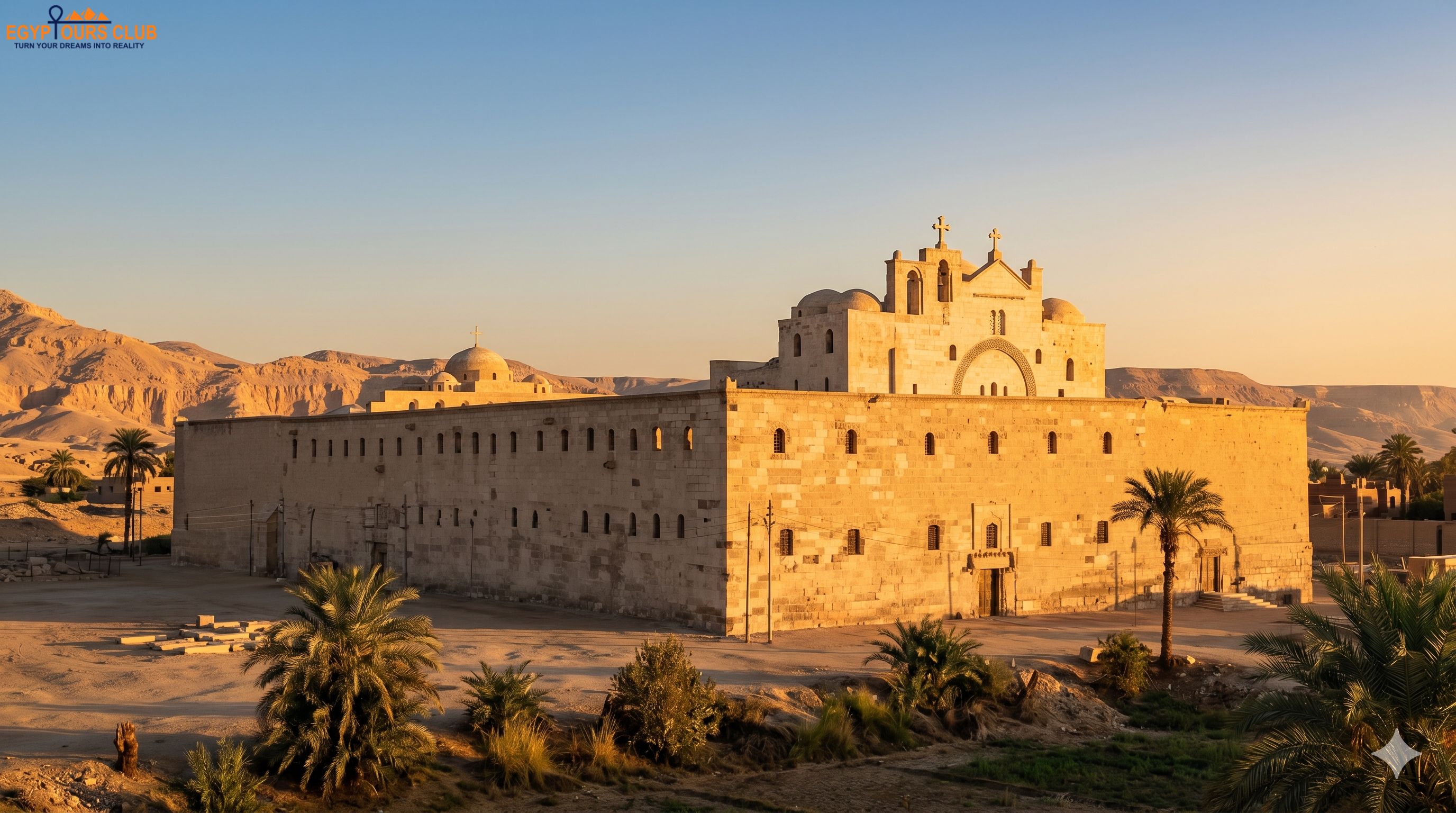
11 Best Things to Do in Sohag | White Monastery Tours
White Monastery Sohag . banner

White Monastery Sohag

Egypt Tours Club

Sohag Coptic heritage · Saint Shenouda · Upper Egypt planning

Saint Shenouda · Deir el-Abyad · Coptic Monasticism · Sohag

White Monastery Sohag Visitor Guide

Explore one of Upper Egypt’s most important Coptic monastic landmarks through the story of Saint Shenouda, monumental pale limestone architecture, living religious tradition and the powerful relationship between the White and Red Monasteries of Sohag.

Quick Travel Answer

Why is the White Monastery in Sohag important?

The White Monastery is a major Coptic monastic site associated with Saint Shenouda, one of the most influential figures in Egyptian monasticism. Its surviving monumental church, pale limestone architecture and place within the wider Sohag monastic landscape make it important for understanding late antique Christianity in Upper Egypt.

The strongest visit pairs the monastery with the nearby Red Monastery, but this page remains focused on the White Monastery itself. For the broader route, use the Sohag Monasteries guide. For scholarly context on Saint Shenouda, use The Met’s Shenoute overview ↗.
Primary IdentityCoptic Monastery
Key FigureSaint Shenouda
ArchitecturePale Limestone
Religious ContextLiving Coptic Tradition
Best PairingRed Monastery

Understand the Monument

What to notice at the White Monastery

The site is strongest when you read architecture, monastic history, worship and the wider Sohag landscape together rather than treating the monastery as a single exterior photo stop.

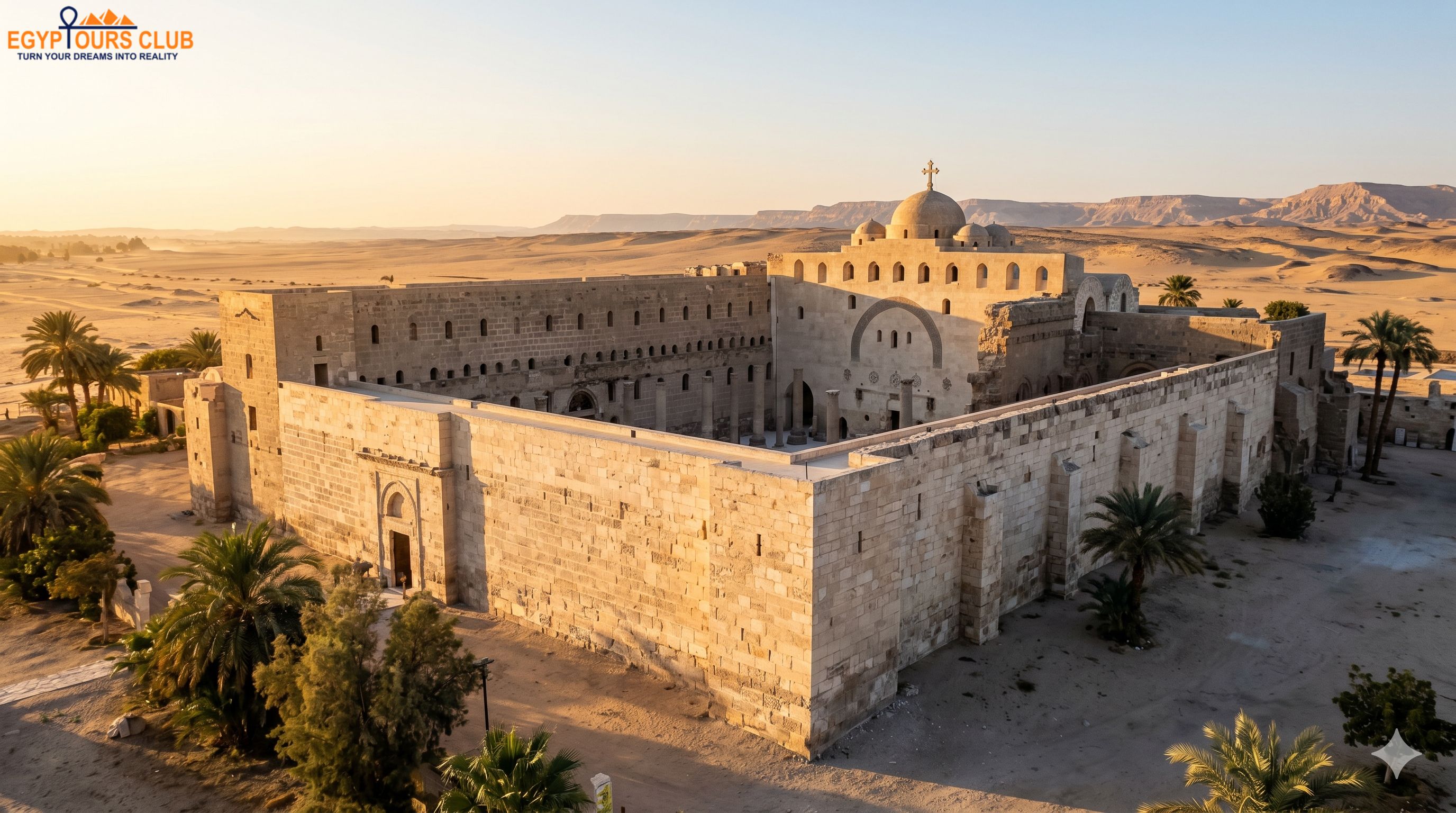
White Monastery Sohag exterior with pale limestone wallsMain Monument

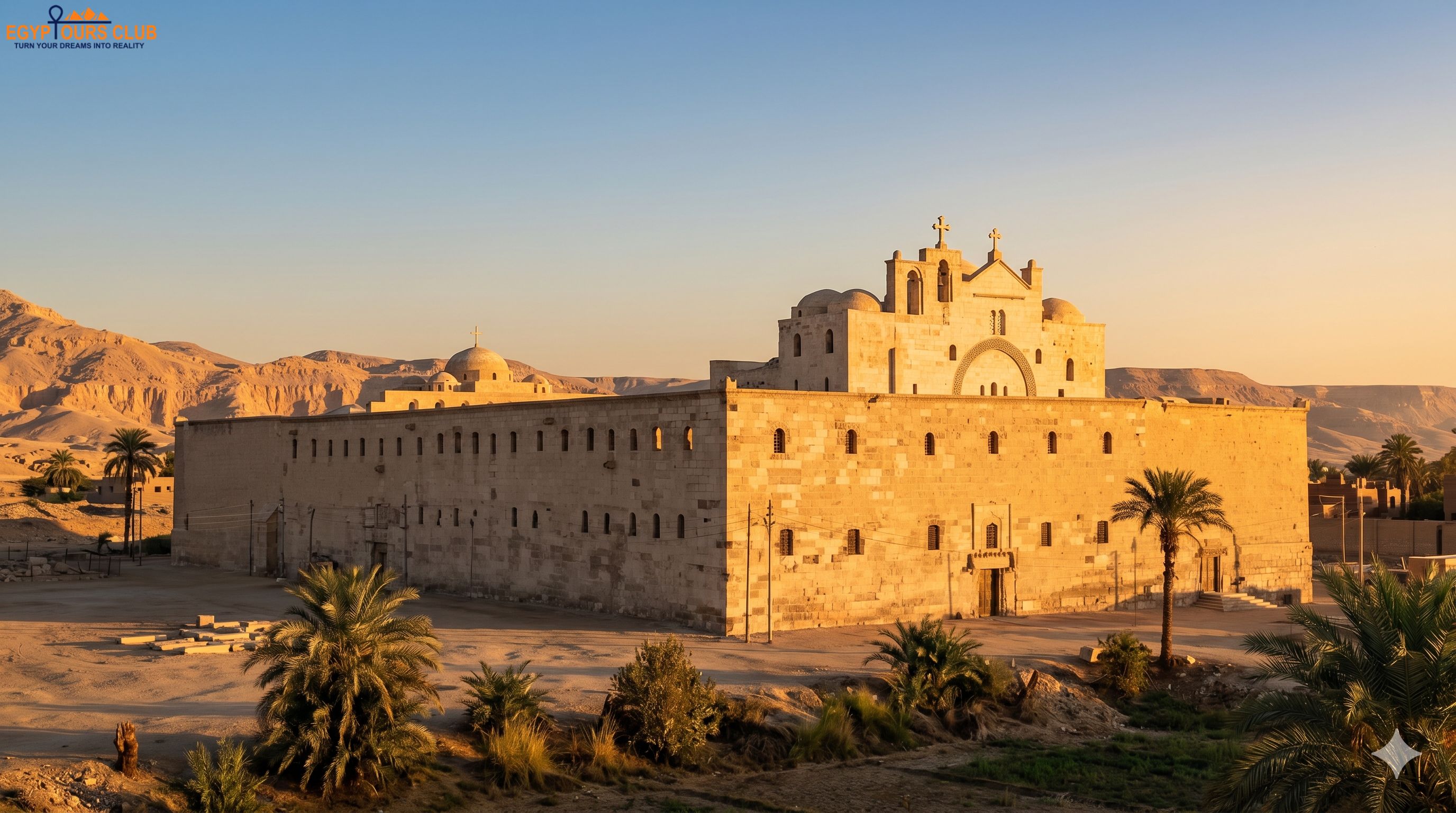
Monumental White Limestone Church

Deir el-AbyadArchitecture

The pale limestone mass gives the monastery its modern name and creates one of the most distinctive Coptic architectural silhouettes in Upper Egypt.

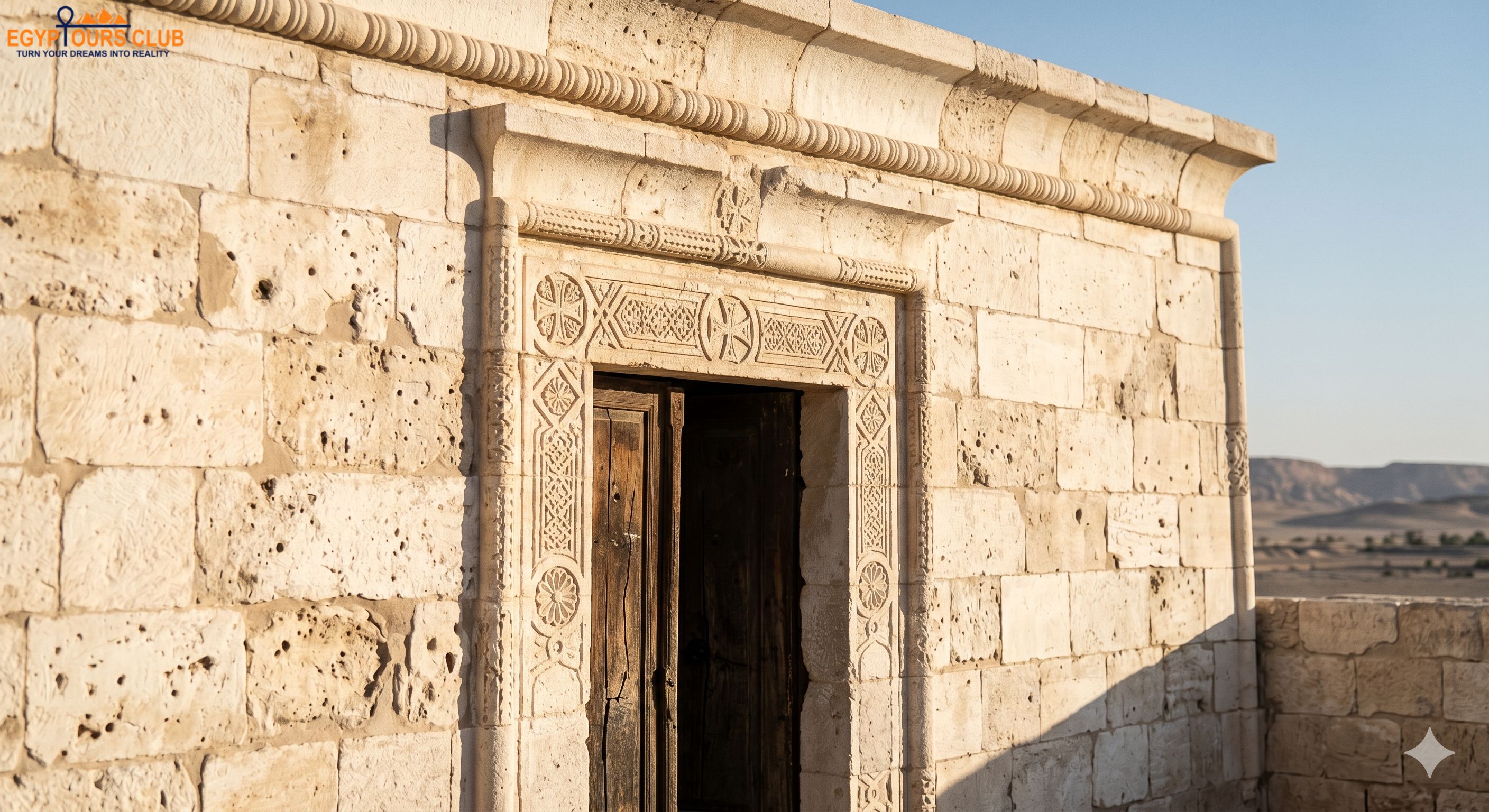
White Monastery carved doorway and stone architectural detailsArchitectural Detail

Carved Stone and Entrances

StoneworkLate antique

Doorways, masonry, reused stone and surviving architectural details reward a closer look beyond the monastery’s overall mass.

Visitor inside the White Monastery in SohagLiving Heritage

Active Coptic Religious Space

WorshipLiving monastery

The monastery is not only an archaeological monument. Respect current worship, services, clergy, visitors and local photography instructions.

White Monastery in the Upper Egypt desert landscape near SohagUpper Egypt

Sohag’s Coptic Landscape

Upper EgyptChristian heritage

Sohag preserves a cluster of late antique and Coptic sites that add a different layer to an Egypt itinerary dominated by pharaonic monuments.

Explore the Monastery

Choose the White Monastery story you want to understand first

Use these themes as a fast orientation before the deeper history, architecture and planning sections.

✝

Saint Shenouda

Start with the monastic leader whose life and reforms shaped the White Monastery community.

Open Saint Shenouda
🏛

Limestone Architecture

Read the mass, walls, entrances and surviving church as a late antique architectural statement.

Open the architecture guide
🎨

White + Red Contrast

Compare pale monumental masonry with the Red Monastery’s richly painted sanctuary tradition.

Compare the two monasteries
🕊

Living Religious Heritage

Understand the site as an active place of worship as well as a historic monument.

Read visitor etiquette

Saint Shenouda and Monastic History

Why Saint Shenouda matters to the White Monastery

The White Monastery should not be understood only as architecture. Its identity is inseparable from Saint Shenouda and the growth of organized Coptic monastic life in late antique Upper Egypt.

From Pigol to Shenouda

The monastic community was associated with Shenouda’s uncle Pigol before Shenouda became its leader and expanded its religious and institutional influence.

Read The Met’s Shenoute profile ↗

A Major Monastic Reformer

Shenouda became one of the most important monastic reformers in the Coptic Church and developed a disciplined community with a strong collective identity.

Explore the historical context ↗

Writer and Religious Leader

Shenouda was also a major Coptic writer and religious figure, making the White Monastery important for language, manuscripts and intellectual history as well as architecture.

See current archaeological research ↗

Sohag’s Wider Coptic Landscape

The White Monastery belongs to a regional network of Coptic churches and monasteries that makes Sohag one of Upper Egypt’s most important Christian heritage areas.

The Met: Sohag and Bawit ↗
White Monastery monumental limestone architecture near Sohag

Architecture and Material

Why the White Monastery building itself matters

The surviving church is one of the clearest reasons to visit. Its massive pale limestone exterior, monumental proportions and late antique form connect the White Monastery with a distinctive Upper Egypt architectural tradition.

Explore the Yale Monastic Archaeology Project via ARCE ↗

White Monastery + Red Monastery

Why the two Sohag monasteries work best together

They should not compete for the same page intent. The White Monastery page owns Saint Shenouda and pale limestone architecture; the Red Monastery should own painted sanctuary and conservation-specific intent. Together, they create the strongest Sohag Coptic route.

White Monastery

Best for Saint Shenouda, monumental pale limestone architecture, monastic history and the institutional story of the community.

Stay on the White Monastery guide

Red Monastery

Best known for painted sanctuary decoration, late antique Coptic art and major conservation work that revealed extraordinary layers of color.

Explore the Sohag monasteries route

Why Compare Both?

Seeing both gives a much clearer understanding of how architecture, decoration, worship and monastic identity developed in the same Upper Egypt region.

The Met: Sohag’s Coptic context ↗

Best Route Ownership

Use the White Monastery page for attraction research and the Sohag Monasteries hub for comparing the complete White + Red route.

Open Sohag Monasteries

Practical Visitor Planning

How to plan your White Monastery visit

Keep the visitor-planning section practical and compact. The exact opening arrangements, religious services and photography conditions can change, so avoid hard-coding unstable details.

01

Suggested Visit Sequence

Begin with the exterior and overall architecture, then move inside with Saint Shenouda and monastic history in mind before connecting the visit to the Red Monastery.

Review the main highlights
02

Active Religious Site

Services, clergy activity and worship can affect movement. Follow local instructions and allow the religious function of the site to take priority.

Read visitor etiquette
03

Best Pairing

Pair White Monastery with the Red Monastery for the clearest contrast in Sohag’s Coptic architecture and art.

Open Sohag Monasteries
04

Photography

Ask before photographing interiors, worshippers, clergy or services. Avoid flash where sacred art or conservation-sensitive surfaces are present.

See before-you-visit tips
05

Dress and Conduct

Modest clothing and quiet behavior are appropriate because this is a living religious site, not only a historic attraction.

Read etiquette notes
06

Access and Mobility

Entrances, thresholds and interior movement can vary. Confirm current assistance needs in advance if mobility is limited.

Ask about current conditions
07

Local Expert Advice

Do not overload the same day with too many distant Upper Egypt stops. Give the White and Red Monasteries enough time for interpretation before adding Abydos or Dendera.

Build a slower cultural route

Before You Arrive

Before you visit the White Monastery

A respectful visit works best when you treat the monastery as both a heritage monument and a living religious community.

Dress Modestly

Covered shoulders and knees are a respectful default for an active Coptic Orthodox monastery.

Ask Before Photography

Do not assume interior, clergy or service photography is permitted simply because exterior photography is easy.

Keep the Visit Calm

Move quietly through worship spaces and avoid interrupting prayers, services or community life.

Confirm Current Access

Religious schedules, restoration activity and local conditions can affect visitor access.

Internal Link Map

From White Monastery to the exact Egypt Tours Club page you need

The links are organized by search intent: dedicated attraction research first, then regional planning, bookable routes and complete Egypt trips.

Choose by Time and Interest

Practical routes that include the White Monastery

The monastery remains the attraction focus. These route cards support travel planning without turning the page into a commercial landing page.

Focused Sohag

White + Red Monasteries

  • White Monastery architecture
  • Saint Shenouda context
  • Red Monastery sanctuary art
  • Coptic heritage interpretation
Open the Sohag Monasteries Guide
Sacred Upper Egypt

Sohag + Abydos

  • White Monastery
  • Red Monastery
  • Temple of Seti I
  • Different sacred traditions across time
Open the Abydos Temple Guide
Slower cultural journey

Coptic Cairo + Sohag

  • Old Cairo churches
  • Coptic Museum area
  • Sohag monasteries
  • Upper Egypt Christian heritage
Open the Coptic Cairo Guide

Planning note: religious schedules, opening arrangements, road conditions and photography rules can change. Confirm current conditions close to travel.

Beyond Sohag

Continue your Coptic and Upper Egypt journey

These pages expand the White Monastery story into other Christian, archaeological and Nile Valley contexts without weakening the page’s main attraction intent.

Cairo

Coptic Cairo Churches

Connect Upper Egypt monasticism with the churches and sacred lanes of Old Cairo.

Open Coptic Cairo
Wadi El-Natrun

Monastery of the Syrians

Continue into manuscript history, layered frescoes and the Coptic-Syriac monastic tradition.

Open Deir El-Suryan
Wadi El-Natrun

Monastery of Saint Bishoy

Compare Sohag with one of the oldest living monastic landscapes of the western Nile Delta.

Open Saint Bishoy Guide
Asyut

Virgin Mary Monastery at Dronka

Continue along a modern pilgrimage site connected with the Holy Family tradition and Upper Egypt Christian heritage.

Open Dronka Guide
Abydos

Temple of Seti I

Contrast Coptic monastic history with one of Upper Egypt’s major ancient Egyptian sacred landscapes.

Open Abydos Temple
Luxor

Luxor Travel Guide

Use Luxor as a practical base for wider Upper Egypt route-building before or after Sohag.

Open Luxor Guide

From One Attraction to a Complete Trip

Where the White Monastery fits into an Egypt itinerary

The White Monastery is usually a specialist cultural extension rather than the anchor of a first Egypt trip. Use these pages only when moving from attraction research to complete trip planning.

Classic travel

Classic Egypt Tour Packages

Start with Cairo, Luxor and Aswan, then add Sohag when you want deeper Christian heritage and Upper Egypt context.

Open Classic Egypt Tours
Nile itinerary

Nile Cruise Packages

Use Luxor as the bridge between a Nile cruise and a road extension to Sohag, Abydos or Dendera.

Open Nile Cruise Packages
Flexible

Tailor-Made Egypt

Choose tailor-made planning when Coptic heritage, specialist archaeology or a slower Upper Egypt route matters more than a standard package.

Create a Tailor-Made Route
White Monastery Sohag for Coptic heritage research

Official and Authoritative Sources

Research the White Monastery with archaeological and museum sources

Use Egypt Tours Club for travel planning, then use academic and museum sources for Saint Shenouda, monastic archaeology, conservation and the wider Coptic landscape of Sohag.

External pages open in a new tab. Visitor access, worship schedules and photography rules can change, so confirm practical conditions close to travel.

Company and Operator

Who is behind Egypt Tours Club?

Keep the traveler-facing brand and the licensed operating company clearly distinguished.

Egypt Tours Club

Egypt Tours Club is the traveler-facing travel brand operated by Vagus Travel Co. It provides destination information, day trips, multi-day packages and tailor-made planning across Egypt.

  • ✓Traveler-facing Egypt travel brand
  • ✓Cultural routes, packages and tailor-made planning
  • ✓Local support for Sohag and wider Upper Egypt routes

Useful Travel Answers

White Monastery Sohag questions before you go

Direct answers about Saint Shenouda, architecture, religious etiquette, the Red Monastery pairing, route planning and wider Coptic heritage.

What is the White Monastery in Sohag?

The White Monastery, also known as Deir el-Abyad or the Monastery of Saint Shenouda, is a major Coptic Orthodox monastic site near Sohag in Upper Egypt, closely associated with Saint Shenouda and known for its monumental pale limestone church.

Why is it called the White Monastery?

The name refers to the pale limestone used in its monumental architecture, which creates a strong visual contrast with the nearby Red Monastery.

Who was Saint Shenouda?

Saint Shenouda, also called Shenoute, was one of the most influential leaders and writers of Egyptian monasticism in late antiquity and became closely associated with the White Monastery community.

How old is the White Monastery?

The surviving church belongs to the late antique Coptic monastic landscape of Sohag, with the monastery strongly associated with Saint Shenouda and the fifth-century development of the community.

What can visitors see at the White Monastery?

Visitors can see the monumental church, limestone walls, sanctuary and interior architectural spaces, while the value of the visit is strengthened by understanding Saint Shenouda, monastic life and the wider Sohag Coptic landscape.

Is the White Monastery still an active religious site?

Yes. It is a living Coptic Orthodox religious site, so respectful dress, quiet behavior and sensitivity to services and local instructions are important.

Can I visit the White and Red Monasteries together?

Yes. They are the strongest natural pairing in Sohag and provide complementary views of Coptic monastic architecture, sacred art and early Christian heritage.

What is the difference between the White Monastery and Red Monastery?

The White Monastery is especially known for its monumental pale limestone architecture and Saint Shenouda connection, while the nearby Red Monastery is especially celebrated for its painted sanctuary and conservation of late antique Coptic wall decoration.

How do I visit the White Monastery from Luxor?

It is usually visited by road as part of a longer Upper Egypt heritage route. Because Sohag is well north of Luxor, it is better to plan the day carefully rather than treat the monastery as a quick add-on.

Can I combine the White Monastery with Abydos?

Yes. A well-paced Upper Egypt route can combine Sohag’s monasteries with Abydos, especially for travelers interested in sacred landscapes across different periods of Egyptian history.

Can I combine the White Monastery with Dendera?

Yes, but adding both Sohag and Dendera can make the day long. A slower route or multi-day Upper Egypt plan often works better.

How long should I spend at the White Monastery?

Allow enough time to understand the church, architecture, Saint Shenouda context and the relationship with the Red Monastery rather than rushing through only the exterior.

Do I need a guide?

A guide is very useful because the monastery’s value lies in historical and religious context as much as in visible architecture.

Can I take photos inside the White Monastery?

Photography rules can change and may depend on worship activity or local instructions. Ask before photographing interiors, people, services or sacred spaces.

What should I wear?

Dress modestly because the White Monastery is an active religious site. Covered shoulders and knees are a respectful default.

Is the White Monastery suitable for children?

Yes, especially for families interested in architecture and history, but keep the pace calm and explain that it is also an active place of worship.

Is the White Monastery accessible for limited mobility?

Access conditions can vary across entrances, thresholds and interior spaces. Confirm current mobility needs and assistance before travel.

What should I combine with the White Monastery?

The strongest nearby pairing is the Red Monastery. Wider routes can connect Sohag with Abydos, Dendera, Luxor or a broader Coptic heritage itinerary.

Is the White Monastery worth visiting?

It is especially rewarding for travelers interested in Coptic heritage, Saint Shenouda, late antique architecture, monastic history and cultural routes beyond Egypt’s standard pharaonic circuit.

Where can I learn more about the monastery’s archaeology?

The ARCE-hosted Yale Monastic Archaeology Project page documents archaeological work at the White Monastery, while The Metropolitan Museum of Art provides useful background on Saint Shenoute and the Coptic landscape of Sohag.

Sohag Coptic Heritage Planning

Plan Your White Monastery Visit

Explore Saint Shenouda’s legacy, the White Monastery’s limestone architecture and the wider Sohag Coptic landscape, then connect the visit with the Red Monastery, Abydos, Dendera or a longer Christian heritage route.

Related Tours

Edfu, Kom Ombo & Esna Temples Tour from Aswan | Full-Day Upper Egypt Experience
Tour From "Aswan"
12 Hours
Edfu, Kom Ombo & Esna Temples Tour from Aswan | Full-Day Upper Egypt Experience

Discover three remarkable Upper Egypt temples on a private full-day tour from Aswan, visiting Esna, Edfu and Kom Ombo with a qualified guide, entrance tickets and air-conditioned transfers.

Edfu, Kom Ombo & Esna Temples Tour from Luxor | Full-Day Upper Egypt Experience
Tour From "Luxor"
12 Hours
Edfu, Kom Ombo & Esna Temples Tour from Luxor | Full-Day Upper Egypt Experience

Discover Upper Egypt on a private full-day tour from Luxor to Esna, Edfu and Kom Ombo temples, with an expert guide, entrance tickets and air-conditioned transfers.

Mount Sinai Tour from Cairo by Car with St. Catherine’s Monastery
Tour From "Cairo"
2 days and 1 night
Mount Sinai Tour from Cairo by Car with St. Catherine’s Monastery

Travel from Cairo on a private 2-day Mount Sinai journey with an overnight stay at a 4-star hotel, a guided night hike for sunrise, a visit to St. Catherine’s Monastery and private round-trip transfers.

St. Catherine’s Monastery Tour from Sharm El Sheikh with Dahab Visit
Tour From "Sharm El Sheikh"
11 Hours
St. Catherine’s Monastery Tour from Sharm El Sheikh with Dahab Visit

Discover one of the world's oldest Christian monasteries on a full-day tour from Sharm El Sheikh. Visit the UNESCO-listed St. Catherine's Monastery, explore its biblical history, and enjoy free time in the charming coastal town of Dahab.

5-Day Egypt Tour to Cairo, Luxor &  & Abu Simbel Itinerary with Flights
Egypt Classic Tour Packages
5 days / 4 nights
5-Day Egypt Tour to Cairo, Luxor & & Abu Simbel Itinerary with Flights

Explore Egypt’s greatest highlights in 5 days with a private journey through Cairo, Luxor, Aswan and Abu Simbel. Visit the Giza Pyramids, Old Cairo, NMEC, Valley of the Kings, Karnak Temple and the Abu Simbel Temples with expert guiding, organized transport and 5-star hotel stays.

The Best of Egypt in 12 days.
11 to 15 days Package
12 days / 11 nights
The Best of Egypt in 12 days.
Upper and Lower Egypt Tour Package in 8 Days | Complete Egypt Cultural Journey
Egypt Classic Tour Packages
8 days / 7 nights
Upper and Lower Egypt Tour Package in 8 Days | Complete Egypt Cultural Journey

Discover the essence of Egypt in 8 days. Travel through Upper and Lower Egypt to explore Cairo's iconic pyramids, Alexandria's coastal gems, and the majestic ancient temples of Luxor and Aswan on a seamless cultural adventure.