

Ramesseum | Visitor Guide to Ramses II's Mortuary Temple in Luxor | Egypt Tours Club
Ramesseum . banner

Ramesseum

Egypt Tours Club

Ramesseum planning by a licensed local Egypt travel team

Ramses II · New Kingdom · Luxor West Bank

Ramesseum Visitor Guide: Ramses II’s Mortuary Temple and Ozymandias

Explore the Ramesseum, the monumental memorial temple of Ramses II on Luxor’s West Bank. See the fallen colossus associated with Ozymandias, Kadesh battle reliefs, Osiride pillars, hypostyle halls, astronomical ceilings and the remarkable mudbrick granaries of ancient Thebes.

Quick Travel Answer

Why is the Ramesseum worth visiting?

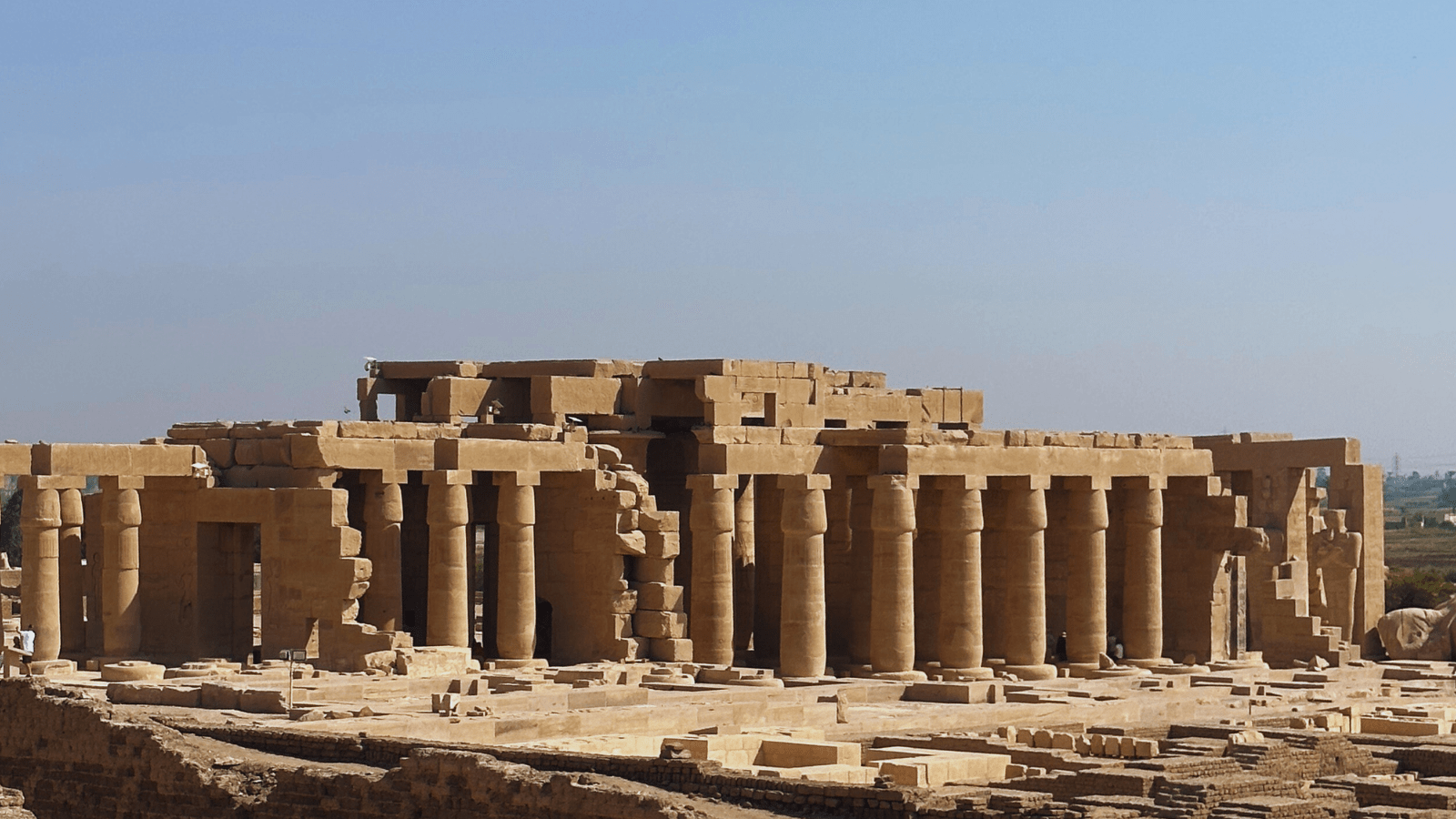
The Ramesseum is the mortuary temple of Ramses II and one of the most atmospheric monuments on Luxor’s West Bank. It combines colossal royal sculpture, Battle of Kadesh reliefs, Osiride pillars, hypostyle halls and rare mudbrick storehouses that reveal how a royal cult complex also functioned as an economic center.

Allow 1.5 to 2 hours. Follow the route from the first pylon and fallen colossus through the second court and hypostyle hall, then walk behind the stone temple to inspect the vaulted granaries.

Explore a Luxor West Bank Tour
Read the Temple Clearly

The essential highlights inside the Ramesseum

These six stops follow the monument from its outer pylon to its inner halls and surrounding economic precinct.

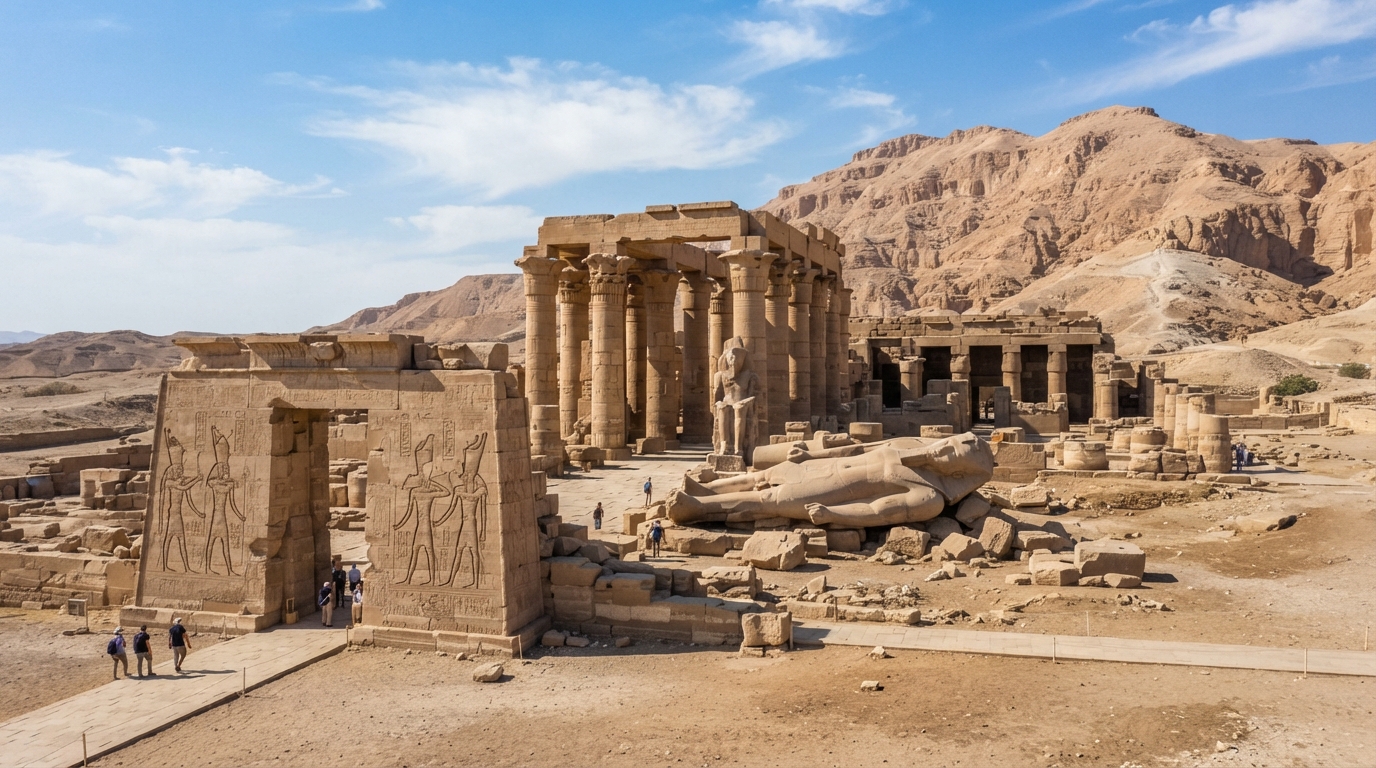
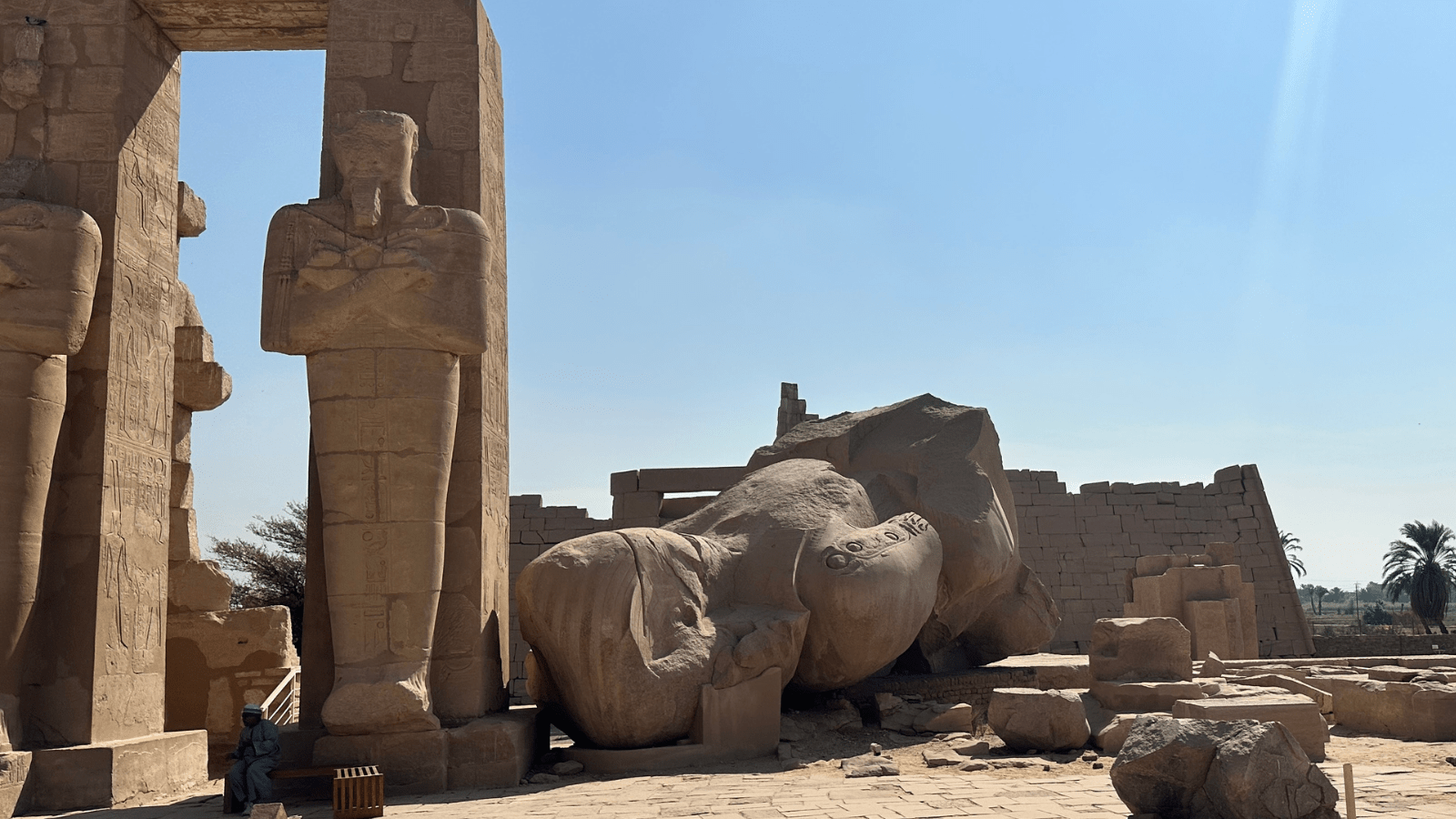
Fallen granite colossus of Ramses II at the Ramesseum in LuxorOzymandias colossus

Fallen Colossus of Ramses II

Pink graniteAbout 17 meters

The shattered statue once dominated the first court and remains the Ramesseum’s most famous image, closely linked with Shelley’s poem Ozymandias.

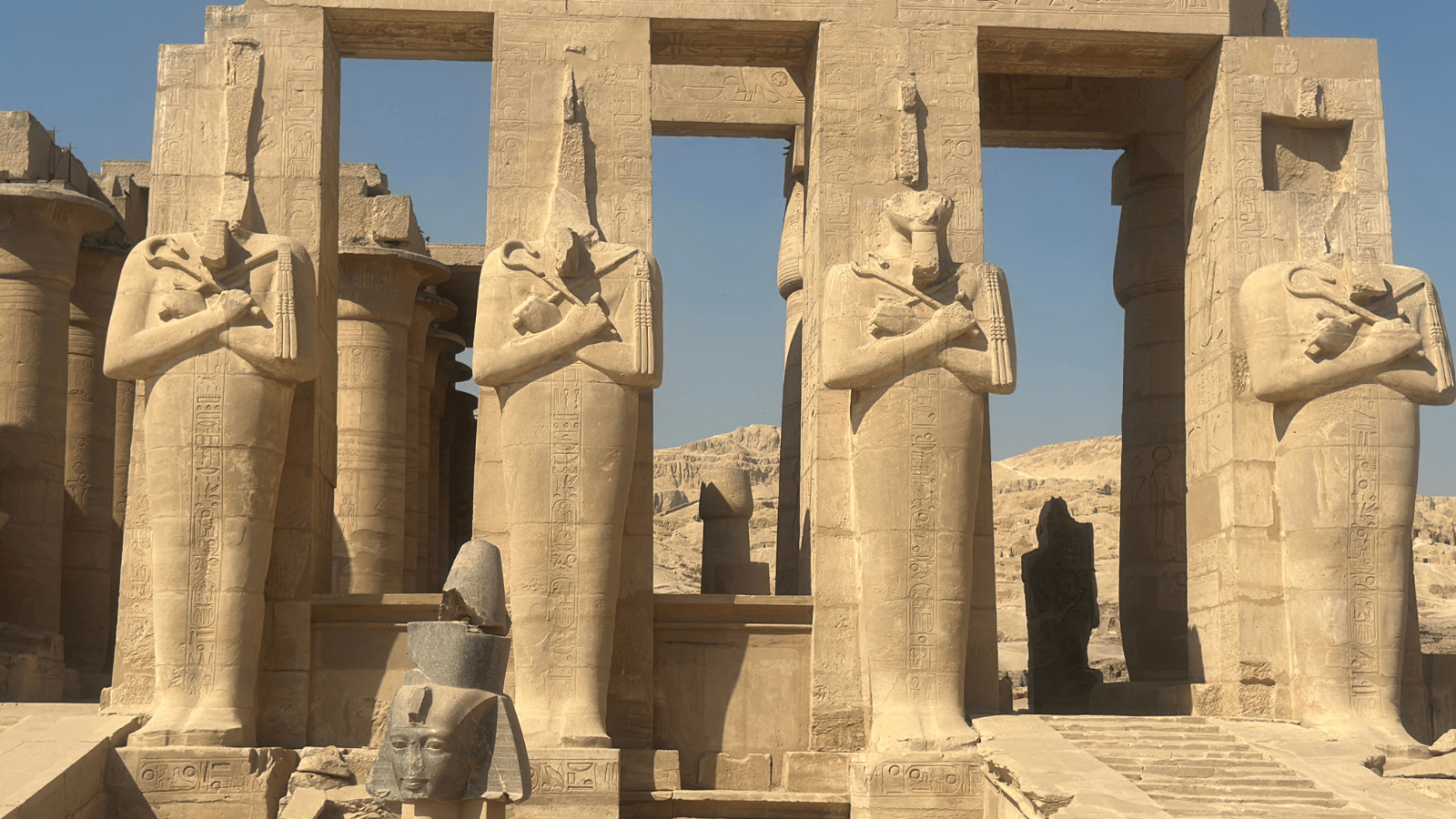
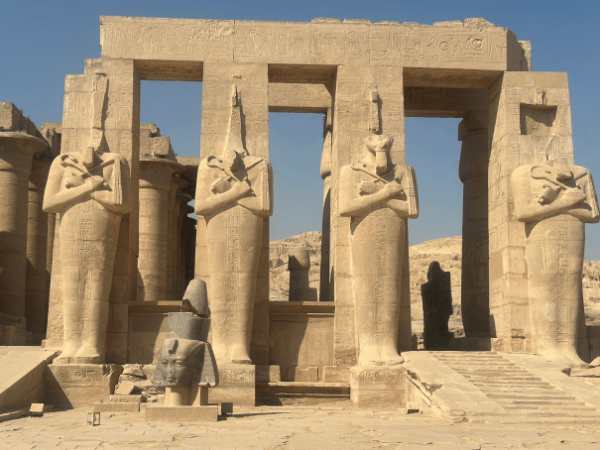
Osiride pillars and royal statues at the Ramesseum temple of Ramses IIRoyal rebirth

Second Courtyard and Osiride Pillars

Ramses IIOsiris imagery

Colossal mummiform figures of Ramses II stand against the pillars, expressing the king’s divine rebirth and eternal authority.

Osiride statues and carved reliefs at the Ramesseum in LuxorMilitary narrative

Battle of Kadesh Reliefs

Royal propagandaHittite campaign

Reliefs on the pylons present Ramses II charging in his chariot and transforming a difficult battle into a visual statement of royal victory.

Inner halls and astronomical ceiling remains at the RamesseumSacred time

Astronomical Room and Inner Shrines

Star chartsFestival calendar

Smaller rooms preserve astronomical and ritual imagery used by priests to organize festivals and maintain the king’s posthumous cult.

Temple ruins and mudbrick storage precinct at the RamesseumEconomic precinct

Mudbrick Granaries and Storehouses

Barrel vaultsTemple economy

The extensive vaulted magazines stored grain, wine, linen and other goods, showing that the Ramesseum was also an administrative powerhouse.

Route Planner

The strongest ways to include the Ramesseum in your Luxor itinerary

Choose the route by historical interest, available time and the number of West Bank monuments you want to explore.

Half Day

Ramesseum and Medinet Habu

  • Compare the memorial temples of Ramses II and Ramses III
  • Focus on royal sculpture, battle reliefs and architecture
  • Ideal for travelers seeking quieter West Bank monuments
Explore the hidden temples tour
Balanced West Bank

Valley of the Queens, Ramesseum and Medinet Habu

  • Combine decorated royal-family tombs with two memorial temples
  • See contrasting architecture and surviving reliefs
  • Strong choice for a focused cultural day
Open the West Bank tour
Full Day

Classic Luxor West Bank

  • Pair the Ramesseum with the Valley of the Kings
  • Add Hatshepsut Temple and the Colossi of Memnon
  • Use an early start to manage heat and walking
Compare Luxor day tours

Planning note: Opening hours, ticket procedures and photography rules can change. Confirm current details before travel, especially during restoration work or seasonal schedule changes.

Osiride pillars and ancient stone reliefs at the Ramesseum

Trusted External Sources

Continue with authoritative Ramesseum information

Use official and specialist heritage sources to verify archaeology, conservation work and current visitor information.

External websites are provided for research and verification. Egypt Tours Club does not control their availability or updates.

Helpful Travel Answers

Ramesseum questions before you go

Concise answers support travelers, search engines and AI answer systems with clear planning information.

Is the Ramesseum worth visiting?

Yes. The Ramesseum is one of Luxor’s most atmospheric and less crowded West Bank monuments, with colossal sculpture, Battle of Kadesh reliefs, Osiride pillars and rare mudbrick granaries.

How long should I spend at the Ramesseum?

Allow about 1.5 to 2 hours to explore the pylons, courts, fallen colossus, hypostyle hall, inner rooms and surrounding storage vaults.

Where is the Ramesseum located?

The Ramesseum stands on Luxor’s West Bank in the Theban Necropolis, close to Medinet Habu, the Valley of the Queens and the Colossi of Memnon.

Why is the Ramesseum associated with Ozymandias?

The Greek form of Ramses II’s throne name became Osymandyas. Descriptions of the temple’s enormous fallen statue later inspired Percy Bysshe Shelley’s poem Ozymandias.

What is the Ramesseum famous for?

It is famous for the fallen granite colossus of Ramses II, Kadesh battle scenes, Osiride statues, hypostyle columns and extensive mudbrick granaries.

What should I combine with the Ramesseum?

The strongest combinations are Medinet Habu, the Valley of the Queens, the Colossi of Memnon, Deir el-Medina and the Valley of the Kings.

What is the best time to visit the Ramesseum?

Early morning is usually best for cooler temperatures, softer light and fewer visitors in the open courtyards.

Is the Ramesseum suitable for families?

Yes. The monument is spacious and generally less crowded than major West Bank sites, although families should supervise children around uneven stone and exposed ruins.

Private Luxor Planning

Build the right Ramesseum and West Bank route

Share your hotel or cruise, travel date, available time and preferred language. Egypt Tours Club can suggest a clear private route through the Ramesseum and nearby Luxor monuments.