

Luxor eclipse 2027 · Amun-Ra · Apep · solar mythology · Ancient Thebes
2 August 2027 · Luxor · Ancient Thebes · Solar Mythology
Ancient Egyptian Solar Mythology: Amun-Ra, Apep, and the Eclipsed Sun
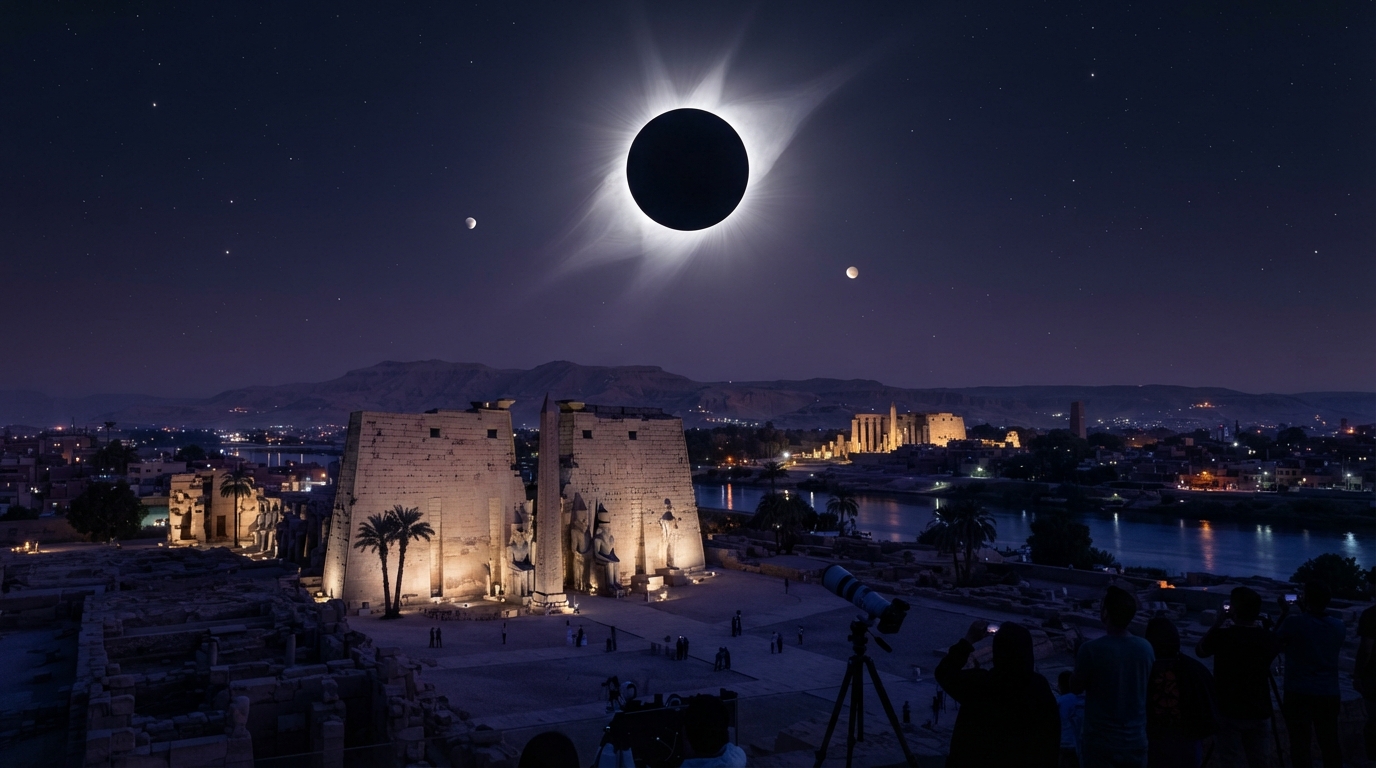
Experience the 2 August 2027 total solar eclipse in Luxor with the cultural context of ancient Thebes: Amun-Ra, Khepri, Atum, Ra's night journey through the Duat, the threat of Apep and the restoration of Ma'at. The mythology deepens the trip, while the actual viewing plan must still be built around modern astronomy, safe solar viewing and confirmed event logistics.
Quick Cultural Answer
How should travelers connect the 2027 Luxor eclipse with ancient Egyptian solar mythology?
Short answer: use the eclipse as a cultural lens, not as proof of a single ancient explanation. Ancient Egyptian religion richly documented the daily rebirth of the Sun, Ra's dangerous night journey, Apep's opposition to cosmic order and the restoration of Ma'at. Direct Egyptian records of specific solar eclipses, however, are limited and debated. The strongest travel experience is therefore to visit the monuments where these ideas survive, then watch totality from a confirmed modern viewing site.
The Solar Cycle
Khepri, Ra, Amun-Ra and Atum: the Sun as a cycle of renewal
Egyptian solar theology changed over time. These divine forms overlap and should not be treated as a single fixed system used identically in every period.
 Rising Sun
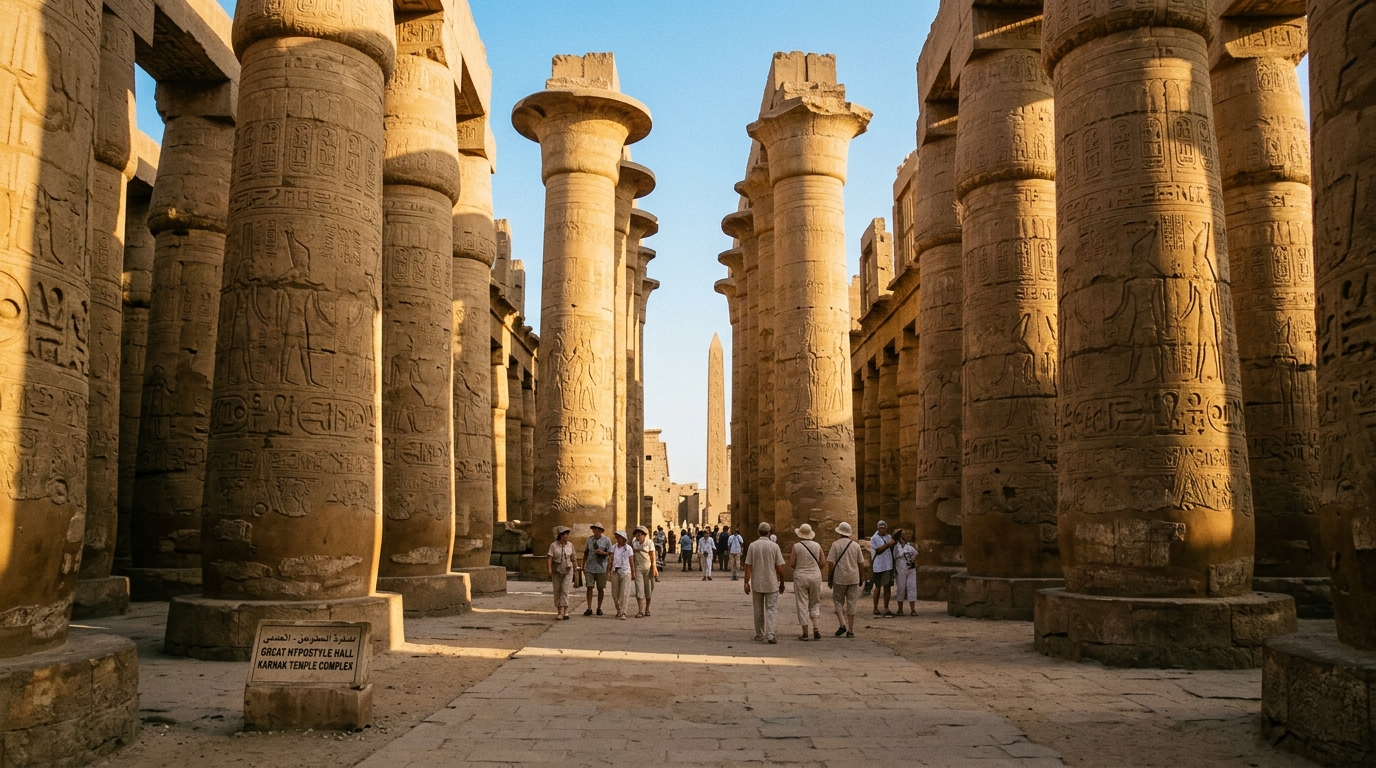
Khepri — emergence and rebirth
Represented by the scarab beetle, Khepri symbolized emergence, self-generation and renewal. The daily reappearance of the Sun after darkness helps travelers understand why rebirth imagery is so important in Luxor's royal funerary landscape.
 Theban Power
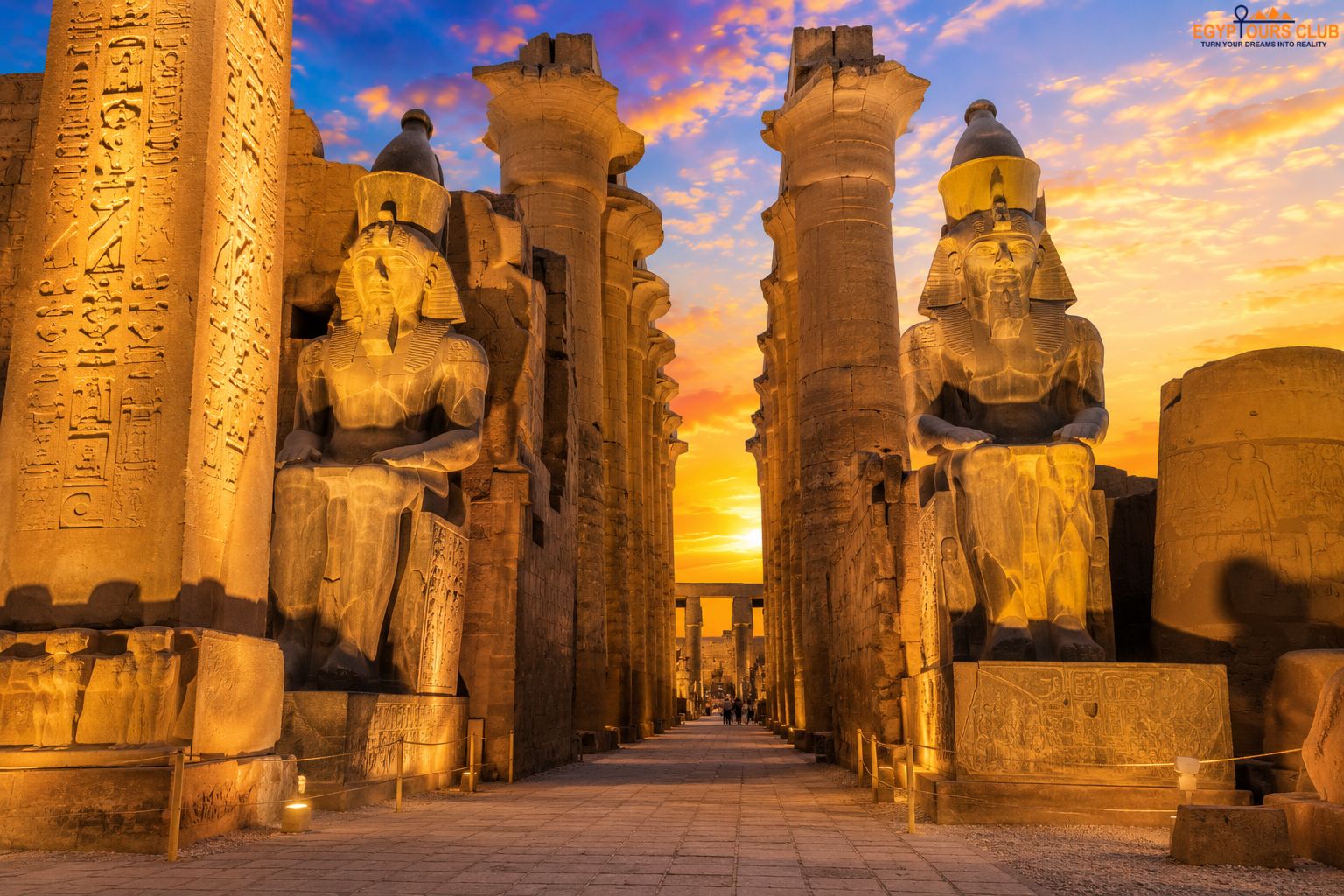
Amun-Ra — solar power and kingship
In Thebes, Amun rose to extraordinary political and religious importance and became closely united with Ra as Amun-Ra. Karnak makes that theology monumental through pylons, obelisks, courts, ritual spaces and royal inscriptions.
 Setting Sun
Atum — completion and return
Atum, the ancient creator deity of Heliopolis, could be associated with the setting Sun. The western horizon therefore became a place of transition: disappearance was not an ending, but preparation for renewal.
 Night Journey
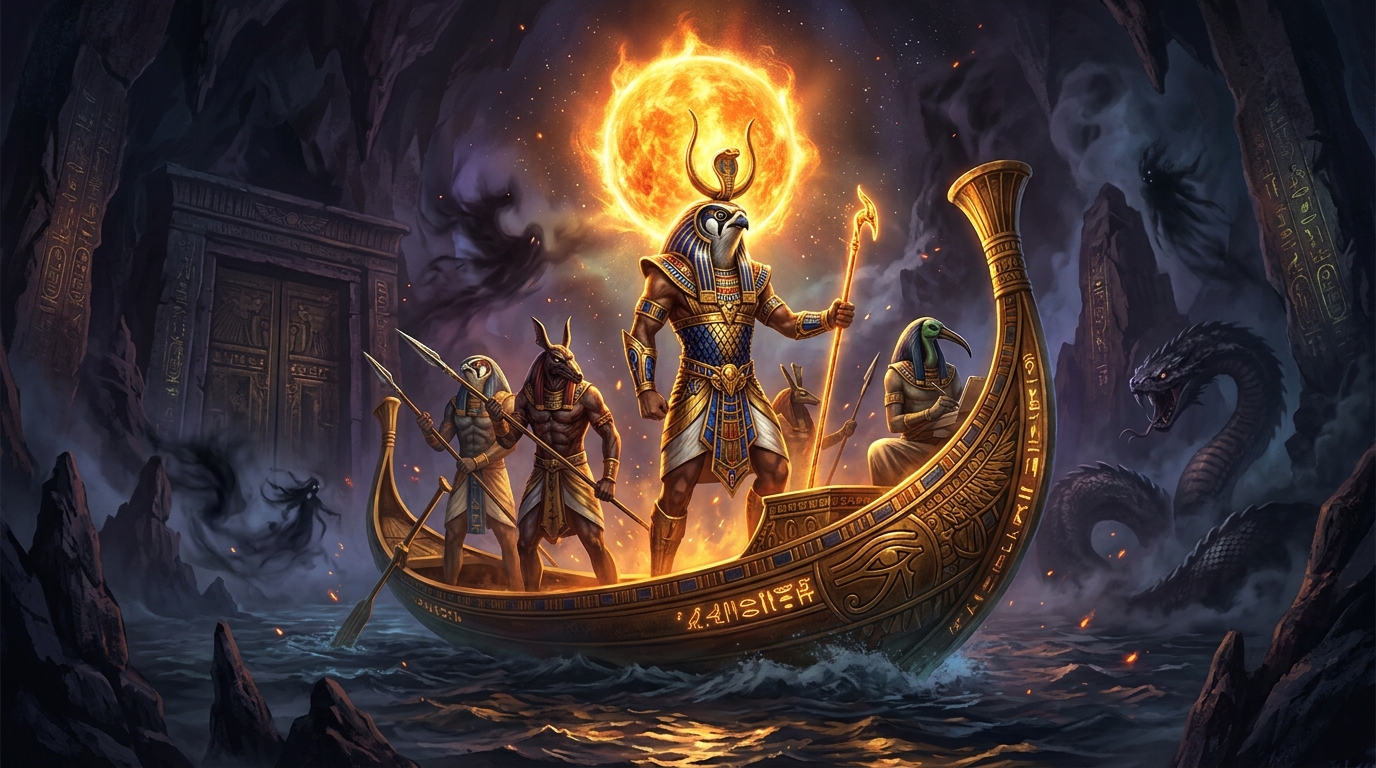
Ra through the Duat
The Amduat and Book of Gates describe the solar god's nocturnal passage through the underworld. In the Valley of the Kings, royal tombs preserve some of the most important surviving images of this dangerous journey and the promise of solar renewal.
Verify the 2027 Luxor eclipse
Use independent astronomy sources to confirm the eclipse path, local timing, duration and safe planning details for 2 August 2027.
Ancient Thebes and safe viewing
Pair the mythology with authoritative heritage context and modern eye-safety guidance instead of relying on unsupported eclipse legends.
Internal Link Atlas
Follow the mythology through the monuments of Luxor
Move from cultural interpretation to exact ETC attraction guides, destination pages and bookable Luxor routes.
East Bank — Amun-Ra & renewal
West Bank — Duat & rebirth
Luxor Planning
Eclipse Planning
Mythology-Focused Itinerary
A practical 4-day Luxor plan around the 2027 eclipse
East Bank: Amun-Ra and sacred kingship
- Karnak Temple with an Egyptologist
- Focus on Amun-Ra, obelisks, ritual and royal ideology
- Continue to Luxor Temple later in the day
West Bank: death, Duat and solar rebirth
- Selected Valley of the Kings tombs
- Look for solar boats and underworld imagery
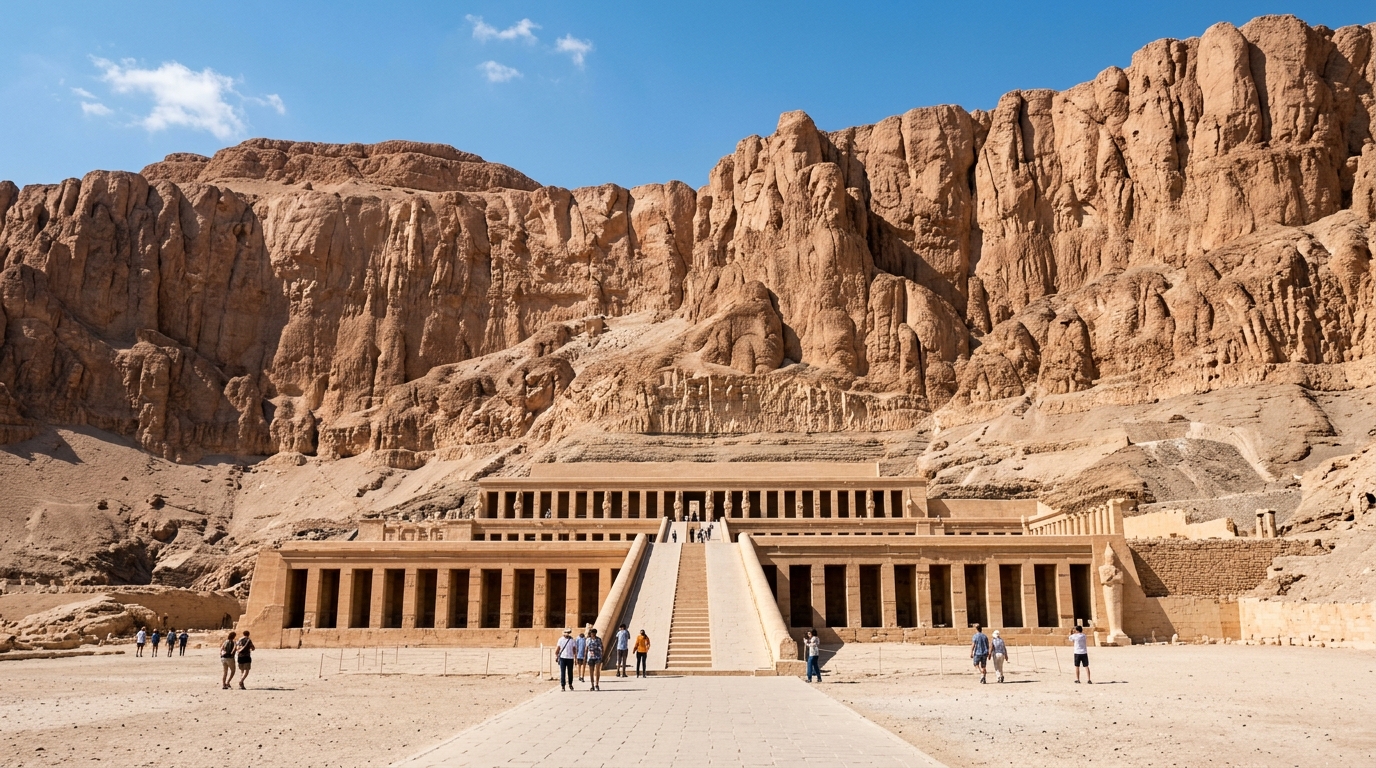
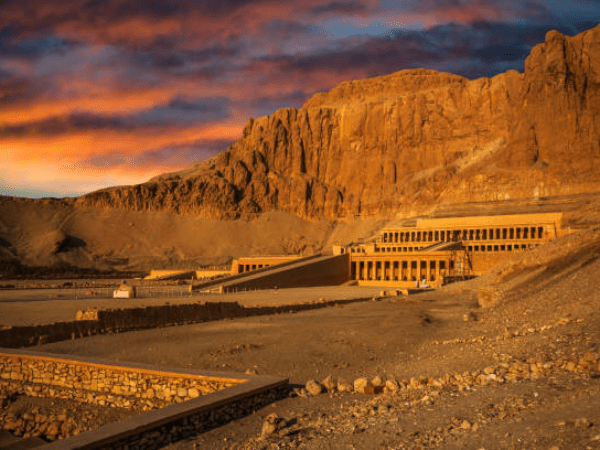
- Add Hatshepsut Temple for royal memory and western landscape
2 August 2027: totality
- Use a confirmed professionally managed viewing location
- Use certified solar viewers during all partial phases
- Experience totality first; let mythology remain the cultural context
Continue through Egypt
- Take a Nile cruise toward Edfu Temple, Kom Ombo Temple and Aswan
- Or return to Cairo for the Pyramids of Giza and Grand Egyptian Museum
- Add the Red Sea for a slower finish
Build the route around your own dates
Turn the eclipse, Luxor archaeology and your wider Egypt plans into one private itinerary. Choose the pace, hotel level, Nile cruise direction, guide language and the extensions that matter to you.
- Private itinerary planning around your travel dates
- Add Cairo, Aswan, Abu Simbel, Nile cruise or Red Sea
- Adjust hotels, pace, guiding and special interests before confirmation
Read independent Egypt Tours Club reviews
Check current traveler feedback on independent platforms before you book. Ratings and review totals change, so these links open the live public profiles rather than displaying a fixed score here.
- Multi-day tour feedback and guide reviews
- Independent customer comments and ratings
- Current public profiles outside the ETC website
History, Myth & Evidence
Apep, Ma'at and what we can responsibly say about eclipses
The mythology is powerful precisely when documented ancient concepts are separated from modern storytelling.
Chaos opposing the solar journey
Apep, or Apophis in Greek tradition, was the great serpent of chaos. Religious texts describe divine forces restraining or defeating him so Ra's journey can continue.
Order, balance and cosmic continuity
The victory over Apep represents the repeated survival of the ordered cosmos. The return of the Sun is therefore more than daylight: it is the restoration of Ma'at over Isfet.
Direct eclipse records are limited
Ancient Egyptian solar religion is exceptionally rich, but unambiguous documentary evidence tying specific eclipses to one standardized mythological explanation is limited.
Science + history, not myth alone
Use authentic solar mythology to deepen the experience, while relying on modern astronomical sources for 2027 timing, safe viewing and operations.
Turn the Story into a Journey
2027 eclipse routes that connect mythology, archaeology and totality
Use the collection page to compare every route, or open one of the fixed-date Nile cruise itineraries below when your travel dates already match.
Egypt Solar Eclipse 2027 Tours
Compare the current collection of fixed-date itineraries built around Luxor totality, Cairo, the Nile, Aswan and Red Sea extensions.
Compare all eclipse packages4-Day Aswan to Luxor Eclipse Cruise
Sail north through Philae, Kom Ombo and Edfu, then keep 2 August dedicated to the Luxor eclipse experience.
Open the 4-day itinerary5-Day Luxor to Aswan Eclipse Cruise
Begin with totality in Luxor, then continue south on a four-night Nile cruise toward Edfu, Kom Ombo and Aswan.
Open the 5-day itinerary8-Day Grand Palm Eclipse Cruise
Choose a seven-night round-trip Nile cruise from Aswan with the eclipse day protected in Luxor and archaeology scheduled separately.
Open the 8-day Grand Palm itineraryLuxor Day Tours
Build Karnak, Luxor Temple and West Bank archaeology around eclipse day without overloading the fixed event date.
Browse Luxor day toursTailor-Made Egypt Journey
Combine mythology-focused guiding, eclipse logistics, preferred hotel level, Nile cruise and extensions at your own pace.
Build a tailor-made tour
Trusted External Sources
Verify astronomy, safety and ancient Thebes independently
Use modern astronomy for the eclipse and authoritative heritage sources for Luxor's monuments.
The 2027 event has not yet occurred. Reconfirm viewing location, site access, transport, safety and final astronomical timing close to travel.
Before Booking
Let mythology enrich the trip—not replace the operational plan
Secure the confirmed eclipse program and Luxor accommodation first, then build sightseeing around it.
- ✓Confirm the exact viewing arrangement and transfers.
- ✓Confirm shade, water, toilets and certified solar viewers.
- ✓Keep archaeological sightseeing separate from the fixed event logistics.
Best planning sequence
Eclipse first, archaeology around it
- Secure 2 August viewing logistics
- Reserve Luxor hotel nights
- Add Karnak, Luxor Temple and West Bank days
- Then add Cairo, Nile cruise, Aswan, Abu Simbel or Red Sea
Frequently Asked Questions
Ancient Egyptian solar mythology and the 2027 Luxor eclipse
Did ancient Egyptians believe Apep caused solar eclipses?
Ancient texts clearly describe Apep as the enemy of the solar god and a force of darkness and chaos. The surviving evidence does not support presenting “Apep swallowed the Sun” as a universally documented explanation for every eclipse.
Why is Amun-Ra important in Luxor?
Ancient Thebes was the principal cult center of Amun. During the New Kingdom, Amun became closely united with Ra as Amun-Ra, and Karnak became one of Egypt's most important temple complexes.
Where can I see solar-underworld imagery in Luxor?
The Valley of the Kings is especially important because royal tombs preserve versions of New Kingdom funerary compositions describing the Sun's passage through the Duat and its renewal.
Can I watch the 2027 eclipse from Karnak, Luxor Temple or the Valley of the Kings?
Do not assume so. Special-event access, crowd controls, security rules and equipment policies may differ from normal admission. Use a confirmed managed viewing location unless official arrangements specifically state otherwise.
What is the best way to combine the eclipse with ancient Egyptian history?
Spend at least two sightseeing days around eclipse day: one for Karnak and Luxor Temple, and one for the West Bank and Valley of the Kings. Keep 2 August focused on the viewing experience.
Luxor Eclipse 2027
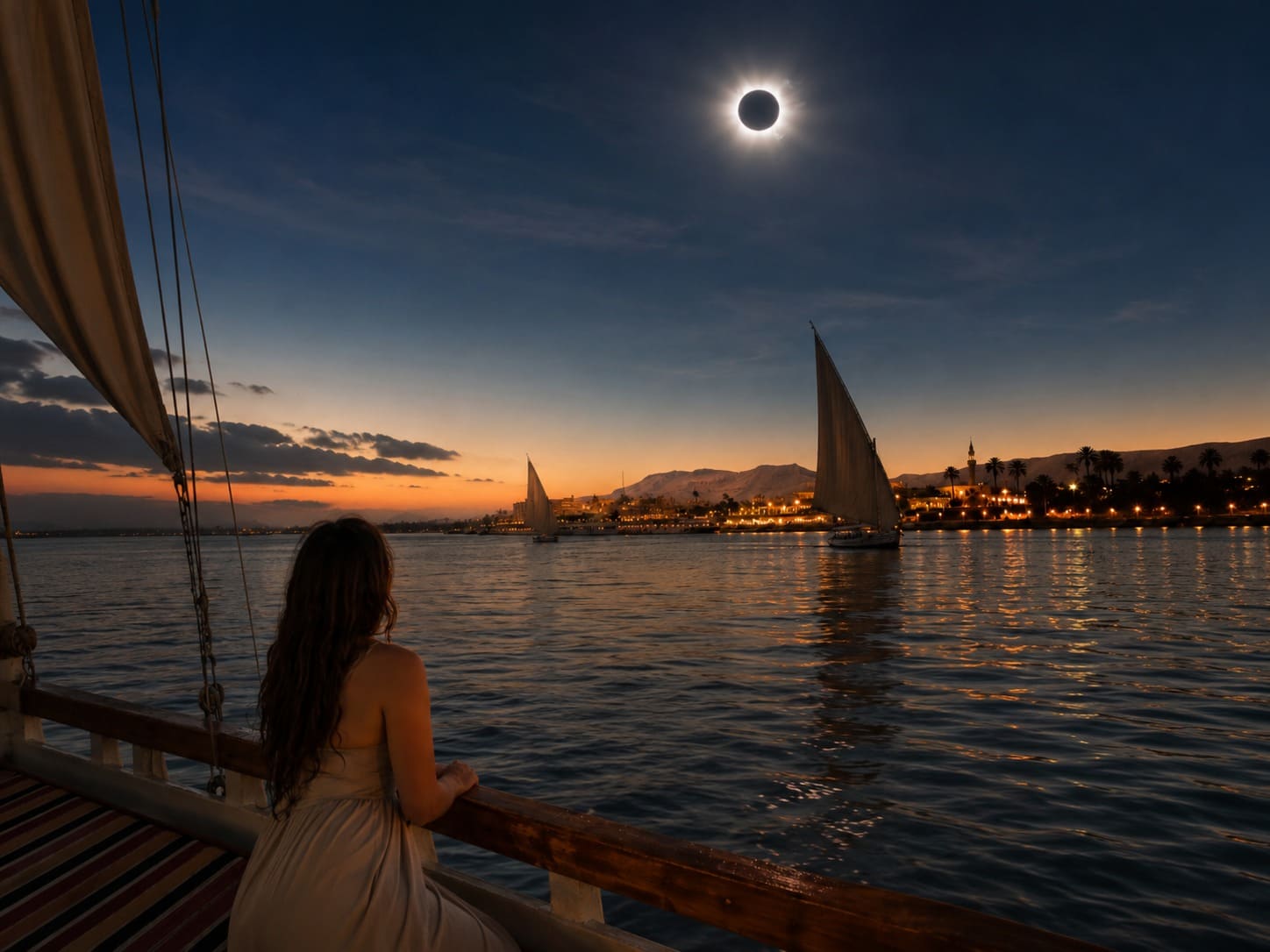
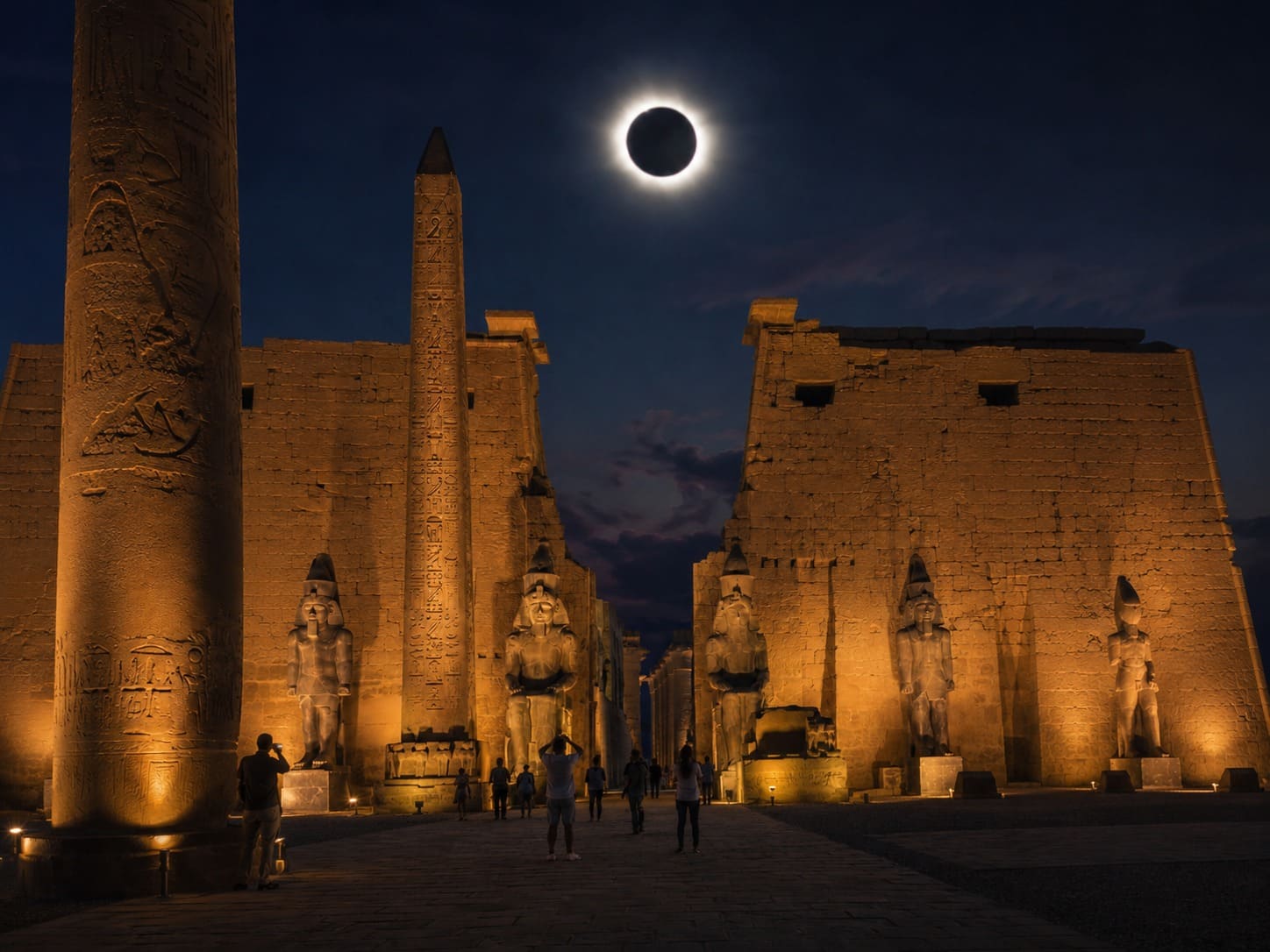
Experience totality with the mythology and monuments of ancient Thebes around it
Secure the eclipse day first, then build Karnak, Luxor Temple, the Valley of the Kings, Hatshepsut, the Nile and wider Egypt into a coherent cultural journey.



.png)



.png)
.png)
.jpeg)